

 BBC
BBC 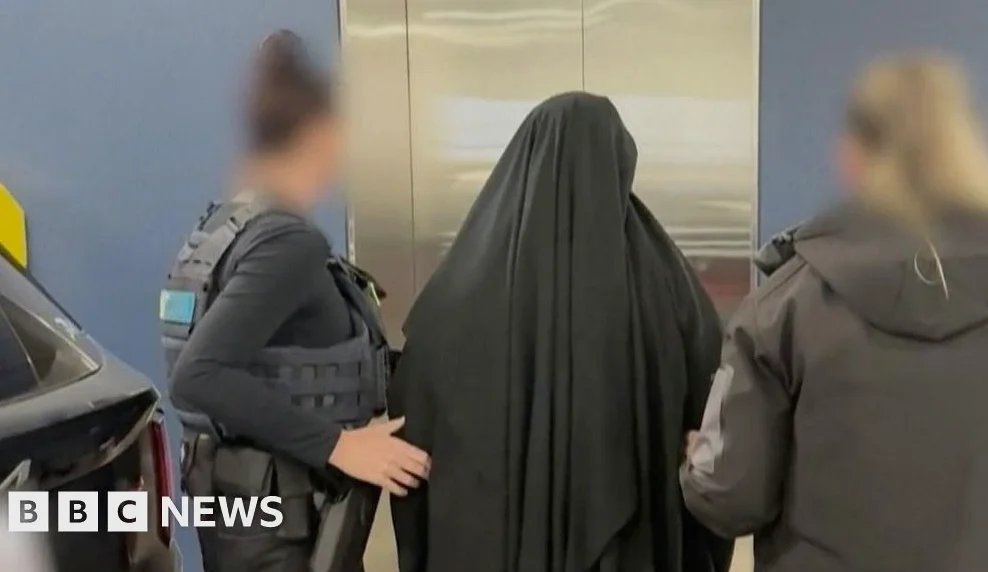
Australian police said a woman with links to the Islamic State (IS) group has been charged with being a member of a terrorist organisation and entering a declared conflict zone after returning to Australia from Syria last year.
Charges and Legal Proceedings
The 34-year-old, identified by local media as Rayann El Houli, arrived in Australia in September along with another woman and is set to appear in a Melbourne court on Thursday, according to police.
Both charges against the woman carry a maximum penalty of up to 10 years in prison, Hilda Sirec, federal police assistant commissioner, told reporters. She added that the woman traveled to Syria in 2013 or 2014 and was detained by Kurdish forces in 2019, being held in Syria’s al-Hawl camp.
Arrival of Women and Children
The announcement comes after two groups of women and children arrived in Australia this month after spending years in the al-Roj camp in north-east Syria, where families of IS fighters have been held since 2019.
Three of the women who returned this month also face various charges, including crimes against humanity. Sirec said all the adult women who had recently arrived in Australia were being investigated, emphasizing that “a period of time without charges being laid is not an indicator that investigations have ceased.”
A mother and daughter. Kawsar Ahmad and Zeinab Ahmad. Who arrived in Melbourne as part of a group at the beginning of the month, have been charged with enslavement and using a slave. The mother, Kawsar Ahmad, is also accused of slave trading.
Another woman, Janai Safar, who arrived in Sydney, was charged with entering and remaining in a declared conflict zone and joining IS.
Political and Public Reactions
The return of these women and children has sparked a heated political debate in Australia. The government has stated it provided no assistance for their return, and Prime Minister Anthony Albanese has insisted, “if you make your bed, you lie in it.”
Advocates, however, argue that Australia must uphold the right to return for these individuals and that the children, in particular, should be supported and not made to pay for the decisions of their parents.






Comments
No comments yet
Be the first to share your thoughts