

 BBC
BBC 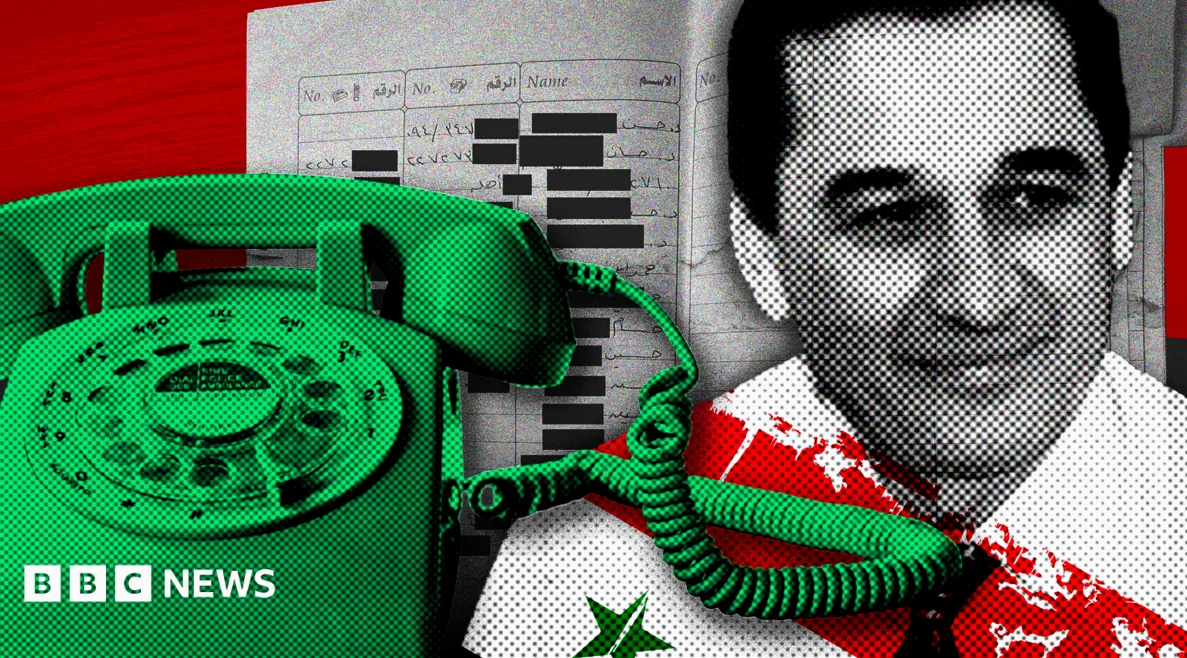
In an abandoned luxury apartment in Damascus, armed men in military fatigues searched through designer clothes and documents, as the living room floor, under a crystal chandelier, had dozens of photos of a man identified as Hussam Luka, known as ‘The Spider.’
A Hidden History
Luka, sanctioned by the UK, US, and European Union, was head of Syria’s most powerful civilian intelligence agency. He vanished in December 2024 when Assad was toppled. In his apartment, a notebook with blue handwriting listed names of shopkeepers, doctors, military officials, and Luka family members. This could help track him down or uncover his crimes.
War Crimes and Allegations
During the Syrian civil war, Luka’s phone number was spray-painted on walls in Homs. In 2011, the war began with Assad’s harsh security operation on pro-democracy protests. Luka, as head of the Political Security Directorate, was tasked with reclaiming Homs from rebels. Residents, including former rebel fighter Motaz al-Zaydi, described dire conditions and the appearance of Luka’s number for safe passage.
Some who called the number were never seen again, according to al-Zaydi and others. Luka was known for his vast network of informants, earning him the nickname ‘The Spider.’ He allegedly oversaw the Eid Massacre in 2015, where 28 people, including 17 children and four women, were killed. The Syrian Network for Human Rights documented the incident. Luka was after the event and became head of the General Security Directorate (GSD) by the time of the administration’s collapse.
Justice and Accountability
There are widespread calls on social media for former senior officials to be held accountable. Syria’s Attorney General, Hassan al-Turba, stated the government had launched a lawsuit against Luka for premeditated murder, torture, and death resulting from torture. A warrant has been circulated domestically, with efforts to secure international extradition ongoing.
Mohammed Towakatli, whose son Wael was among the victims of the Eid Massacre, wants Luka and other senior administration officials to be returned to Syria and executed. ‘They look like humans but have no humanity in them at all,’ he said.
The BBC tested 155 numbers from the phone book found in Luka’s apartment, identifying 51 active numbers. Calls to military commanders and relatives were unsuccessful, with most denying knowing Luka or his family. A BBC reporter, previously on a GSD wanted list, traveled to Syria to meet some of those listed.
Doctors in Aleppo and Damascus acknowledged treating Luka or accompanying his mother on medical trips to Russia but refused to share more information. A guard for Luka’s apartment block eventually provided the number for a man known as Mahmoud, who served as Luka’s personal bodyguard. After weeks of failed attempts, a meeting was arranged at a hotel in the early hours of the night.
Mahmoud, described as broad-shouldered and physically imposing, appeared cautious and considered each answer carefully. He expressed anger with Luka for leaving certain details unaddressed.





Comments
No comments yet
Be the first to share your thoughts