

 BBC
BBC 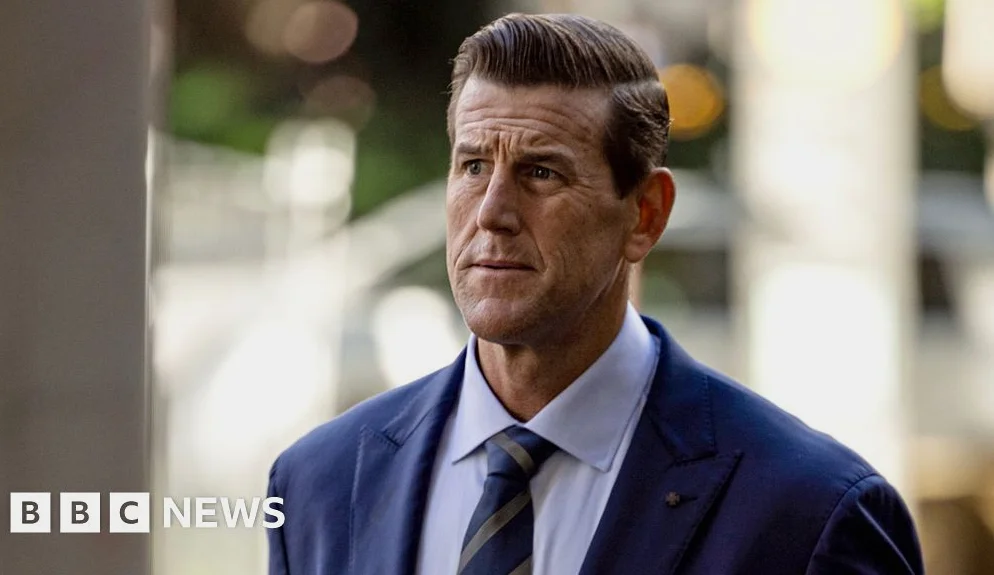
Ben Roberts-Smith, the most decorated living soldier in Australia, was quietly escorted off a plane at Sydney airport and into a police car on Tuesday, charged with five counts of war crimes. The former Special Air Service (SAS) corporal and Victoria Cross recipient, who left the Australian Defence Force (ADF) in 2013, now faces life in prison if found guilty of the alleged murders of unarmed Afghan detainees.
The Allegations and Legal Battle
Roberts-Smith denies all wrongdoing, calling the allegations ‘egregious’ and claiming they are driven by spiteful and jealous peers. His case is the result of a high-profile civil defamation case from 2023, in which a Federal Court judge ruled that claims of four murders were substantially true. The ruling was upheld on appeal, leading to the criminal charges.
The legal battle spanned seven years and cost millions of dollars, earning the nickname ‘trial of the century.’ While allegations of domestic violence and bullying were dismissed, the ruling on the murder claims has now moved the case into the criminal area.
A Global First
Roberts-Smith is believed to be the first Victoria Cross recipient charged with a war crime. Deane-Peter Baker, a special forces ethics scholar, said, ‘We’ve never seen this before.’ The prosecution of such a decorated veteran is an extraordinary moment for the globe, as well as for Australia, which has long celebrated the exploits of its military.
Professor Donald Rothwell, a leading expert in international law, stated that the case is a ‘very significant cultural and social moment’ for a country that has historically placed great value on the contributions of its defense forces.
The Investigation and Legal Challenges
The investigation into Roberts-Smith was the culmination of a five-year probe by the Office of the Special Investigator (OSI), a body established after the 2020 Brereton Report found ‘credible evidence’ that elite soldiers unlawfully killed 39 people in Afghanistan. The OSI has launched 53 investigations, but only one other person, former SAS soldier Oliver Schulz, has been charged so far.
Ross Barnett, director of investigations at the OSI, said the investigation faces ‘challenging circumstances,’ including limited physical evidence and no cross-border policing cooperation. ‘We can’t go to that country, we don’t have access to the crime scenes… we don’t have photographs, site plans, measurements, the recovery of projectiles, blood spatter analysis… we don’t have access to the deceased. There’s no post-mortem,’ he said.
Peter Stanley, former principal historian at the Australian War Memorial, noted that military culture makes it difficult for soldiers to testify against each other. However, some witnesses have come forward, believing their duty is to the truth rather than to their comrades.
Barnett said Roberts-Smith’s arrest is a ‘significant step,’ but the OSI is committed to completing its remaining investigations ‘expeditiously.’
Rothwell said the case presents unique challenges for Australia’s legal system, which has no contemporary experience with war crimes trials. The trial will face logistical difficulties, including coordinating witnesses and dealing with prejudicial information already in the public domain from the civil case.
Given the complexity and delays in Australia’s legal system, Rothwell said a trial is ‘most definitely’ years away. Schulz, who was charged in March 2023, will not face trial until next year.
The case is testing the nation’s military legacy, which has long been associated with the Anzac spirit – a set of values rooted in bravery, loyalty, and fairness. The ongoing saga has raised concerns about the public’s faith in the defense force and has caused distress among its members.





Comments
No comments yet
Be the first to share your thoughts