

 BBC
BBC 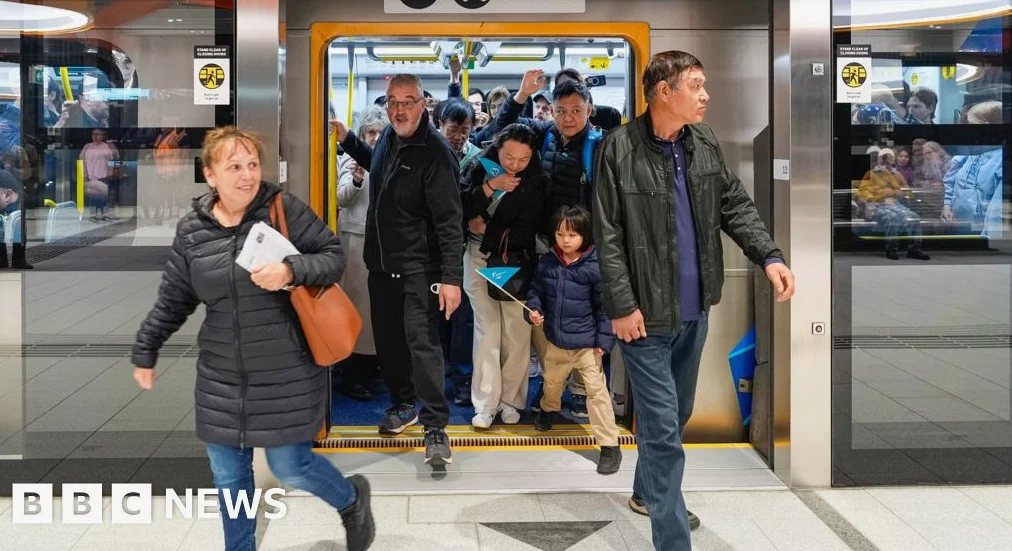
Victoria and Tasmania have taken the historic step of offering free public transport in response to soaring fuel prices, which have been driven by the conflict between the US, Israel, and Iran. The measures. Which apply to different periods. Aim to encourage residents to use public transport instead of driving to ease the strain on fuel supplies and prices.
Free Travel in Victoria and Tasmania
Victoria’s Premier Jacinta Allan announced on Saturday that all public transport—including trains, trams, and buses—will be free for the entire month of April. This decision comes as the state faces record-high fuel prices, which have risen sharply since the start of the conflict. The government says the move is intended to provide immediate relief to Victorians while reducing the demand for petrol.
Tasmania’s Premier Jeremy Rockliff also declared that public transport—including coaches, buses, and ferries—would be free from Monday until the end of June. The island state’s transport minister noted that this would save families A$20 per week on school bus fares, a significant relief for many households.
Both states have framed their actions as a response to the economic pressures caused by the war in the Middle East. Victoria’s Premier stated. ‘This won’t solve every problem. But it’s an immediate step to help Victorians right now.’ Rockliff added, ‘We know the rising cost of fuel is impacting the family budget, and that’s why we have again taken strong and decisive action to protect Tasmanians.’.
Other States Hold Back
While Victoria and Tasmania have moved quickly to implement free public transport, other states have been more cautious; New South Wales, which includes Sydney, has not followed suit. Transport Minister John Graham told broadcasters that the state is keeping its ‘powder dry’ as the situation is expected to last more than a month.
South Australia is expanding the number of senior travel cards and absorbing higher fuel costs, while Queensland has already reduced fares. Premier Roger Cook made a nostalgic reference to the 1980s, noting that ‘Rick Astley was top of the charts when fares were this low in Western Australia back in the 80s.’
According to the Australian Institute of Petroleum, the average price of petrol in Australia has risen to A$2.38 a litre, up from around A$2.09 when the war began a month ago. This sharp increase has put significant pressure on households and businesses across the country.
Global Fuel Price Crisis
The war in the Middle East has disrupted global supply chains, particularly after the effective closure of the Strait of Hormuz, a critical waterway through which about 20% of the world’s oil and natural gas flows. The near-total blockade of international shipping in the strait has led governments worldwide to implement measures to conserve fuel.
Australia’s Prime Minister Anthony Albanese addressed concerns about panic-buying and empty petrol stations, reassuring the public that supply is not the main issue — he emphasized that the sharp rise in international oil prices has had a knock-on effect on domestic fuel prices.
Other countries have also introduced measures to curb fuel use, but In Egypt, shops, restaurants, and cafes were ordered to close early, while non-essential workers are being asked to work from home one day a week. In Ethiopia, non-essential staff in state-owned companies and public institutions are being placed on leave to reduce travel; the Philippines has declared a national emergency, offering subsidies to transport drivers and implementing a four-day work week for civil servants.
Looking Ahead
As the conflict in the Middle East continues, the impact on global fuel prices and transport systems is expected to persist. In Australia, the situation could prompt further policy responses from other states if the crisis deepens. The Australian government has indicated that it is monitoring the situation closely, but it remains to be seen whether other states will follow Victoria and Tasmania’s lead in offering free public transport.
Analysts warn that the prolonged closure of the Strait of Hormuz could have a wider impact on the global economy. The uncertainty surrounding fuel supplies has already led to increased volatility in energy markets, with potential consequences for inflation and economic growth in many countries.
Public Reaction and Economic Impact
The move to offer free public transport in Victoria and Tasmania has been welcomed by many commuters, who are struggling with the rising cost of fuel. However, some critics argue that the measures are only temporary and do not address the underlying issues driving up fuel prices.
For ordinary Australians, the cost of driving has become a significant burden. With petrol prices climbing to A$2.38 a litre, many families are finding it increasingly difficult to afford regular travel. The free public transport initiative in Victoria and Tasmania is expected to help reduce this burden, at least in the short term.
Transport officials in both states have emphasized the importance of using public transport to ease pressure on fuel supplies. They argue that reducing the number of private vehicles on the road can help stabilize fuel prices and reduce the strain on the economy.
Future Considerations
The Australian government is under pressure to provide a coordinated response to the fuel price crisis. While some states have taken independent action, others are waiting to see how the situation develops before making their own decisions.
With the conflict in the Middle East showing no signs of abating, the demand for fuel-saving measures is likely to continue. The success of Victoria and Tasmania’s policies could influence other states to follow a similar path, potentially leading to a broader shift in public transport policy across Australia.
As the world continues to grapple with the effects of the war in the Middle East, the impact on fuel prices and transport systems will remain a key issue for governments and citizens alike. The coming months will be critical in determining how effectively these challenges can be addressed.






Comments
No comments yet
Be the first to share your thoughts