

 The Guardian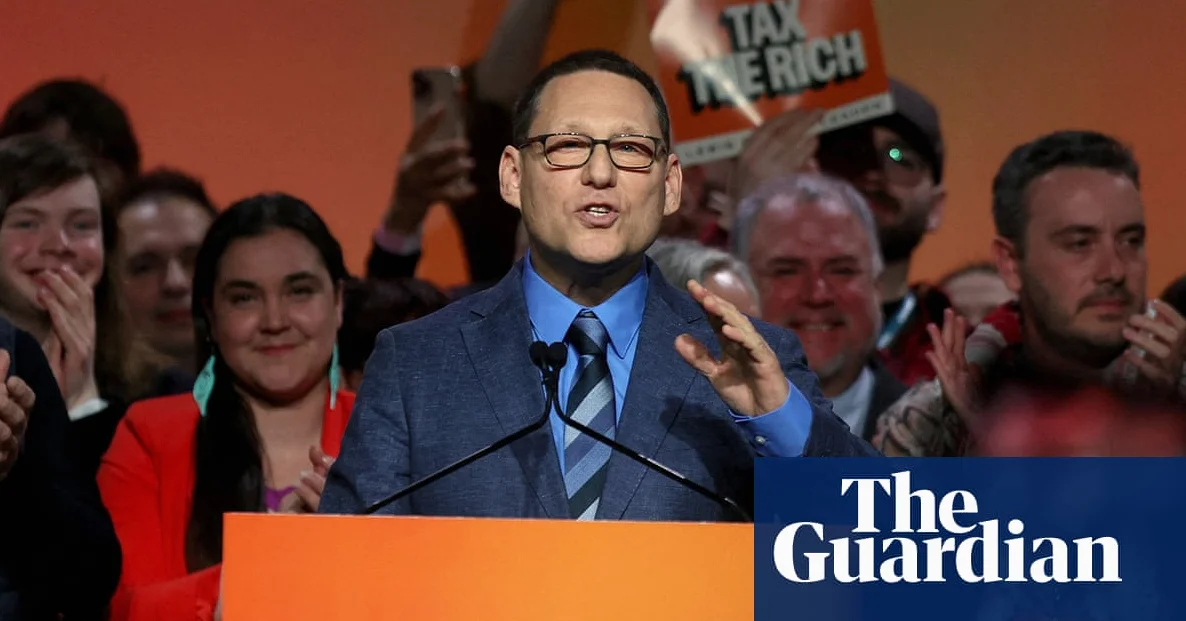
Avi Lewis, a former broadcaster and self-proclaimed socialist, has been elected as the new leader of Canada’s New Democratic Party (NDP), according to The Guardian. The election comes as the party looks to recover from a devastating federal election last year that saw it lose its official party status in Parliament. A record number of members voted in the three-day leadership convention, giving Lewis a first-ballot win that highlighted widespread support for his vision of a ‘NDP comeback.’
Promise of Equity and Tax Reform
Speaking to supporters in Winnipeg after his win, the 58-year-old documentary filmmaker and former television host pledged to center the party around the pursuit of equity. He promised higher wealth taxes, green energy initiatives, and tuition-free education. Lewis said, ‘We can already hear the howls from the establishment: ‘But how will you pay for all this?’ It is time, far past time, to properly tax the corporations and billionaires that have been riding a tidal wave of profits while the 99% have been suffering and struggling,’ he told a cheering crowd.
Lewis took aim at the governing Liberal Party, stating that an NDP government would challenge the dominance of oil companies and ‘grocery barons’ that enjoy billions in profits. He claimed, ‘The NDP will start winning again because we will become that symbol to the 99%, illuminating the darkening sky of these terrifying times with the energising light of collective struggle.’
Challenges Ahead for New Leader
Lewis, the grandson of former party leader David Lewis and son of former Ontario NDP leader Stephen Lewis, faces a daunting set of tasks in rebuilding a party that has just six MPs, weak polling, and about C$13 million in debt. That effort will likely be complicated by the fact that he has never held political office and does not hold a seat in Parliament.
In winning the leadership convention, Lewis beat the former MP Heather McPherson, who placed second, the union organizer Rob Ashton, the British Columbia city councillor Tanille Johnston, and the farmer Tony McQuail. The prime minister, Mark Carney, and the Conservative party leader, Pierre Poilievre, each issued statements of congratulations to Lewis, saying they looked forward to working with the newly appointed leader.
Both Carney’s Liberals and Tories were beneficiaries of the party’s collapse in the last election, which saw the NDP lose 17 of its 24 seats, as well as official party status. Then leader Jagmeet Singh resigned after losing his own riding. Now polling at about 6% federally, the party was dealt another blow earlier this month when the MP Lori Ildout crossed over to the Liberals, leaving it far short of the 12 MPs needed for official party status.
Regional Tensions and Diverging Priorities
Unlike other federal parties, the NDP has deep ties with its provincial counterparts. Lewis appeared on stage with Manitoba premier Wab Kinew, whose NDP party won a strong majority in the province in 2023, and who consistently polls as the country’s most popular premier. But reactions from some provincial leaders following Lewis’s victory highlight the challenges he faces in unifying the party.
While British Columbia’s NDP premier, David Eby, applauded Lewis’s win, he also noted his government’s aim of increasing jobs in the technology and mining sectors – both industries criticized by Lewis. ‘Our priority is lifting up working people and growing prosperity,’ said Eby.
Lewis has looked to strengthen the party’s environmental credentials, calling for a green energy deal and an export tax to be placed on oil and gas shipped to the US. He also wants to invest 2% of Canada’s gross domestic product in the fight against the effects of the climate crisis. Alberta’s NDP leader, Naheed Nenshi, who has clashed with Lewis over oil and gas development, warned that a perceived ideological shift in the federal party would not be helpful to its provincial version in Alberta.
‘It is clear that the direction of the federal party under this new leader, someone who openly cheered for the defeat of the Alberta NDP government, is not in the interests of Alberta,’ he said. In Saskatchewan, the NDP leader, Carla Beck, said she had declined to meet with Lewis, calling his positions ‘ideological and unrealistic.’ She pointed to a video Lewis had posted in which he opposes new pipeline projects.
The interim leader Don Davies said the party was ready to rebuild after a devastating result last April, telling convention attendees that he believes voters are concerned that Carney is becoming increasingly conservative. ‘There is something I’d like to clear up arising from my speech at the press-gallery dinner,’ Davies said on Sunday. ‘I erroneously said, when Prime Minister Carney played hockey, that he was a goalie. I was mistaken. He’s clearly a rightwinger.’






Comments
No comments yet
Be the first to share your thoughts