

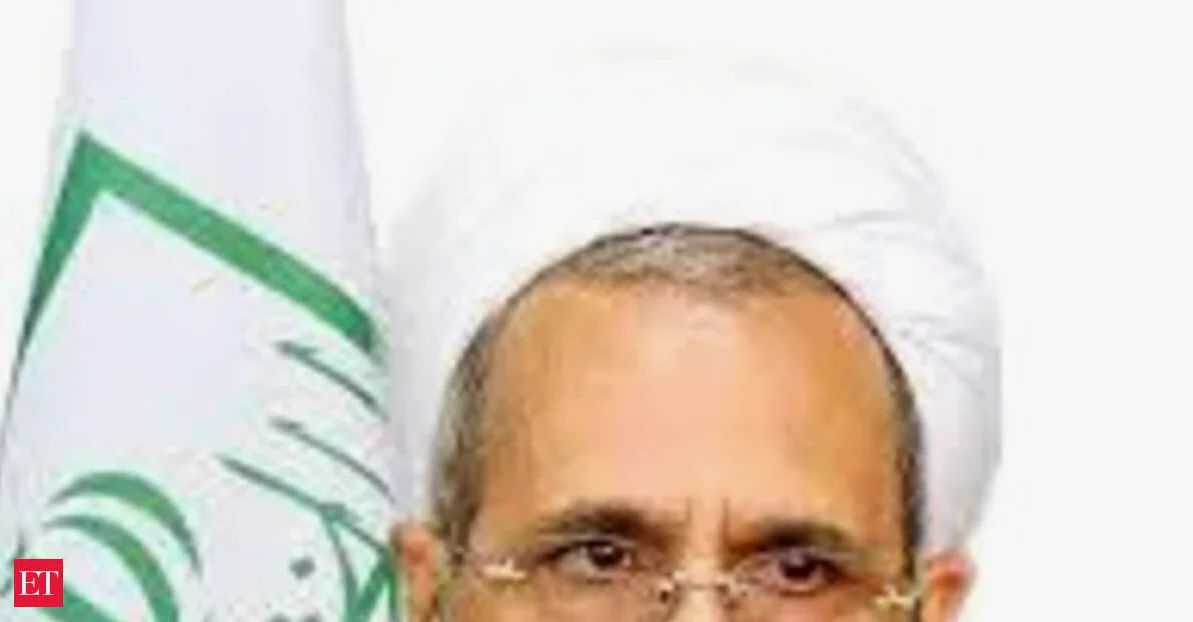
Ayatollah Alireza Arafi has been named as the interim successor to Ayatollah Ali Khamenei, the long-serving Supreme Leader of Iran, following reports of his death in a recent strike. The announcement came amid heightened tensions between Iran and Israel, with both sides exchanging retaliatory attacks in the wake of the alleged killing of Khamenei.
Leadership Transition and Constitutional Framework
According to ISNA news agency, Arafi has been appointed as the jurist member of Iran’s Leadership Council, a body tasked with assuming the duties of the Supreme Leader until the Assembly of Experts selects a permanent successor. This council includes President Masoud Pezeshkian and Chief Justice Gholamhossein Mohseni Ejei, who will collectively oversee the country’s leadership during the transitional period.
Under Iran’s constitution, the Leadership Council is responsible for carrying out the functions of the Supreme Leader until the Assembly of Experts, a clerical body of 88 members, chooses a new leader. The Assembly holds ultimate authority over the country’s political system, armed forces, and key institutions.
Following the announcement of Khamenei’s death, the Iranian government confirmed that a three-member council would assume leadership duties during the transition period. The council includes the president, chief justice, and a jurist from the Guardian Council, as reported by IRNA news agency.
Ayatollah Alireza Arafi: Background and Role
Ayatollah Alireza Arafi, born in 1959 in Meybod, central Iran, has held several key positions in Iran’s religious and academic institutions. He has served as the head of Iran’s Centre for the Management of Islamic Seminaries and as the director of the revered Qom Seminary since 2016. Qom Seminary is one of the most influential religious institutions in Iran and plays a central role in shaping the country’s religious and political landscape.
Arafi is also a member of the powerful Guardian Council, a constitutional body responsible for vetting legislation and overseeing elections. He has previously served as the President of Al-Mustafa International University from 2008 to 2018 and is a permanent member of the Supreme Council of the Cultural Revolution since 2011.
As a prominent Shia cleric and Islamic jurist, Arafi’s appointment reflects the traditional mechanisms of leadership succession within Iran’s religious establishment. His role as a member of the Guardian Council and his extensive academic background make him a figure with deep ties to both the clerical and political spheres of the country.
Impact on Iran’s Political and Regional Dynamics
The death of Ayatollah Ali Khamenei, who had been the Supreme Leader since 1989, marks a significant turning point in Iran’s political history. Khamenei succeeded Ayatollah Ruhollah Khomeini, the founder of the 1979 Islamic Revolution, and played a central role in shaping Iran’s foreign and domestic policies for over three decades.
With the interim leadership in place, the focus now shifts to the Assembly of Experts, which is expected to convene in the coming weeks to select a new Supreme Leader. The process is likely to be influenced by the current geopolitical climate, including the ongoing tensions with Israel and the United States.
Analysts suggest that the selection of a new leader could have far-reaching implications for Iran’s domestic policies and its regional alliances. The new leader will inherit a country that is grappling with economic challenges, internal unrest, and a complex web of international relationships.
According to reports, Iran’s clerical leaders have vowed to avenge the death of Khamenei, and the country has launched a fresh wave of attacks in response to the alleged strikes that killed him. Israel has also retaliated, targeting the capital, Tehran, and the situation remains highly volatile.
As the interim leadership takes shape, the international community is closely watching Iran’s next steps. The selection of a new Supreme Leader is a critical moment that will determine the country’s trajectory in the coming years.






Comments
No comments yet
Be the first to share your thoughts