

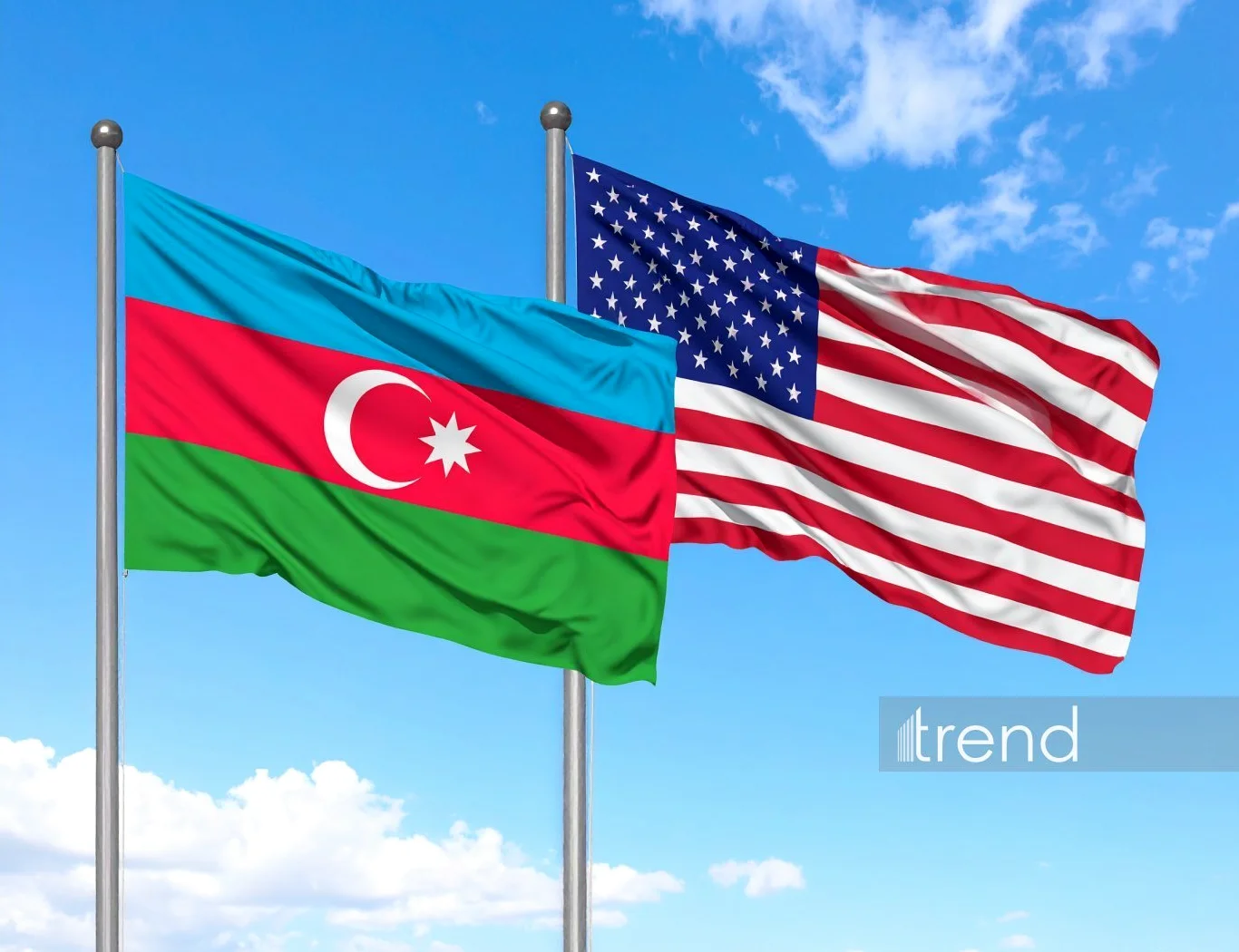
Azerbaijan and the United States have expanded their economic relationship beyond traditional energy cooperation, embracing a complex partnership that includes green energy, digital innovation, and logistics. Trade between the two countries reached $1.55 billion in 2025, with the U.S. emerging as one of Azerbaijan’s top trading partners.
From Oil to Renewable Energy
The foundation of Azerbaijan-U.S. economic relations was laid in 1994 with the signing of the Contract of the Century, a landmark agreement that integrated Azerbaijan into the global energy system. Multinational companies like ExxonMobil and bp brought investment, technology, and international market access to the country. Today, Azerbaijan is exporting natural gas to 16 countries through the Southern Gas Corridor, playing a critical role in European energy security.
Recent efforts have focused on the green transition, with Azerbaijan aiming to add seven to eight gigawatts of renewable energy capacity in the coming years. U.S. expertise in wind, solar, and grid management is expected to be crucial in this transformation. The shift from fossil fuel production to sustainable energy solutions marks a new chapter in the partnership.
Economic Growth and Trade Expansion
Trade between Azerbaijan and the U.S. has grown significantly, with $1.49 billion in imports from the U.S. in 2025, primarily consisting of high-tech and industrial equipment. Azerbaijani exports to the U.S. totaled $61.8 million, reflecting the country’s ongoing industrial and infrastructure modernization.
Beyond energy, Azerbaijan’s non-oil sector is gaining momentum. Industrial parks, agro-processing, and chemical and metallurgical industries are producing more competitive goods. Azerbaijan’s total foreign trade reached $49.4 billion in 2025, highlighting its active role in the global economy.
Investment and Strategic Partnership
Direct investment flows between the two countries have also increased. In the first nine months of 2025, Azerbaijan received $133 million in U.S. direct investment, a 30 percent increase from the previous year. Azerbaijani investments in the U.S. rose to $117 million, a 2.5-fold increase, highlighting the mutual economic interests of both nations.
In February 2026, President Ilham Aliyev of Azerbaijan and U.S. Vice President J. D. Vance signed the Strategic Partnership Charter, outlining new directions for economic cooperation. The agreement emphasizes logistics, innovation, digital transformation, and industrial collaboration, signaling a shift toward future-oriented economic development.
Caleb Orr, U.S. State Department Deputy Assistant Secretary for Economic, Energy, and Business Affairs, stated that over 200 U.S. companies currently operate in Azerbaijan, with Washington aiming to expand bilateral trade further. He highlighted key areas for cooperation, including energy investments, regional connectivity, artificial intelligence, and digital infrastructure.
“The U.S. is exploring ways to strengthen Azerbaijan’s role as a regional digital hub, and the Trans-Caspian route could revolutionize trade across Eurasia,” Orr said. He also emphasized the importance of the Trans-Caspian International Transport Route, or Middle Corridor, which provides an alternative and more flexible route between China and Europe, helping to diversify global supply chains.
Azerbaijan’s digital transformation is being supported by U.S. technology companies, with firms like Visa expanding their presence in the country’s fintech and electronic payment sectors. The integration of artificial intelligence, big data, and data centers is expected to further enhance Azerbaijan’s economic model, using its energy potential alongside technological advancements.
The partnership also holds strategic significance for the broader region. For Europe, Azerbaijan is a reliable energy and transit partner. For Central Asian countries, it provides access to Western markets. For the U.S., having a stable and open-market partner in the South Caucasus is crucial for regional stability and economic integration.
The evolving Azerbaijan-U.S. economic relationship reflects a strategic vision aimed at shaping the future economic architecture of both countries. What began as an oil-driven partnership three decades ago is now centered on innovation, technology, and sustainable development.




Comments
No comments yet
Be the first to share your thoughts