

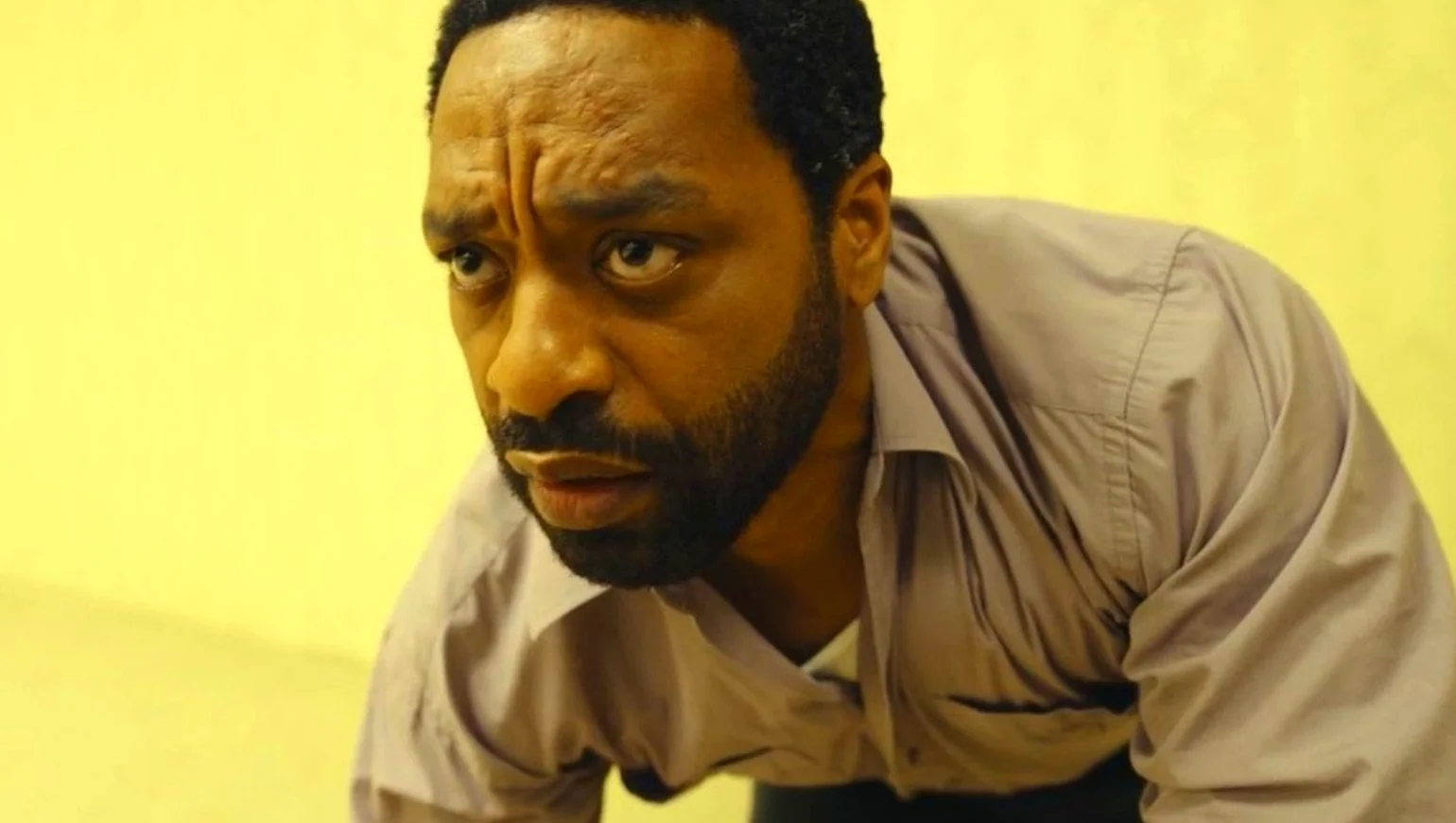
Failed architect and struggling furniture store owner Clark (Chiwetel Ejiofor) discovers a mysterious portal in the basement of his strip mall warehouse that leads to a sprawling, maze-like dimension of drab, yellow-wallpapered rooms. He becomes obsessed with exploring this nightmarish area, dragging his assistant manager Kat (Lukita Maxwell), her boyfriend Bobby (Finn Bennett), and eventually his therapist, Dr. Mary Kline (Renate Reinsve), into the labyrinth with him. The film, directed by 20-year-old YouTuber-turned-filmmaker Kane Parsons, builds atmospheric dread before ratcheting up to true cosmic horror.
Origins of the Backrooms Lore
The concept of the “Backrooms” began as an anonymous 4chan creepypasta post. According to Time Magazine, the idea evolved from a singular image to a YouTube phenomenon before becoming a buzzy summer horror release. The lore is rooted in the internet’s collective imagination and the eerie aesthetics of liminal spaces, places that are neither fully real nor imaginary, like empty rooms and abandoned corridors.
Timeline and Hidden Connections
According to looper.com, the movie takes place in the summer of 1990, with the opening found-footage video tape dated June 19 and CCTV footage of Clark’s first visit captured on the 29th. In the timeline of the YouTube series, this is a key moment, it occurs a month after the Async Research Institute faked the death of employee Peter Tench to cover up their experimental and highly deadly research, only for him to reappear and escape back to the world above. This is not directly referenced in the film, but the failed mission seen in the cold open and Mary’s interrogation by Phil (Mark Duplass) suggest the organization is hiding more than it admits.
Existential Horror and Symbolism
According to GQ México y Latinoamérica, the Backrooms represent a space where reality is distorted and time is irrelevant. As one character warns: “If you’re not careful and step into the wrong area of reality, you could end up in the Backrooms, where there’s nothing more than the stench of old, wet carpet, the madness of monochrome yellow, the endless background noise of fluorescent lights at maximum hum, and about six hundred million square miles of empty rooms randomly segmented, where you will be trapped. God save you if you hear something moving nearby, because, without a doubt, it has heard you.”
Kane Parsons, as both director and creator, captures this inquietude and existential terror. The film’s protagonist, Clark, is a man grappling with personal issues — divorce, anger, and alcoholism — making his descent into the Backrooms both literal and metaphorical. The yellow walls and fluorescent hum serve as visual and auditory symbols of a world gone wrong, a place where even time feels uncertain.
The film ends with Clark disappearing into the labyrinth, leaving the audience to wonder whether he will ever return or if he has become just another lost soul in the Backrooms. The final scenes, including Mary’s interrogation and the shadowy presence of Phil, hint at a larger conspiracy, perhaps the Backrooms are not just a product of the internet’s imagination but the result of real-world experimentation gone wrong.






Comments
No comments yet
Be the first to share your thoughts