

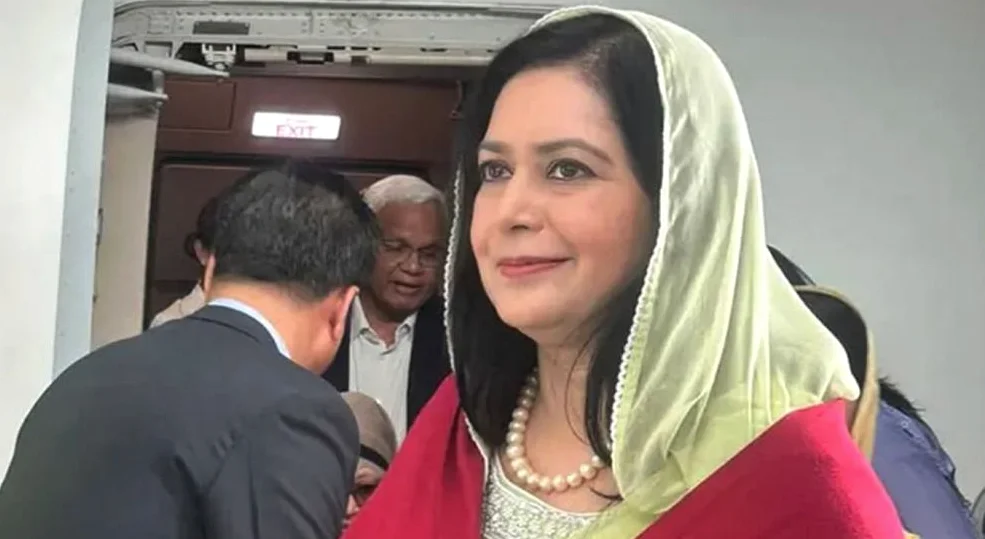
Bangladesh will become a safe and dignified place for all women and girls, according to Dr. Zubaida Rahman, wife of Prime Minister Tarique Rahman, during a special event marking International Women’s Day 2026. Speaking as a special guest at the ceremony, she expressed hope for a society built on equality, dignity, and justice.
Women’s Empowerment and Democracy
Dr. Zubaida Rahman, speaking at the “Shreshtho Odommo Nari” (Outstanding Indomitable Women) award ceremony, emphasized that International Women’s Day 2026 should be observed as a renewed commitment to these values. She referenced a widely known statement by the United Nations, stating, “When women move forward, a nation also moves forward.”
The event was attended by President Mohammad Shahabuddin, who served as the chief guest, as well as State Minister for Women and Children Affairs Farzana Sharmin, Resident Representative of the UNDP, Bangladesh Stefan Liller, and members of the cabinet and parliament.
Dr. Zubaida paid tribute to late President Ziaur Rahman, highlighting his role in establishing multi-party democracy in the country. She noted that the greatest strength of a human being is determination and resilience, and that despite immense oppression and injustice, Khaleda Zia remained uncompromising, patient, and steadfast.
Indomitable Women and Democratic Values
Dr. Zubaida described BNP Chairperson Khaleda Zia as an indomitable symbol of the country’s democratic journey. She said Khaleda Zia’s heart has always wept for the oppressed and persecuted people of the country, and her thunderous voice has consistently spoken out against autocracy and exploitation.
“She is a mother, a fighter, and a strong voice for justice,” Dr. Zubaida said. “She serves as a guiding inspiration for people who believe in democracy.”
Khaleda Zia’s life, according to Dr. Zubaida, offers important lessons about women’s resilience and courage in leadership. She added that Khaleda Zia’s contributions to women’s education and the advancement of democracy have been significant.
Zaima Rahman, granddaughter of former prime minister Khaleda Zia, received the award on behalf of her grandmother. The ceremony recognized the contributions of six women from various fields, including education, social justice, and political activism.
What’s Next for Women’s Rights in Bangladesh
The event marked a significant step in the ongoing efforts to promote gender equality and women’s rights in Bangladesh. With International Women’s Day 2026 serving as a focal point, the government and civil society are expected to launch new initiatives aimed at improving the status of women in the country.
According to recent data, women’s participation in the labor force in Bangladesh stands at around 35%, significantly lower than the global average of 47%. Efforts to increase this number are seen as critical to achieving economic growth and social development.
“The future of Bangladesh depends on the empowerment of its women,” said Farzana Sharmin, State Minister for Women and Children Affairs. “We are committed to creating a society where every woman and girl has the opportunity to thrive.”
The upcoming year will see the implementation of new policies aimed at reducing gender-based violence, increasing access to education, and promoting women’s leadership in politics and business. The government has also pledged to increase funding for programs that support women’s economic independence.
With the backing of international organizations such as the UNDP, Bangladesh is on track to make significant progress in the coming years. The nation’s commitment to women’s rights is seen as a key factor in its broader development goals.






Comments
No comments yet
Be the first to share your thoughts