

 BBC News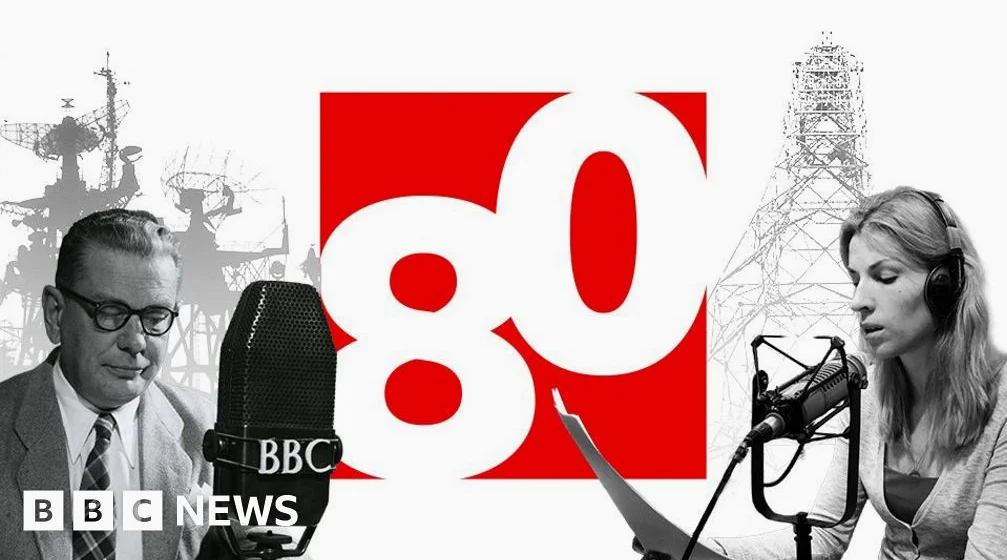
The BBC Russian service has spent eight decades fighting to reach Russian audiences despite persistent efforts by the Russian government to restrict access to foreign media. From jammed radio broadcasts during the Cold War to the recent blocking of its website, the service has remained a vital link to the outside world for many Russians.
Origins in the Iron Curtain Era
On 24 March 1946, the BBC launched its first regular radio broadcasts in the Russian language, aiming to provide an alternative to Soviet state propaganda. By 1949, the Soviet government had already begun jamming these signals, making it difficult for listeners behind the Iron Curtain to access the content.
For nearly half of the 20th century, Russians had to go to great lengths to tune in to foreign broadcasts. Natalia Rubinstein, a former BBC presenter and resident of Leningrad, recalls how people would take radios with them on cross-country ski trips to escape the jamming signals. ‘I still have this picture before my eyes: a person leaning on a tree, with ski poles next to him, listening to the radio somehow nestled on their chest,’ she said.
Jamming techniques were pioneered by Nazi Germany during World War Two, using noise and powerful transmitters closer to the target audience. During the Cold War, the BBC repeated its 90-minute Russian-language bulletin three times a week, ensuring that listeners could catch at least one broadcast.
Strategies to Outmaneuver the Jamming
Despite the jamming, the BBC Russian service found ways to reach its audience. In 1982, after the death of Soviet leader Leonid Brezhnev, the BBC managed to bypass the jamming teams, broadcasting a special program about the event. ‘I believe, for a quite a few minutes, it went through clear because the jammers had assumed that they were off shift and perhaps had abandoned ship for the night,’ said Peter Udell, who ran the BBC’s East European service.
The secrecy of Soviet state media gave foreign broadcasters an advantage. In 1964, the BBC reported the removal of Soviet leader Nikita Khrushchev from power well before it became public knowledge in Russia. By 1987, as Mikhail Gorbachev introduced liberal reforms, the BBC Russian service began receiving letters from Russian provinces and was even picked up by Russian radio stations.
In 1988, BBC Russian listeners tuned in live to UK Prime Minister Margaret Thatcher answering their questions. More than 800 calls came in from across the USSR, with 15 of them broadcast live. This marked a turning point for the service, which eventually moved into its first office in Moscow in 1988.
Modern Challenges and Expansion
As the 21st century progressed, the BBC Russian service evolved from radio to online platforms and social media. By 2022, the service had grown to more than 100 journalists, competing with the best independent media in the country. However, the Russian invasion of Ukraine in February 2022 caused a dramatic shift in the media landscape.
On 4 March 2022, the BBC’s website, along with those of other foreign media, was blocked in Russia, accused of ‘spreading false information of public interest.’ New laws made it illegal to refer to the invasion as a ‘war,’ contradicting the official term ‘special military operation.’
Local BBC Russian staff were forced to leave Russia if they wanted to report on the conflict objectively and safely. A new office was set up in Riga, Latvia, to continue the service. ‘A new generation of Russians are now having to fight to stay connected to the world,’ said Jenny Norton, head of BBC News Russian. ‘And our team has to battle internet blocking and shutdowns to keep on reaching them.’
The Russian government has intensified its efforts to control online access, blocking virtual private networks (VPNs) as they become popular. One poll suggests that 36% of Russians use VPNs to bypass the internet restrictions. Cities across Russia have experienced internet outages, with fears that only a ‘whitelist’ of government-approved services will be available during shutdowns, similar to one used in Iran.
Despite these challenges, Russians continue to find ways to access BBC journalism. The service’s audience has grown to 12 million people a week, proving the continued need for independent media. ‘The need for BBC Russian is as strong as it was in 1946,’ said Rubinstein, highlighting the enduring importance of the service.
The Russian government’s efforts to control information are not new, but they have become increasingly severe in recent years. The blocking of the BBC’s website and the jamming of broadcasts are part of a broader strategy to limit access to foreign media and maintain control over the narrative.
As the BBC Russian service continues to adapt to the changing media landscape, it remains a critical voice for those seeking to stay connected to the world. With the rise of internet shutdowns and increased restrictions on online content, the service’s role in providing an alternative to state-controlled media is more important than ever.
Despite the challenges, the BBC Russian team is determined to continue its mission. ‘Our team has to battle internet blocking and shutdowns to keep on reaching them,’ said Norton, emphasizing the importance of the service in a time of growing media restrictions.
As the digital Iron Curtain continues to tighten, the BBC Russian service remains a vital link to the outside world for many Russians. Its 80 years of defiance against censorship and control serve as a testament to the power of independent media in the face of adversity.





Comments
No comments yet
Be the first to share your thoughts