

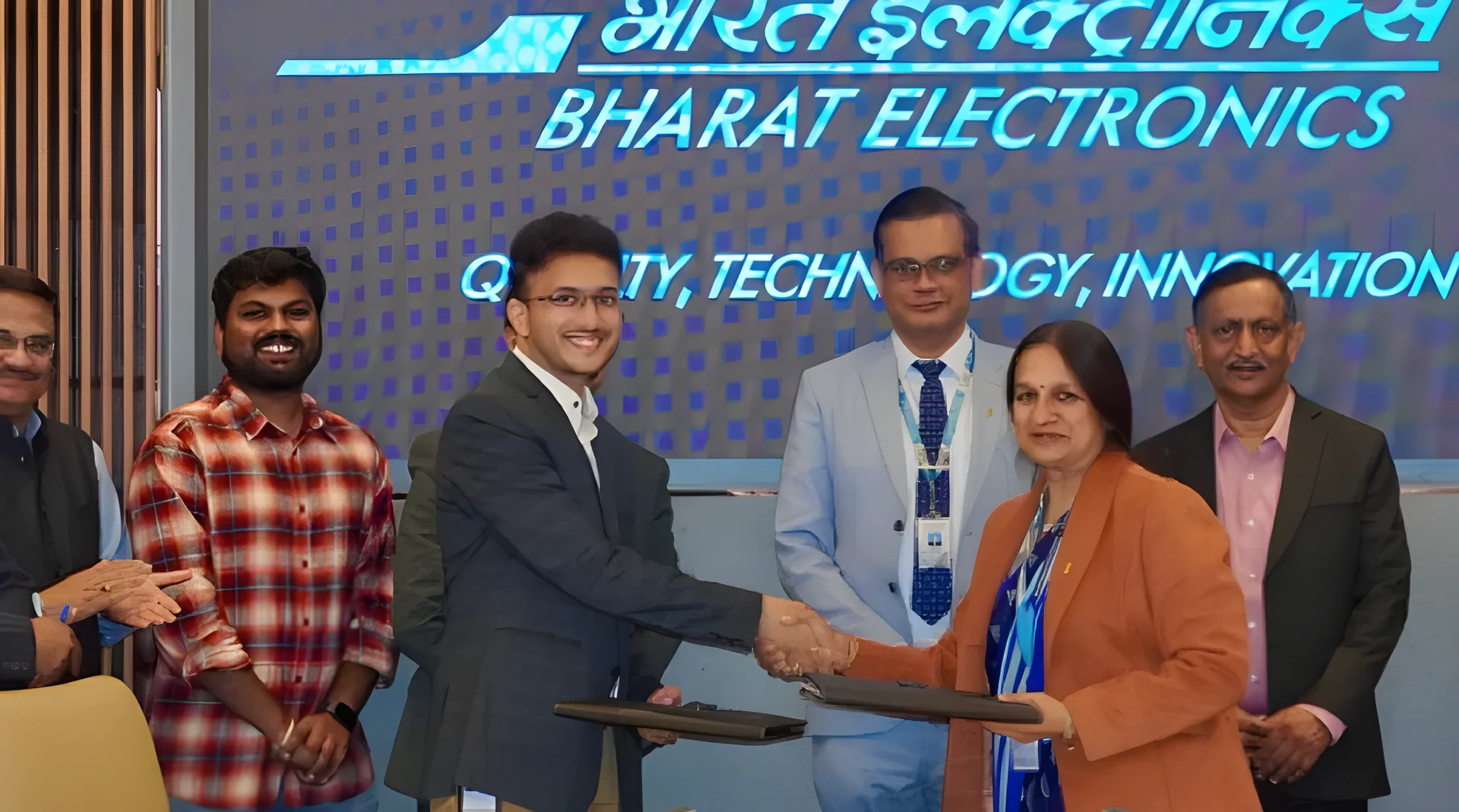
Bharat Electronics Limited (BEL), India’s leading defence electronics public sector undertaking, has signed a memorandum of understanding (MoU) with Bellatrix Aerospace, a space technology startup, to jointly design, develop, and manufacture satellite systems and payloads. The collaboration was announced on Friday and aims to use the strengths of both entities in advancing India’s satellite technology.
Combining Expertise for VLEO Technology
The partnership will combine BEL’s expertise in defence electronics and mission-critical payload development with Bellatrix’s capabilities in satellite propulsion systems and satellite subsystems. The collaboration focuses on developing indigenous satellite platforms designed for operations in Very Low Earth Orbit (VLEO), a region of space that is gaining interest for high-performance satellite missions but requires specialized technologies to operate effectively.
VLEO refers to orbits between 300 and 1,000 kilometers above the Earth’s surface. These orbits offer advantages such as reduced signal latency and improved resolution for Earth observation and communication satellites. However, operating in this region requires advanced propulsion systems and materials to counteract atmospheric drag and maintain orbital stability.
Bellatrix Aerospace, founded in 2015, specializes in developing satellite propulsion technologies and subsystems aimed at enabling advanced satellite missions. The company’s work aligns with India’s growing ambitions in the space sector, which has seen significant investments in recent years.
Strategic and Civilian Applications
The collaboration aims to accelerate innovation and strengthen India’s capabilities in building next-generation satellite systems for both strategic and civilian space missions. This includes applications such as Earth observation, remote sensing, and high-speed communication networks.
“Very Low Earth Orbit opens up a new frontier for high-performance satellite missions, but it demands technologies purpose-built for that environment,” said Rohan M Ganapathy, chief executive officer and chief technology officer of Bellatrix Aerospace. His comments highlight the technical challenges of VLEO and the need for specialized engineering solutions.
The MoU was exchanged between Rashmi Kathuria, general manager and unit head at BEL’s Ghaziabad unit, and Ganapathy in the presence of BEL chairman and managing director Manoj Jain and other senior officials. The event highlights the growing importance of public-private partnerships in advancing India’s space program.
Implications for India’s Space Sector
This partnership is part of India’s broader strategy to become self-reliant in satellite technology. The country has already launched several successful satellite missions, including the Mars Orbiter Mission and the Chandrayaan lunar probe. However, the shift towards VLEO presents new opportunities and challenges.
According to industry analysts, the global VLEO satellite market is projected to grow at a compound annual growth rate of 15.3% from 2023 to 2030. India’s involvement in this sector could position it as a key player in the global satellite industry.
BEL’s involvement in this project is expected to enhance its capabilities in satellite payload development, which is a critical component of modern space missions. Meanwhile, Bellatrix Aerospace stands to gain access to BEL’s extensive experience in defence electronics and systems integration.
The collaboration is also expected to contribute to India’s efforts to reduce its dependence on foreign satellite technologies. Currently, India relies on imported components for many of its satellite systems, and this partnership could help build indigenous alternatives.
With the growing interest in VLEO, the next phase of the collaboration will likely involve detailed design and development work. Both companies have not yet disclosed specific timelines or budget figures for the project.
As the space sector continues to evolve, partnerships like this between established players and innovative startups will be crucial in shaping the future of satellite technology in India and beyond.






Comments
No comments yet
Be the first to share your thoughts