

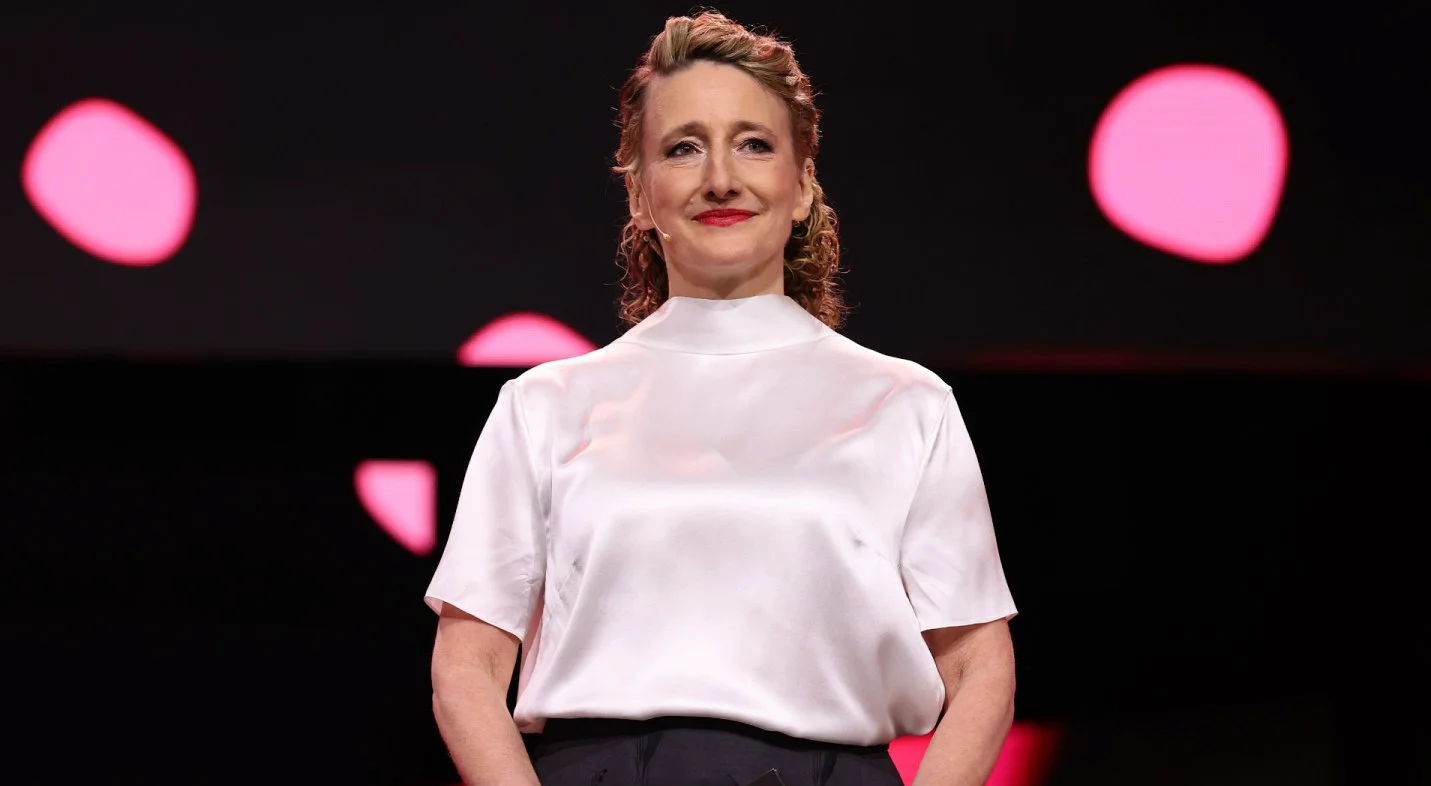
BERLIN — Tricia Tuttle, the beleaguered director of the Berlin Film Festival, has agreed to stay on as head of the festival but under new conditions, including a controversial ‘code of conduct’ that includes an ‘antisemitism taboo,’ according to German media reports. The decision comes amid intense political pressure and public scrutiny following pro-Palestinian statements made at the festival’s awards ceremony in late February.
Controversy Over Political Statements
Tuttle has been under fire since the Berlinale awards ceremony on February 21, when several filmmakers made pro-Palestinian statements from the stage. Syrian-Palestinian director Abdallah Al-Khatib, winner of the top prize in the Perspectives section for Chronicles From the Siege, used his speech to criticize the German government, accusing it of ‘being partners in the genocide in Gaza by Israel.’ In response, German Federal Environment Minister Carsten Schneider walked out of the ceremony.
Tuttle has also faced criticism from right-wing media for a photo taken with the Chronicles From the Siege crew on February 15, which shows her standing next to filmmakers wearing keffiyehs and holding Palestinian flags. None of these actions are illegal in Germany, but the new code of conduct raises questions about its compatibility with free speech laws.
Political Pressure and Cultural Tensions
German conservative media outlet Bild reported that the German Culture Ministry was unable to agree on terms for a separation deal with Tuttle, who has three years left on her five-year contract. Instead, the ministry is pushing for Tuttle to remain as director but under new conditions, including the formation of an advisory board and a code of conduct that all festival participants must sign.
The code, according to Bild, will include a ‘taboo against antisemitism’ that applies to all participants. The German Culture Ministry also reportedly wants Tuttle to ‘attract more Hollywood stars to Berlin.’ However, it remains unclear how enforcing political censorship would achieve that goal.
Calls for reform of the Berlinale have primarily come from the ranks of the conservative CDU party, which is part of Germany’s ruling coalition. CDU parliamentarian Ellen Demuth, who sits on the parliamentary committee on culture and media, told Bild last week that ‘Germany’s most important film festival needs a fundamental overhaul’ and that discussions ‘must ultimately lead to the replacement of Tricia Tuttle as director of the Berlinale.’
In contrast, Sven Lehmann, a member of the Green Party and chairman of the culture and media committee, expressed support for Tuttle’s decision to stay. ‘Especially in light of the campaign waged against her last week, this demonstrates her remarkable strength and deep commitment to the Berlinale and the art of film,’ he said in a statement on his official website on Tuesday. ‘I expect the Federal Government and the Berlinale to develop a viable plan for the future of the Berlinale, including how to deal with polarizing political statements,’ he added. ‘The Berlinale should remain a place of free culture and exchange, not a place of intimidation.’
Support from International Film Community
In response to calls for her dismissal, hundreds of actors, directors, and film industry professionals, including Sean Baker, Tilda Swinton, Vicky Krieps, and Wim Wenders, have come out in support of Tuttle. On Tuesday, 32 global film festival bosses, including Cannes’ Thierry Frémaux, Sundance’s Eugene Hernandez, and TIFF’s Cameron Bailey, published an open letter ‘in support of Tricia Tuttle’s wish to continue as Berlinale Festival Director.’
The controversy surrounding Tuttle and the Berlinale has sparked a broader debate about the balance between free expression and the prevention of antisemitism in cultural institutions. The festival’s future will depend on how effectively it can handle these complex issues while maintaining its status as one of the world’s most prestigious film festivals.
The new advisory board and code of conduct are expected to be implemented ahead of the 2024 Berlinale, which is scheduled to take place from February 15 to 25. The festival’s governing body, the Berlinale Foundation, has yet to officially comment on the changes, but the political and cultural implications of this decision are likely to be far-reaching.





Comments
No comments yet
Be the first to share your thoughts