

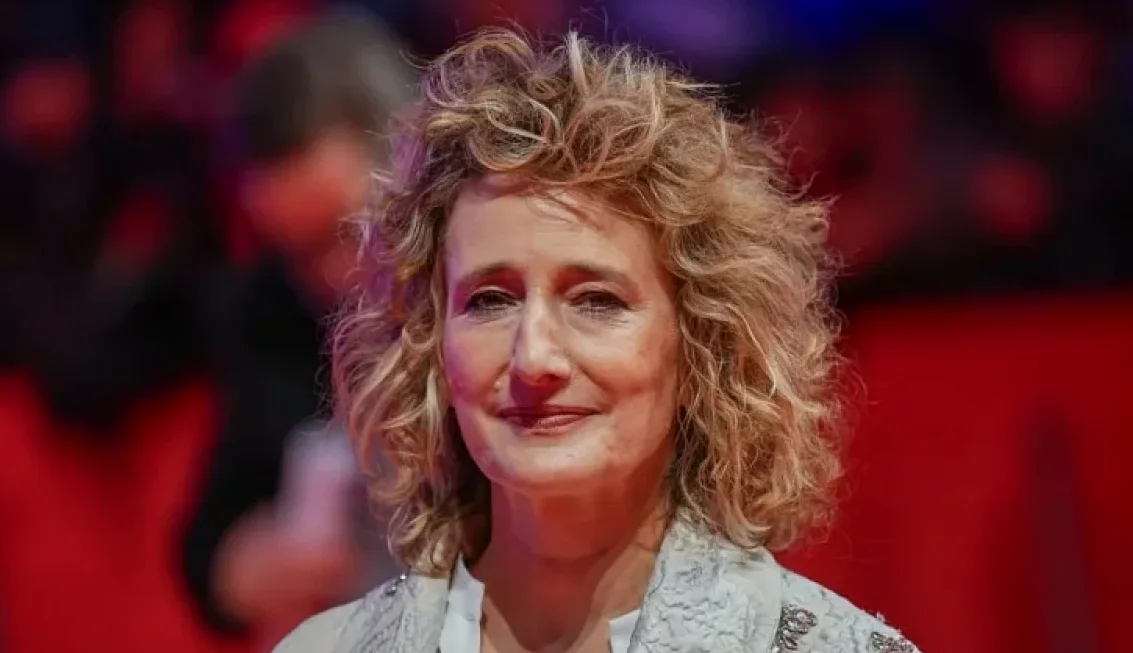
The Berlin International Film Festival, known as Berlinale, is at the center of a growing political and cultural storm, with its director, Tricia Tuttle, facing mounting pressure from German officials over the festival’s handling of the Israel-Gaza conflict. Culture Minister Wolfram Weimar has called an emergency meeting of the state’s culture commission (KBB) to address concerns raised by the festival’s recent events.
Controversy Over Political Statements
The 2024 Berlinale has drawn sharp criticism for allowing anti-Israeli activists to use its platform to make statements supporting Palestine and Gaza. The controversy reached a peak during the festival’s closing ceremony, when several award recipients made political remarks in favor of the Palestinian cause, prompting swift reactions from German officials.
German Environment Minister Carsten Schneider abruptly left the closing ceremony when Palestinian director Abdallah Al-Khatib criticized the German government’s stance on the Israel-Gaza conflict. The incident has intensified the debate over the festival’s role in promoting political discourse and its adherence to principles of free speech and anti-Semitism.
Weimar has stated that the Berlinale should not be used to promote incitement or anti-Semitism, emphasizing that the festival must uphold its reputation as a premier European film event. However, the festival has defended the statements made by its award recipients, asserting that they fall within the boundaries of German freedom of speech laws.
Leadership Under Scrutiny
Tuttle, who has led the Berlinale since 2020, now finds herself at the center of a potential leadership shift. The supervisory board is set to meet on Thursday to discuss her future and potential personnel changes. According to insiders, Weimar and Tuttle reportedly agree on the necessity for a new direction for the festival, but the exact nature of this change remains unclear.
Political turbulence has raised questions about the festival’s integrity and purpose. With the Israel-Gaza conflict dominating global headlines, the Berlinale faces a difficult balancing act between its role as an artistic platform and its responsibility to avoid promoting hate or discrimination.
The festival has long been a hub for political discourse, but this year’s events have drawn particular scrutiny. Unlike previous years, the festival’s programming has been accused of prioritizing political messaging over cinematic excellence, raising concerns about its future relevance and reputation.
Analysts suggest that the Berlinale’s handling of the Israel-Gaza conflict could have lasting implications for its standing in the international film community. The festival, which is one of the most prestigious in Europe, must now handle a delicate path between artistic freedom and political responsibility.
What’s Next for Berlinale?
The upcoming meeting of the KBB is expected to address the contentious points raised by the festival’s recent events. Officials are likely to weigh the festival’s artistic expression against its societal responsibilities, particularly in light of the ongoing Israel-Gaza conflict.
The outcome of this meeting could determine whether the Berlinale will undergo significant changes in leadership or programming. With the festival’s reputation on the line, the decisions made in the coming weeks will have far-reaching consequences for its future.
The Berlinale’s ability to maintain its status as a leading international film festival will depend on its capacity to address these concerns while continuing to provide a platform for diverse voices. As the festival moves forward, it must find a way to balance its commitment to free expression with its responsibility to promote tolerance and combat discrimination.






Comments
No comments yet
Be the first to share your thoughts