

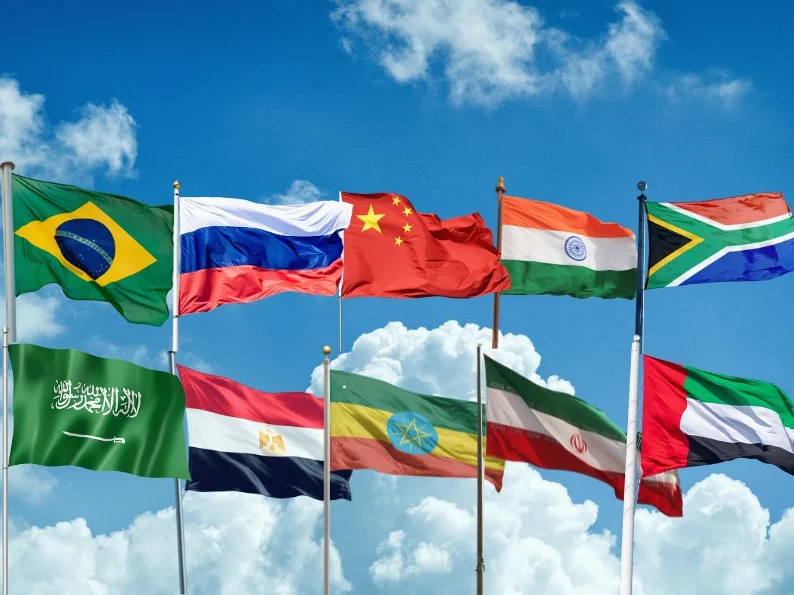
BRICS nations are advancing alternative payment mechanisms that could reshape African energy financing, reducing dependence on the U.S. dollar and Western financial infrastructure. As of early 2026, BRICS Pay—a blockchain-based cross-border payment network—is in pilot phases, while the BRICS Unit, a basket-backed settlement instrument, began limited use in late 2025. These tools aim to bypass the SWIFT system and provide a more stable financial framework for African energy projects.
African energy markets are increasingly vulnerable to dollar fluctuations, which have worsened with the U.S. currency’s decline in 2026. Tariff shocks and monetary uncertainty have intensified the need for alternative financing. BRICS-linked settlement mechanisms are seen as a potential solution to reduce currency risk and unlock new capital for energy transition and supply expansion.
Local currency transactions within BRICS have surged to nearly 90% of intra-BRICS trade, up from 65% just three years ago. This shift is largely driven by large energy contracts between China and Russia. BRICS Pay’s prototype demonstrations in late 2024 highlighted member states’ desire for a payment rail that bypasses dollar-centric infrastructure, offering lower transaction costs and reduced dependency on Western financial systems.
The BRICS Unit, backed roughly 40% by gold and 60% by a basket of member currencies, is not a circulating currency but a unit of account designed to settle cross-border trade. It aims to provide stability without undermining national monetary sovereignty. This approach offers an attractive option for African exporters seeking to mitigate currency volatility.
However, economic disparities among BRICS members and the rejection of a supranational currency authority by countries like India and South Africa present challenges. As a result, the bloc has refocused on practical infrastructure rather than a unified currency, a strategy that may better serve energy stakeholders.
African energy projects face persistent financing gaps due to dollar-denominated debt, which magnifies risk when the dollar strengthens. In 2026, the dollar’s decline has intensified the search for alternatives. BRICS-linked payment systems could reduce exchange-rate risk, making capital costs more predictable for long-term energy investments.
The New Development Bank (NDB) and the upcoming Africa Energy Bank (AEB) are expanding alternative capital channels. The NDB is accelerating local-currency financing and renewable projects across the continent, while the AEB aims to bridge a $30–$50 billion gap in energy funding, with $10 billion in target commitments.
“The critical challenge in investment is the lack of access to finance,” said Rene Awembeng, Managing Partner at Premier Invest, at an energy event in Cape Town in 2024. “We need to find solutions to this to bridge our 200-billion-dollar-per-year financing gap.”
Commodity exchanges and pilot platforms are emerging to facilitate direct trading of oil, gas, and other resources without first converting into dollars. For African resource exporters, this could mean more competitive pricing, faster settlement cycles, and greater integration into global value chains independent of traditional dollar constraints.
For African energy markets, the real value lies in flexibility: new payment rails, diversified funding sources, and insulation from political shocks. Alternative systems like China’s Cross-Border Interbank Payment System and the emerging BRICS Pay network promise resilience against sanctions and financial weaponization—key benefits for countries seeking buffer mechanisms in a contested global order.
While the BRICS Unit remains a settlement instrument and not a sovereign currency, digital currency bridges and Central Bank Digital Currency interoperability are on the agenda. Full deployment of these systems is still years away, but the evolving architecture could position Africa to negotiate better terms and reduce vulnerability to sharp currency swings.
As energy demand grows and capital needs mount, the question for investors and policymakers is not whether BRICS settlement alternatives will replace the dollar—but how they can be integrated into diversified, resilient financing strategies that support Africa’s energy ambitions in a multipolar financial era.



Comments
No comments yet
Be the first to share your thoughts