

 The New York Times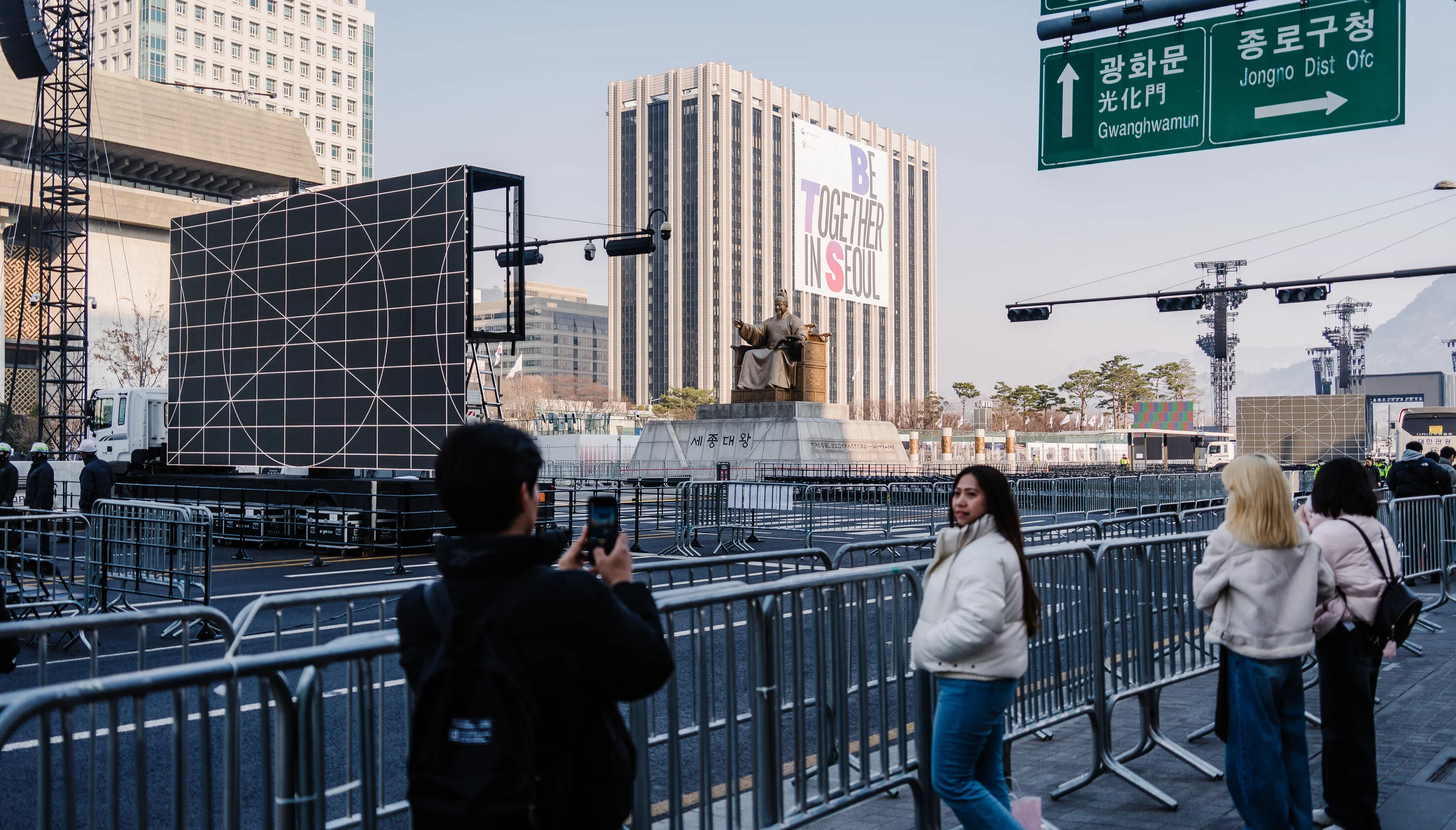
South Korea’s government is mobilizing thousands of security personnel for the highly anticipated BTS comeback concert, but critics argue public resources are being used for a private event. The concert. Scheduled for Gwanghwamun Square in Seoul, is expected to draw 260,000 fans and has become a focal point of national attention.
Disruption and Debate Over Public Use
The concert’s impact has been felt far beyond the event itself; Public transportation in the surrounding area has been suspended, and access to major buildings near the venue is restricted. Some weddings in the area are scrambling to find alternative transportation for their guests — At least one couple is in talks with the Seoul police to use police buses for their event, according to the venue’s receptionist.
Local officials have taken steps to ensure the event’s success, including closing nearby museums and deploying 10,000 safety personnel, with 6,000 being police officers; Additionally, 4,800 security personnel have been sent by Hybe, the company managing BTS. This level of security is typically reserved for high-level government events, sparking debate about the allocation of public resources.
Kwon Yeong-guk. The head of the progressive Justice Party, has raised concerns about the fairness of the situation; In a social media post, he questioned whether the public should bear the inconvenience while private companies reap the profits. His comments reflect a broader sentiment among some citizens who feel the event is prioritizing corporate interests over public needs.
Economic Impact and Government Justification
Despite the controversy. The concert is expected to have a significant economic impact on Seoul; According to an analysis by Bloomberg, the event is projected to generate $177 million in economic activity for the city. This includes spending by attendees, vendors, and the local hospitality sector.
Officials have defended the extensive security measures, citing the need to ensure the safety of the large crowd. The concert is being livestreamed by Netflix, adding to its global reach and potential economic benefits. However, some argue that the government’s response is disproportionate, given that the event is ultimately a private production.
“Such extensive precautions are necessary for the safety of the 260,000 people expected to show up for the concert,” said a government official. “But some are questioning whether the government has gone too far for what is ultimately a private production by Hybe and Netflix.”
Public Reaction and Future Implications
The public reaction has been mixed. While many fans are excited about the concert, others are frustrated by the disruptions and the perceived misuse of public resources. Social media has been abuzz with discussions about the event, with some users expressing support and others voicing concerns.
“I can’t help but question the fairness of an arrangement in which the inconvenience is borne by the public while private companies take the profits,” Kwon Yeong-guk said in his social media post. His comments have resonated with some members of the public, who feel the government is prioritizing corporate interests over the needs of ordinary citizens.
As the concert approaches, the debate over its impact continues. Some experts suggest that the event could set a precedent for how public resources are used in the future for large-scale private events. Others believe the economic benefits justify the measures taken by the government.
The concert is scheduled to take place on Saturday, with fans expected to gather early in the morning. The event is being closely watched not only for its cultural significance but also for the implications it may have on public policy and resource allocation in the future.
As the day of the concert draws near, the discussions surrounding it are likely to continue. Whether the event will be seen as a success or a misstep in terms of public resource use remains to be seen. For now, the city of Seoul is preparing for what is expected to be a historic moment in its cultural and economic landscape.






Comments
No comments yet
Be the first to share your thoughts