

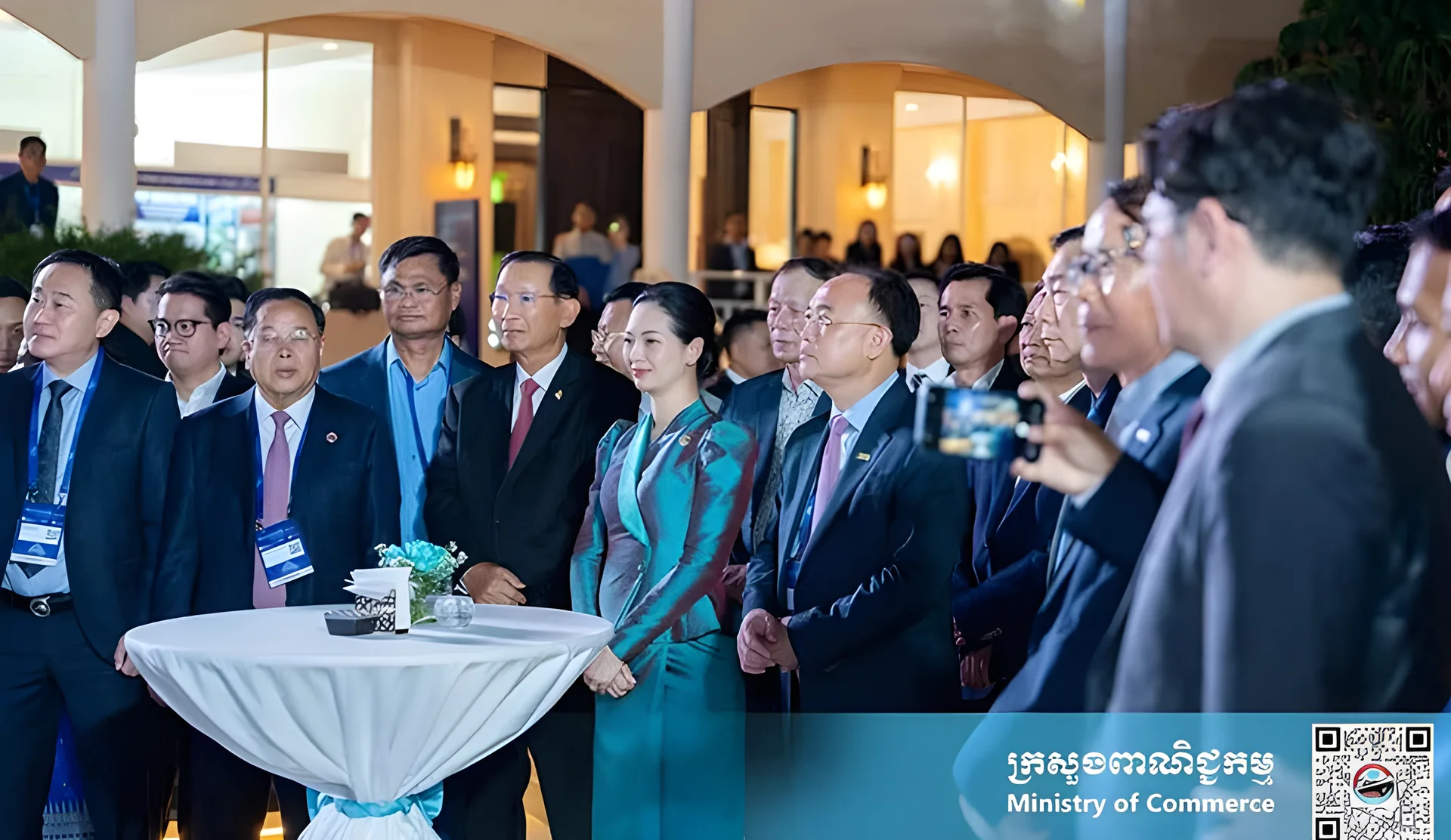
Cambodia’s Minister of Commerce, Cham Nimul, presided over the Cambodia-ASEAN Business Summit 2026 (CABS 2026) networking event on Tuesday evening at the Sofitel Phnom Penh Phokeethra. The event brought together senior government officials, business leaders, and development partners from across Southeast Asia, reflecting the growing importance of regional economic collaboration in the ASEAN bloc.
ASEAN’s Vision for 2045 and Economic Integration
In her opening remarks, Minister Cham Nimul expressed appreciation for the Cambodia Chamber of Commerce’s efforts to strengthen private sector connectivity and deepen regional investment cooperation. She highlighted that the summit’s theme — ‘Transforming ASEAN: Innovation, Integration, and Industrial Evolution’ — aligns closely with the ASEAN Community Vision 2045, which aims to position the region as a dynamic and highly integrated economic bloc by the middle of the century.
According to the minister, ASEAN has considerable untapped investment potential, and she urged businesses to intensify cross-border partnerships and expand regional value chains. ‘Stronger networking and investment linkages are essential to accelerating economic integration and ensuring shared prosperity,’ she said during her address.
Policy Reforms and Investment Agreements
Cham Nimul also pointed to ongoing efforts to enhance ASEAN’s institutional and policy frameworks, including amendments to the ASEAN Trade in Goods Agreement (ATIGA) and the ASEAN Thorough Investment Agreement (ACIA). These reforms are aimed at improving trade facilitation and investor confidence across the region.
The minister emphasized that these agreements are critical for reducing trade barriers and creating a more cohesive economic environment. ‘By streamlining procedures and enhancing transparency, we can build a more resilient and interconnected ASEAN economy,’ she stated.
The ATIGA, which entered into force in 2015, aims to create a single market and production base by reducing tariffs and non-tariff barriers. The ACIA, signed in 2012, seeks to promote a more open and liberalized investment environment across ASEAN member states. Both agreements are key components of ASEAN’s broader economic integration strategy.
Networking as a Catalyst for Business Growth
Cham Nimul described the networking reception as a vital platform for dialogue and collaboration, urging participants to translate discussions into concrete investments and joint ventures that will help shape ASEAN’s next phase of industrial evolution.
‘This event is not just about exchanging ideas, but about forging partnerships that will drive innovation and economic transformation,’ she said. ‘We need to ensure that the momentum from today’s discussions translates into real economic outcomes for our countries.’
The CABS 2026 summit, which is held annually, has become a key forum for business leaders and policymakers to discuss economic trends, investment opportunities, and regional cooperation. This year’s event was hosted in Cambodia, a country that has experienced rapid economic growth and is increasingly seen as a strategic hub in Southeast Asia.
Participants at the event included representatives from major multinational corporations, regional banks, and government agencies. The summit provided a platform for discussions on emerging industries such as digital technology, renewable energy, and sustainable agriculture — sectors that are expected to drive economic growth in the region in the coming years.
With ASEAN’s population exceeding 650 million people and a combined GDP of over $3 trillion, the region represents a significant market for investment and trade. However, challenges such as uneven economic development, infrastructure gaps, and regulatory differences remain obstacles to full integration.
The minister’s call for stronger collaboration comes at a time when ASEAN is also handling the challenges posed by global economic uncertainties, including inflation, supply chain disruptions, and geopolitical tensions. Strengthening regional ties is seen as a way to build resilience and ensure sustainable economic growth.
The CABS 2026 summit is expected to result in several Memoranda of Understanding (MOUs) and investment commitments from participating businesses. These agreements are anticipated to contribute to job creation, technology transfer, and enhanced regional value chains.






Comments
No comments yet
Be the first to share your thoughts