

Unmatched Wildfires Spark Evacuations
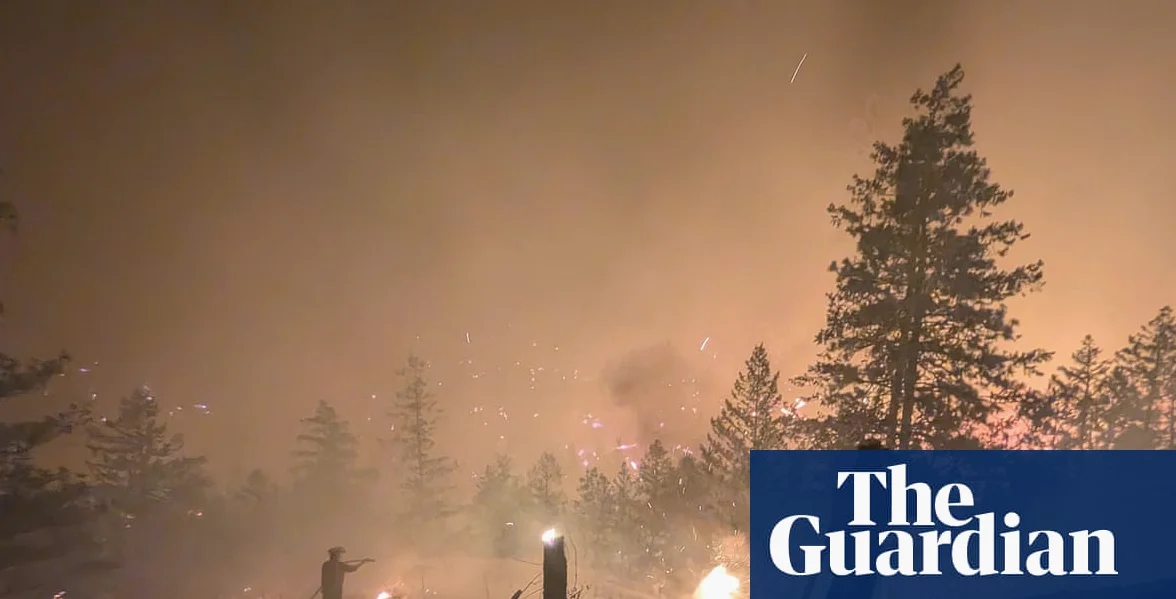
Canada’s federal government has approved urgent assistance for British Columbia after an onslaught of fast-moving wildfires forced about 22,000 people to evacuate their homes. A total of 102 wildfires were reported on Sunday, with nearly half classified as ‘out of control’ by the BC Wildfire Service. Of these fires, 78 ignited during the past week alone.
The entire community of Summerland, located about 30 miles south-west of Kelowna, was evacuated overnight on Saturday. Approximately 12,000 residents fled, along with another 8,000 people from the nearby area of Peachland. About 10,000 others have been warned to prepare for immediate evacuation.
Federal Support and Evacuation Efforts
Emergency Management and Community Resilience Minister Eleanor Olszewski announced the approval of federal assistance in a social media post on Sunday. She directed officials to work with British Columbia to provide shelter and accommodations for displaced individuals. ‘I have tasked federal officials, led by the government operations centre at Public Safety Canada, to work with the province to ensure support reaches those who need it most,’ she said.
Efforts to contain the Bald Range wildfire, which has grown to more than 40 sq miles (100 sq km), have been hindered by its rapid spread. The fire, first detected late on Friday, advanced nearly nine miles toward Okanagan Lake in a short time. British Columbia Premier David Eby declared a state of emergency on Saturday, describing the fire as ‘like a bomb going off.’
Climate Conditions and Fire Intensity
Cliff Chapman, the BC Wildfire Service’s director of provincial operations, attributed the ‘explosive’ fire conditions to the prolonged hot and dry weather the province has experienced this summer. Forecasted thunderstorms could exacerbate the situation with lightning. Jennifer Pascoa, a resident of Summerland, recounted the frantic evacuation: ‘It happened so quickly. We came home from the beach, we saw the plume of smoke, and then within an hour, the sky was covered in dark, black clouds.’
Firefighting operations have faced challenges from thick smoke and turbulence. The British Columbia Wildfire Service deployed 10 standard helicopters and one night-vision helicopter. The Royal Canadian Mounted Police are investigating a possible fatality in the fire near Summerland.
Mike Flannigan, a professor of wildland fire at Thompson Rivers University in Kamloops, emphasized the increasing severity and speed of wildfires in Canada and the US. Southern British Columbia and the Pacific Northwest have seen little to no rain in the past six weeks, leaving the regions ‘bone dry.’ Flannigan warned that such conditions are driven by human-caused climate change, resulting in higher intensity fires. ‘We’re seeing higher intensity fires today than the past,’ he said. ‘The shorter the timeframe, the more challenging it is.’
Traditional fire management strategies, which assumed no immediate danger if a fire was 20km away from a community, are no longer viable, according to Flannigan. He urged residents in at-risk regions to keep emergency kits ready. ‘If a fire can run 60km in a day, you should be worried about it,’ he added. The Bald Range fire exemplifies how wildfires can now metastasize through the night, with fire management agencies now using night-vision helicopters to combat blazes after dark.
Current conditions suggest that the fire season in British Columbia and the US states of Washington and Oregon may extend into the autumn. Flannigan expressed concern about the future, stating, ‘It looks grim… there’s no rain.’ He noted that Canada may begin to experience ‘fire years’ instead of a summer fire season, similar to California. ‘I’m scared for the coming weeks,’ he said.






Comments
No comments yet
Be the first to share your thoughts