

 The Guardian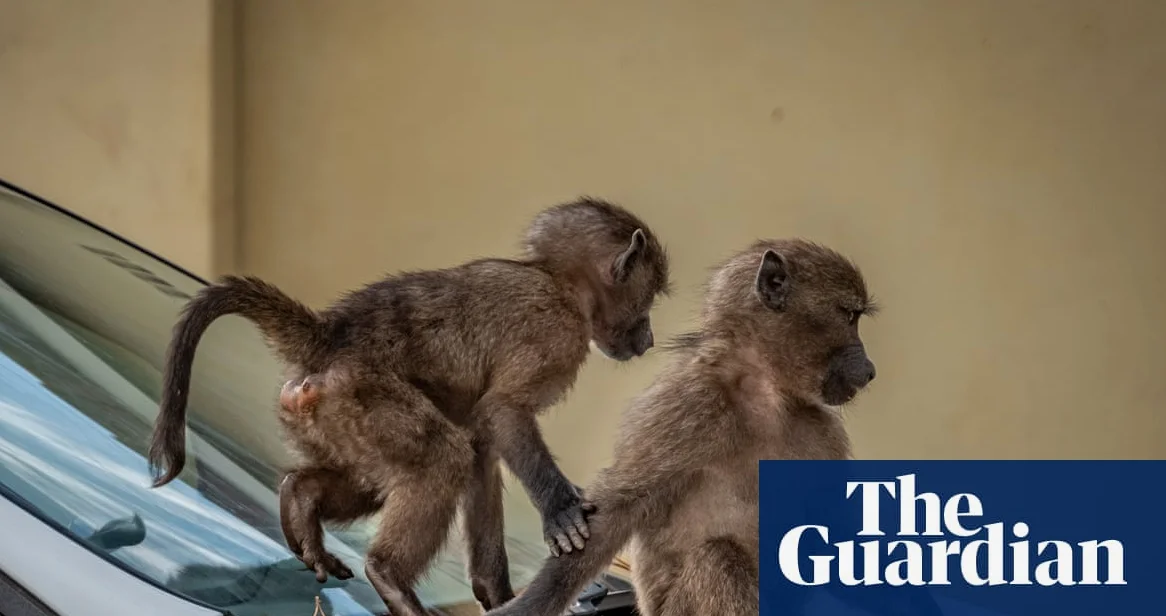
SIMON’S TOWN, South Africa — Chacma baboons leaped from roads to garden walls and rooftops in Da Gama Park, mere feet from children of South African navy families playing in the streets. Some kids laughed. Others kept their distance. Most treated the primates like everyday neighbors.
A few miles away, documentary maker Nicola de Chaud, 61, scrolled through photos of her kitchen ransacked by a baboon. The animal had tossed food everywhere and once hurled one of her dogs across the veranda. In January, a male baboon charged at her and refused to leave her home for 10 minutes. “It has become really, really difficult and very traumatic,” de Chaud said. She moved from Johannesburg to Simon’s Town five years ago.
Conflicts pit residents against activists in a standoff over Cape Town’s expanding baboon population. Troops now number more than 600 across 17 groups, up from 360 in 10 troops at the turn of the century, according to the 2025 Cape baboon management action plan. The city’s population swelled 65% to 4.8 million between 2001 and 2022, swallowing low-lying foraging lands preferred by the baboons.
Without natural predators on the Cape Peninsula, baboons raid urban areas for high-calorie human food. Deaths from human causes jumped from four in 2013 to 33 in 2024, the plan states. Victims include baboons shot, hit by cars, mauled by dogs or electrocuted.
Animal rights advocates demand residents secure bins, lock doors and train dogs to ignore the primates. Lynda Silk, a healer and activist, pushes for prosecutions. “There’s been no successful prosecution for a person shooting a baboon,” she said.
Tom Cohen, an American journalist retired in Cape Town since 2019, calls coexistence impossible. He labels Simon’s Town’s two troops “hopelessly habituated and dependent on human food.” Even after baboon-proofing his home, the animals smashed a bathroom window in February 2025, wrecked a microwave and left feces behind. “The smell lingers,” Cohen said.
Government layers — national, provincial and local — approved fences for some areas and a “zero tolerance” bylaw against harming baboons. Simon’s Town’s rugged terrain rules out fencing, so relocation to a sanctuary tops the list. Euthanasia stays a last resort.
The plan faces court challenges. Activists prefer rangers firing paintballs to chase baboons from homes. The Cape Baboon Partnership, a non-profit, took over ranger management in March 2025. Sandie MacDonald, 54, who co-leads Cape Peninsula Civil Conservation with Silk, worries officials rushed relocation before testing the new rangers. “The baboons are coming into those areas so much less,” she said.
Nerine Dorman, 47, of Welcome Glen, blasts the sanctuary idea. “You might as well just put them down rather than relegate them to this living captivity,” she said.
Rangers won’t fix Simon’s Town, counters Joselyn Mormile, a Cape Baboon Partnership scientist with 15 years studying South African baboons. “That’s a losing battle that we are fighting every day,” she said.
Mormile’s PhD work examined Rooi-Els, a village 20 miles south of Cape Town where residents chose coexistence. Even there, 11 infant baboons died in vehicle strikes over four years. Mortality exceeded wild levels. “I can never promote sharing space,” she said.
University of Cape Town professor Justin O’Riain faults activists for legal hurdles that delayed decisions and allowed one Simon’s Town troop to form. “There’s never accountability for the people who complain about how baboons are managed but do not provide a viable alternative,” he said.
The 2025 action plan dubs the crisis a “wicked problem.” No single fix satisfies everyone. A 2024 protest in Kommetjie saw pro- and anti-baboon groups clash; one person and one baboon got pepper-sprayed.
Table Mountain National Park blankets most mountains over 25,000 hectares. Yet fragmentation leaves baboons spilling into suburbs.






Comments
No comments yet
Be the first to share your thoughts