

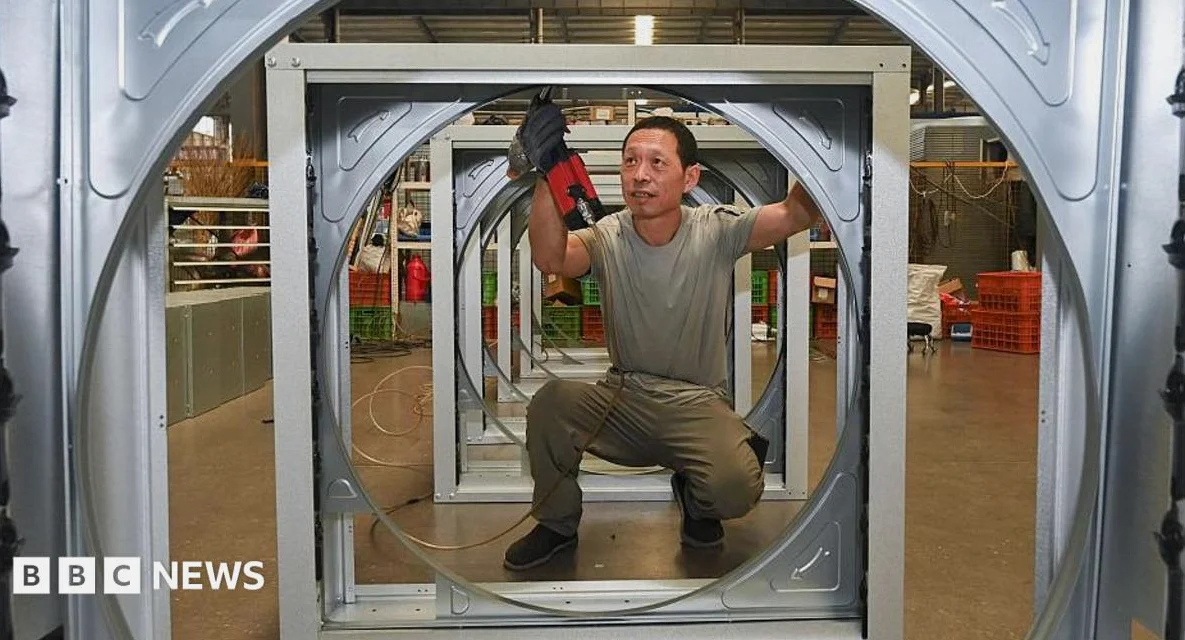
China’s economy grew by 4.3% in the second quarter of 2026, falling short of its revised annual target of 4.5%-5% and marking the weakest quarterly expansion since the end of 2022, according to official data. The slowdown comes amid weak domestic demand, a deepening property market slump, and external uncertainties linked to the ongoing Iran war and global trade shifts.
Domestic Demand and Property Sector Struggles
According to the National Bureau of Statistics, the country’s economic performance was hampered by an imbalance between strong supply and weak demand; Consumer spending remains subdued, with retail sales rising by just 1% in June, a modest improvement from a 0.6% decline in May. Fabien Yip. A market analyst at investment platform IG, noted that businesses are absorbing higher energy and raw materials costs because demand at the till is too weak to bear it.
The real estate sector. Which traditionally accounts for 25-30% of China’s GDP when including related industries, continues to struggle; Housing prices fell by 0.1% in June, continuing a long-running slump that has persisted for years. Developers have defaulted on projects. And new construction has slowed dramatically, according to BBC reports.
External Pressures and Export Volatility
Although China’s exports surged by 27% in June compared to the same period last year, the second quarter growth figures still reflect a slowdown; the Iran war, which began on 28 February 2026, has added to the country’s external instability, affecting oil prices and trade dynamics. The National Bureau of Statistics acknowledged the rising uncertainty in its release accompanying the GDP figures.
In March, the government cut its growth target to a range of 4.5%-5%, the lowest since 1991, offering officials more flexibility in managing the economy. The 4.3% growth in Q2 places China at the lower end of this target range. Analysts had predicted a 4.5% growth rate for the quarter, suggesting the slowdown was widely anticipated.
Economic Policy and Future Outlook
China’s economic challenges are compounded by geopolitical tensions that are changing global trade patterns. The export strength that supported the first quarter appears to be fading, with analysts warning that global uncertainties could continue to weigh on the economy. The country’s 2025 full-year GDP growth was 5.0%, meeting its previous target, but the revised 2026 goal indicates Beijing’s recognition of an emerging slowdown months in advance.
As China moves forward, its ability to stimulate domestic demand and stabilize the property sector will be key to meeting its economic goals. The government has yet to announce major policy responses, but the National Bureau of Statistics emphasized the need to address internal and external uncertainties to maintain long-term growth.





Comments
No comments yet
Be the first to share your thoughts