

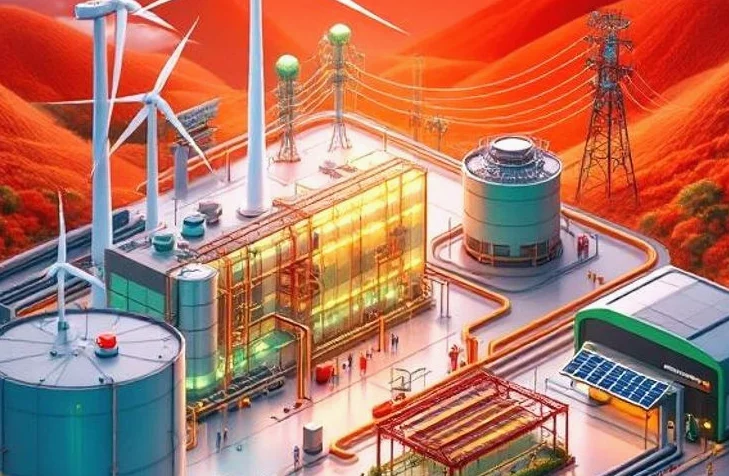
China has set an ambitious target of achieving a €3 per kilogram hydrogen price to accelerate the adoption of fuel cell vehicles, signaling a major push in the green hydrogen economy. This initiative is part of a broader strategy to transition to renewable energy sources and reduce dependence on fossil fuels. The target price aims to make hydrogen fuel more competitive with traditional energy sources, thereby encouraging the development and deployment of fuel cell technology across various sectors, including transportation and industrial applications.
Strategic Objectives and Economic Implications
According to the PwC report, the green hydrogen economy is expected to play a crucial role in the future energy landscape. China’s target of €3 per kilogram hydrogen price is a strategic move to position itself as a leader in the hydrogen economy. This price point is designed to make hydrogen fuel more accessible and economically viable, which could lead to significant growth in the fuel cell vehicle market. By reducing the cost of hydrogen production and distribution, China aims to stimulate investment in hydrogen infrastructure and technology, thereby supporting a sustainable energy ecosystem.
Chinese officials have emphasized the importance of this initiative in the context of the country’s broader environmental and economic goals. The government has been actively promoting research and development in hydrogen technology, with a focus on improving efficiency and reducing costs. This effort is supported by substantial investments in renewable energy, such as wind and solar power, which are essential for producing green hydrogen. The target price of €3 per kilogram is seen as a critical threshold for the widespread adoption of hydrogen fuel cell vehicles, as it would make them more competitive with traditional internal combustion engines and battery-electric vehicles.
Economically, this target could have far-reaching implications. By making hydrogen fuel more affordable, China could potentially reduce its reliance on imported oil and gas, enhancing energy security. Additionally, the development of a strong hydrogen economy could create new job opportunities and stimulate technological innovation. However, the success of this initiative will depend on the ability to scale up production and distribution networks while maintaining cost efficiency.
International Reactions and Comparative Strategies
Germany, for instance, has its own hydrogen strategy, which includes doubling its hydrogen fuel targets. However, according to the CleanTechnica report, Germany’s approach has been criticized for not adequately considering the demand from operators and the cost signals in the market. This highlights a contrast between China’s targeted price approach and Germany’s more generalized strategy. While Germany focuses on expanding hydrogen infrastructure, China is taking a more specific and cost-oriented approach to make hydrogen fuel competitive.
Other countries are also exploring hydrogen as a key component of their energy transition. Japan, for example, has been investing heavily in hydrogen technology, with a focus on developing fuel cell vehicles and infrastructure. Japanese officials have stated that the success of the hydrogen economy will depend on achieving a balance between production costs and market demand. This perspective aligns with China’s approach, suggesting that a clear and achievable price target could be a common strategy among leading nations in the hydrogen economy.
Meanwhile, the United States is also advancing its hydrogen initiatives, with several states and private companies investing in hydrogen production and distribution. However, the U.S. approach is more fragmented, with varying levels of support and investment across different regions. This contrasts with China’s centralized and strategic approach, which could provide a more cohesive framework for developing a hydrogen economy.
Challenges and Opportunities in the Hydrogen Economy
Despite the potential benefits, the hydrogen economy faces several challenges. One of the primary obstacles is the high cost of hydrogen production, which remains a significant barrier to widespread adoption. According to the PwC report, the cost of producing green hydrogen is still higher than traditional fossil fuels, and achieving the €3 per kilogram target will require substantial advancements in technology and infrastructure.
Another challenge is the need for a strong distribution network to transport and store hydrogen efficiently. This requires significant investment in pipelines, storage facilities, and refueling stations. Additionally, the development of hydrogen fuel cell vehicles and other applications will depend on the availability of a reliable and cost-effective supply of hydrogen.
However, these challenges also present opportunities for innovation and investment. The push for a hydrogen economy has already spurred research into new technologies, such as advanced electrolysis and carbon capture, which could help reduce production costs. Furthermore, the growing interest in hydrogen as a clean energy source is attracting private sector investment, which could accelerate the development of the necessary infrastructure and technology.
Local Impact and Public Perception
The local impact of China’s hydrogen strategy is beginning to be felt in various regions. In cities like Beijing and Shanghai, where the government has been promoting the use of hydrogen fuel cell vehicles, there has been an increase in public interest and investment in hydrogen technology. Local businesses and research institutions are collaborating to develop new applications for hydrogen, such as in transportation and industrial processes.
Public perception of hydrogen as a viable alternative to traditional fuels is also evolving. While there was initial skepticism about the practicality and cost-effectiveness of hydrogen fuel, growing awareness of its environmental benefits and the government’s support are helping to change attitudes. This shift in perception is crucial for the long-term success of the hydrogen economy, as consumer acceptance will play a significant role in its adoption.
Non-English sources have highlighted the importance of local reactions in shaping the hydrogen economy. In Japan, for example, there has been strong public support for hydrogen technology, driven by government incentives and a cultural emphasis on environmental sustainability. Similarly, in Germany, local communities are beginning to see the benefits of hydrogen infrastructure, such as reduced emissions and improved air quality, which are contributing to a more positive outlook on the technology.
What’s Next for the Hydrogen Economy
The future of the hydrogen economy will depend on the ability to overcome existing challenges and capitalize on emerging opportunities. China’s target of €3 per kilogram hydrogen price is a significant step in this direction, but sustained investment and policy support will be essential for long-term success. As technology advances and production costs decrease, the hydrogen economy is likely to become more viable and widespread.
International collaboration will also play a crucial role in the development of the hydrogen economy. Countries with different strategies and levels of investment will need to work together to share knowledge, technology, and best practices. This collaboration could help accelerate the transition to a low-carbon energy system and promote the adoption of hydrogen as a clean and sustainable energy source.
Ultimately, the success of the hydrogen economy will be determined by a combination of factors, including technological innovation, economic feasibility, and public acceptance. As China continues to push for a more affordable hydrogen price, the global landscape of energy production and consumption is likely to undergo significant transformation in the coming years.






Comments
No comments yet
Be the first to share your thoughts