

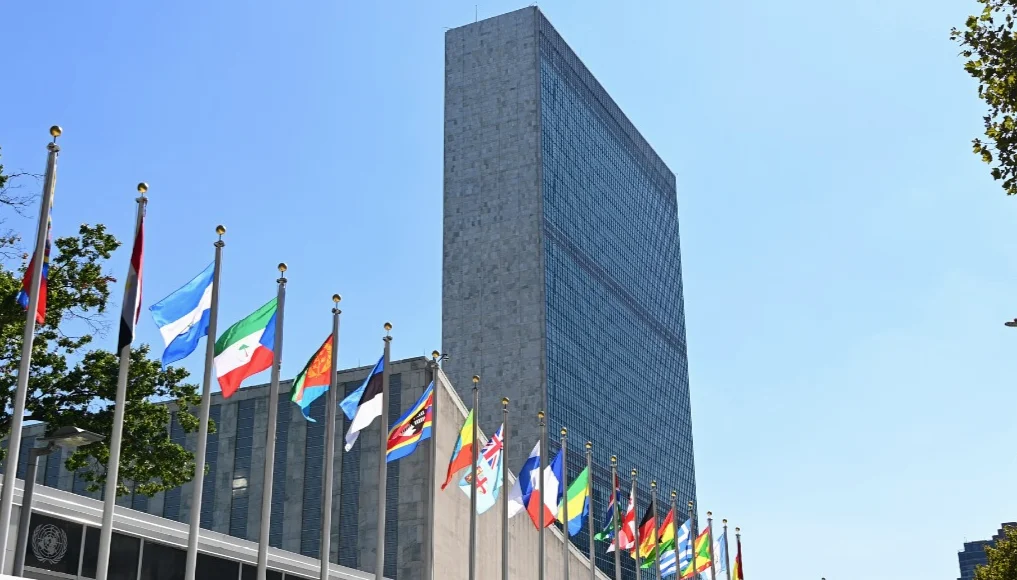
China has urged more nations to support its Global Governance Initiative (GGI) and to work together to revitalize and strengthen the United Nations, Foreign Minister Wang Yi stated during a press conference on Sunday. The remarks were made on the sidelines of the fourth session of the 14th National People’s Congress, where China’s foreign policy priorities are regularly discussed.
Strengthening the UN’s Role
Wang emphasized that the GGI aligns with the common expectations of the international community and reflects the shared aspirations of people across the globe. He noted that China, as a founding member of the United Nations and a long-time defender of its mission, is committed to preserving the UN’s leading role in global affairs.
“Without the United Nations, the world would be worse off,” Wang said, highlighting the critical role the UN plays in maintaining international peace and security. He warned against creating parallel structures outside the UN or forming exclusive blocs, which he called “unpopular and unsustainable.”
Global Governance Initiative Gains Momentum
The GGI, launched in 2021, seeks to promote multilateralism and address global challenges such as climate change, economic inequality, and public health crises. China has increasingly positioned the initiative as a counterpoint to Western-led global governance models, particularly in the wake of the U.S.-led “rules-based order”.
Wang’s comments come amid growing geopolitical tensions and a global push for a more multipolar world order. The GGI has gained traction in recent years, with several developing nations expressing interest in its principles, particularly in areas like trade, technology, and climate cooperation.
According to a report from the United Nations Development Programme (UNDP), 62 countries have formally endorsed the GGI’s core principles as of 2024. However, many Western nations remain skeptical, with some viewing it as a veiled attempt to challenge the existing global governance architecture.
What Analysts Say
Experts suggest that China’s renewed push for the GGI and UN support is part of a broader strategy to enhance its global influence and counterbalance Western dominance in international institutions. “China is using the GGI to position itself as a leader in global governance, particularly in the Global South,” said Dr. Li Wei, a political scientist at Tsinghua University.
“Wang’s emphasis on the UN reflects a desire to maintain the organization’s relevance, but also to align it more closely with China’s vision of multilateralism,” Dr. Li added. He noted that the GGI’s success will depend on how effectively China can secure commitments from other nations.
China’s push for a stronger UN comes at a time when the organization is facing criticism over its effectiveness in addressing global crises. The UN Security Council’s inability to resolve conflicts in places like Ukraine and the Middle East has led to calls for reform, which China has long supported.
Wang reiterated that China will continue to advocate for a more equitable and representative UN, one that reflects the interests of all member states, particularly those in the developing world.
“The United Nations must be strengthened, not weakened. Its central role must be reinforced, not challenged,” Wang said, echoing previous statements made by Chinese officials.
With the upcoming UN General Assembly session in September, China is expected to continue pushing for reforms that align with its vision of global governance. Analysts say the coming months will be crucial in determining whether the GGI can gain broader international support.






Comments
No comments yet
Be the first to share your thoughts