

 Bloomberg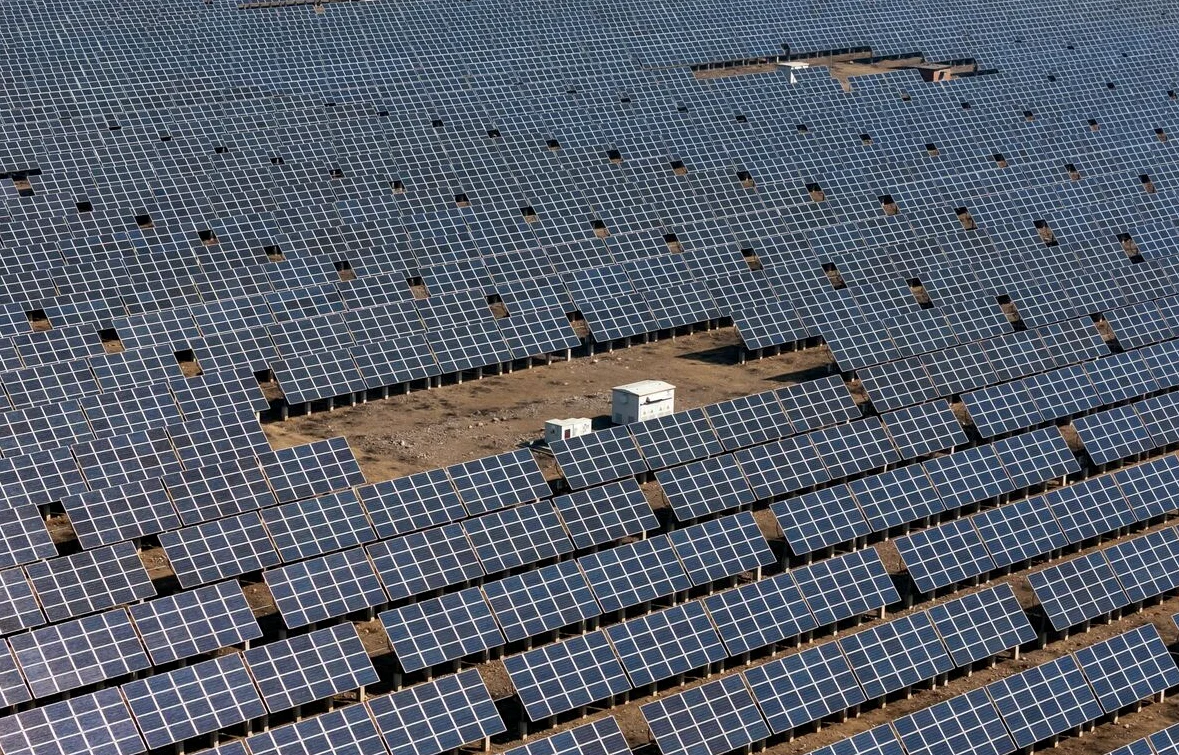
China’s latest five-year plan, revealed at the National People’s Congress, has notably avoided setting ambitious solar energy targets, a move that reflects the sector’s growing challenges following years of rapid expansion. Unlike previous plans that included specific goals for renewable energy, the new document does not establish a clear target for solar installations by 2030, instead focusing on initiatives such as zero-carbon industrial parks and grid modernization.
Strain on the Power Grid
The decision comes as solar power generation in China overtook wind for the first time in 2023, driven by a surge in cheap solar panels. However, this rapid growth has placed significant stress on the national power grid, leading to increased curtailments and reduced returns for solar developers. According to data from the National New Energy Consumption Monitoring and Early Warning Center, solar power use edged down to 94.3% in January 2024, compared to 94.4% the previous year and 94.6% in December.
Muyi Yang, a senior energy analyst at think tank Ember, noted that as renewables reach higher shares in the power mix, the focus naturally shifts toward system integration. ‘That redirects attention to grid expansion and flexibility, energy storage, and other means of balancing variable power generation, like pumped hydro,’ Yang said.
Market Pressures and Recycling Targets
The solar sector is also facing market pressures, with polysilicon prices in China falling by between 6.2% and 12.9% in the week through Wednesday, according to the China Silicon Industry Association. Wafer prices also declined by between 2.5% and 2.9%, while module and cell prices remained flat at 0.71-0.75 yuan per watt and 0.41-0.45 yuan per watt, respectively.
These market dynamics underscore the need for a more structured approach to managing the solar industry’s lifecycle. China has announced plans to upgrade its capability to recycle older solar modules in the coming years, with a target of recycling 250,000 tons by 2027. This initiative aims to address the growing issue of outdated equipment being phased out of service.
Structural Changes in the Industrial Economy
Expanding clean power in the broader industrial economy requires significant structural changes to systems and processes that have historically been designed around fossil fuels. ‘That’s where you start to see more explicit policy attention and new initiatives emerging like the zero-carbon industrial park initiative,’ said Yang.
The government’s emphasis on zero-carbon industrial parks and other grid-supporting measures reflects a broader strategy to integrate renewable energy into the national infrastructure. This approach aims to ensure that the benefits of solar and other renewables can be fully realized without compromising the stability of the power grid.
China’s five-year plan also includes targets for expanding offshore wind power capacity and developing nuclear and pumped hydro energy sources. These initiatives are designed to complement solar power and address the challenges of variability in renewable energy generation.
The shift in focus from solar-specific targets to broader energy integration and infrastructure development highlights the evolving nature of China’s energy policy. As the country continues to grapple with the complexities of a rapidly expanding renewable energy sector, the emphasis on grid modernization and system flexibility is expected to shape the trajectory of China’s energy transition in the coming years.





Comments
No comments yet
Be the first to share your thoughts