

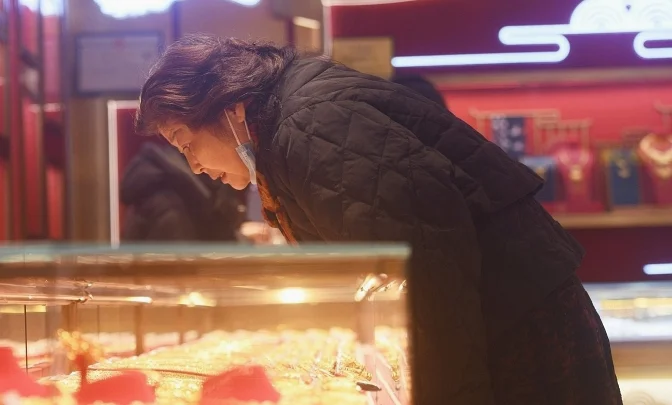
BEIJING — Rose Tian, a 43-year-old high school teacher, stocked up on gold bracelets, necklaces and rings at one of Beijing’s biggest jewelry markets in the week before Lunar New Year. Economic worries and global tensions drove her decision. She has sunk thousands of dollars into the metal over the years for herself and family.
Buyers like Tian propelled China to the forefront of a worldwide precious metals rally. Gold and silver hit record highs before recent sharp drops rattled traders. The World Gold Council reported Chinese purchases of gold bars and coins reached 444 metric tons in 2025, up 29% from the prior year.
Tian remains undeterred by volatility. Her salary has dipped lately, and she eyes gold as the surest shield for savings. “I’m still bullish because I believe gold is a great safe-haven asset,” she said.
China’s central bank joined the fray. Officials boosted gold reserves to 74.19 million ounces by end of January, adding 40,000 ounces that month alone. That marked the 15th consecutive month of buys, according to the State Administration of Foreign Exchange. The January purchase followed a net gain of 860,000 ounces over 2025, after resuming buys in November 2024.
Households have few appealing outlets for cash. Property markets slump. Stocks swing wildly. Bank rates offer little. Gold fills the gap for everyone from seasoned ‘aunties’ to young Gen Z shoppers.
Many snap up gold exchange-traded funds via WeChat or Alipay apps. Those funds saw record inflows in 2025. Gold futures volumes on the Shanghai Futures Exchange also hit an annual peak, the World Gold Council said.
Physical gold draws crowds too. Queues form at jewelry hubs for bars and one-gram ‘gold beans’ in glass jars. But prices plunged on Jan. 30, the steepest one-day drop in decades for gold and silver.
“It’s become more of a speculative frenzy,” said Hamad Hussain, climate and commodities economist at Capital Economics.
Not everyone agrees the swings spell trouble. Wang Qing, chief macroeconomic analyst at Orient Golden Credit Rating, pointed to the central bank’s steady buys amid high prices as a sign of reserve diversification. Gold comprised 9.7% of China’s official reserves by end of 2025, below the global average of 15%, he noted. Short-term dips won’t shift the long-term push, Wang added.
The World Gold Council echoed that view. Even if the bank eases pace during price spikes, China’s purchases signal a drive to diversify swelling reserves, a recent report stated.
Social media buzzes with tales of pain. Retail investors lament buying at peaks and getting “chopped up like chives.” Yet demand rebounds. Hong Miao, a sales associate at Beijing’s Tianya Jewelry Market, reported more foot traffic after the dip. Gold bar sales picked up, though caution lingers. “A ‘wait-and-see’ attitude dominates,” she said.
Not all stick with gold. Jia Pei, a 30-something tourist from Henan province, sold 50 grams last summer at double her purchase price from years prior. Now too pricey, she said. She and friends hoard silver instead. “I’ve begun hoarding silver,” she said. “Even if prices fall, it’s bearable.”




Comments
No comments yet
Be the first to share your thoughts