

 The Guardian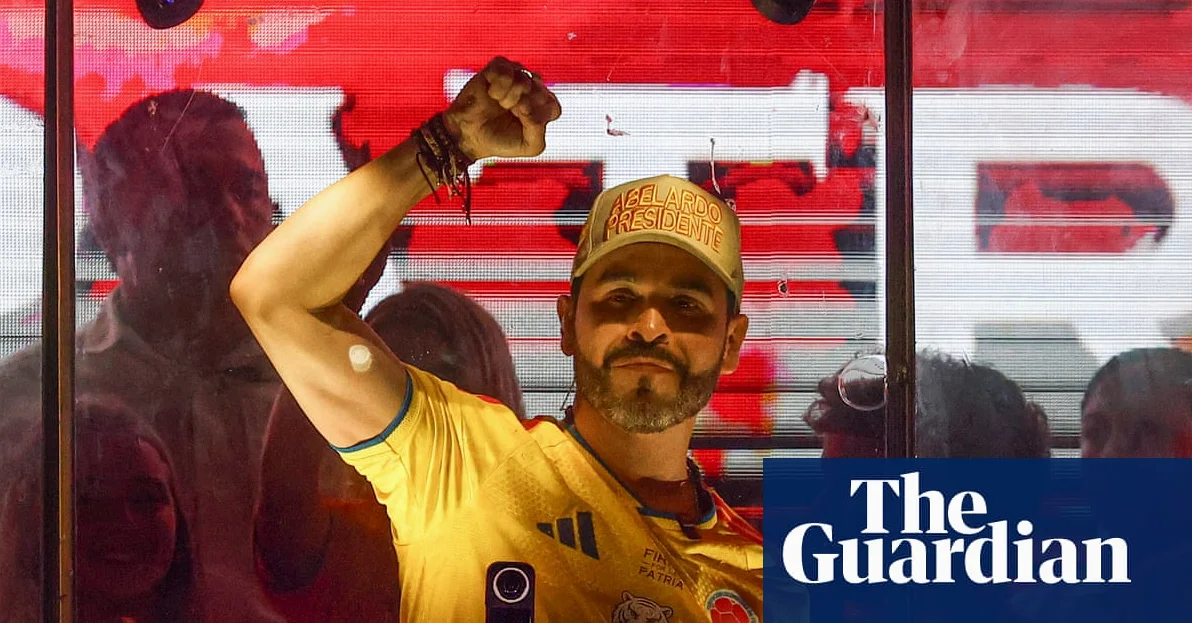
Colombians will cast their votes in a presidential runoff on Sunday that is expected to bring a major change to the country’s armed conflict, which has seen its highest levels of violence since the landmark 2016 peace agreement with the Major Armed Forces of Colombia (Farc).
Contestants and Campaign Platforms
The frontrunner in the election is Abelardo de la Espriella, a far-right lawyer and millionaire businessman who admires former U.S. President Donald Trump. De la Espriella has vowed to abandon President Gustavo Petro’s “total peace” plan, which aims to negotiate the disarmament of all criminal organizations, and instead pursue full-scale military confrontation with armed groups.
His opponent is Iván Cepeda. A left-wing senator and Petro’s chosen successor, who supports the continuation of the “total peace” plan with necessary adjustments. Cepeda led the polls for most of the campaign but was defeated in the first round three weeks ago and has struggled to attract centrist voters since.
Far-Right Momentum in Latin America
The election, in which more than 41 million Colombians are eligible to vote, is expected to deliver another victory for a far-right candidate advocating a hardline approach to crime. This would follow similar outcomes in Peru and Chile, where far-right candidates have gained traction. If De la Espriella wins, only Mexico, Brazil, Uruguay, and Guatemala would remain under left-wing governments in the region.
Sandra Borda Guzmán, an associate professor of political science at Los Andes University in Bogotá, said De la Espriella capitalized on two global trends: positioning himself as an anti-establishment “outsider” and promising quick solutions to violence. He even claimed he would restore state control over territories dominated by criminal groups within 90 days, though he later clarified he never said he would solve the security issue in that timeframe.
De la Espriella, who began his legal career defending leaders of right-wing paramilitary militias, stated that his goal during his first three months in office would be to “capture or kill” 10 major narcoterrorist and organized crime leaders. Guzmán noted that the combination of the international trend favoring anti-political figures and Colombia’s domestic security situation has significantly boosted De la Espriella’s campaign.
Public Opinion and Concerns
Violence in Colombia has remained far below the high levels recorded before the 2016 peace deal, but the past year has been the most violent since the agreement. Miguel Bermúdez, a 40-year-old business administrator from Cartagena, said he plans to vote for De la Espriella because he is an “outsider” despite his history as a lawyer for the wealthy. “For a long time, I’ve been looking for something that feels fresh. I’m tired of that same old political narrative,” he said.
On the other hand, Kátia Outten, a 57-year-old dentist from the island of San Andrés, plans to vote for Cepeda because “he understands the needs of ordinary people.” During his presidency, Cepeda’s backer, Petro, expanded social programs and raised the minimum wage. The poverty rate has fallen to its lowest level since 2012.
Outten also decided not to vote for De la Espriella due to his controversial comments, including a radio interview in which he claimed to have won support among female voters because of the size of his penis. “Women make up just over 50% of the population. If we go out and vote with women’s empowerment in mind, we can show that all of that rhetoric has no basis,” she said.





Comments
No comments yet
Be the first to share your thoughts