

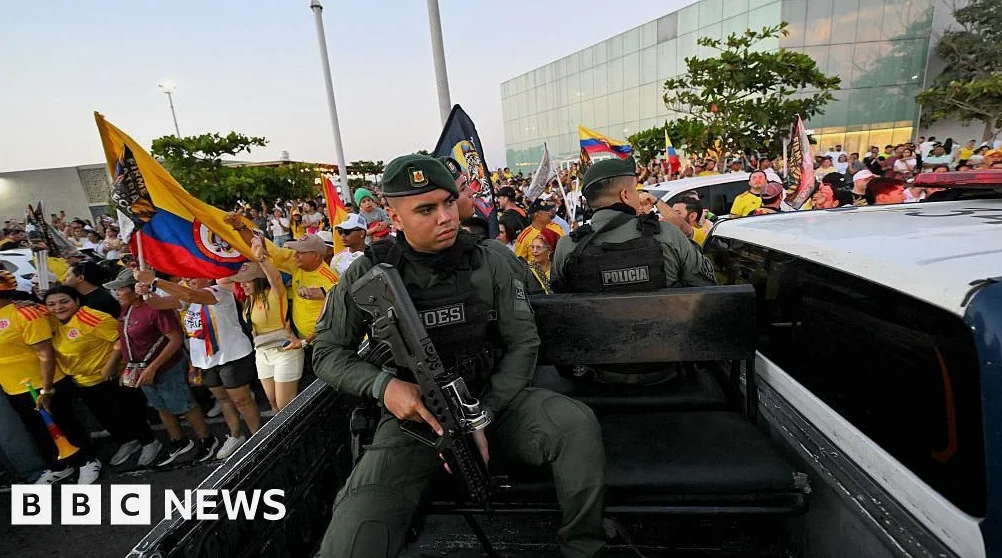
Colombia’s internal conflict, marked by a surge in violence and insecurity, is a central issue in the upcoming presidential election, Over six decades of conflict between armed groups, the state, and cartels has claimed hundreds of thousands of lives, according to BBC and AOL.com.
Armed Group Expansion and Violence
Illegal armed groups, including Major Armed Forces of Colombia (FARC) dissident factions, the National Liberation Army (ELN), and the Clan del Golfo, have expanded their control of rural areas critical to drug trafficking and illegal mining. Membership in these groups has roughly doubled in the last five years. A harsh offensive between the ELN and FARC dissidents near the Venezuela-Colombia border displaced tens of thousands of people last year.
“We had no choice but to leave our things behind. They started placing bombs along the routes people travel,” said one displaced resident, Edilma, whose experience is far from unique.
Candidates’ Visions for Peace
The two presidential candidates offer starkly different approaches to addressing the violence. Left-wing senator Iván Cepeda is seen as the architect of President Gustavo Petro’s “total peace” strategy, which prioritizes negotiation with armed groups. Critics argue the strategy has failed, allowing armed groups to exploit ceasefires to expand their control. Supporters, however, maintain it prevents a larger loss of life.
Cepeda also played a key role in the 2016 peace deal that disarmed thousands of FARC fighters. He has pledged “social transformations that the country urgently cries out for” while promising to “take stock” of the peace strategy and “make the necessary changes.”
His challenger, conservative outsider and right-wing businessman Abelardo de la Espriella—who calls himself El Tigre,has yet to detail his approach, but his campaign is marked by the assassination of a presidential candidate, homicides, kidnappings, and bombings.
Public Concerns and Election Dynamics
Security issues dominate voters’ minds as they prepare for Sunday’s election. The campaign has been shadowed by violence, including the assassination of a presidential candidate. This has fueled public concern about the country’s direction and the ability of either candidate to restore security and stability.
Colombia’s escalating, harsh internal conflict is defining the political setting. As voters cast their ballots, they will weigh the risks of continuing the current strategy against the promise of a new approach, in hopes of curbing the violence that has displaced thousands and claimed countless lives.






Comments
No comments yet
Be the first to share your thoughts