

 The Guardian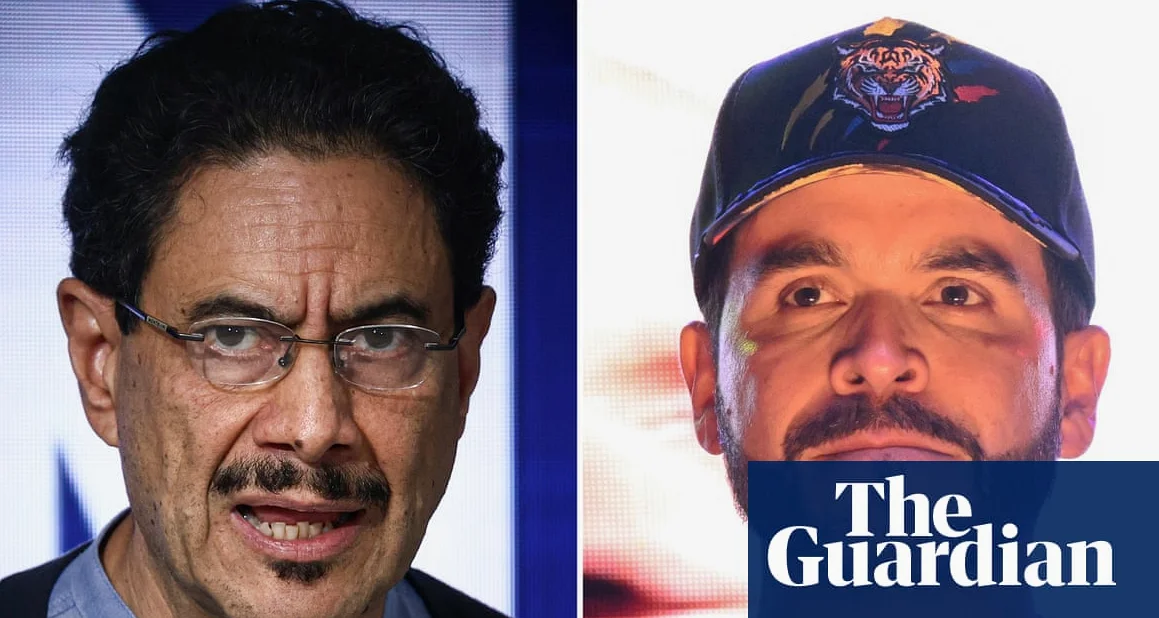
Historical Ties to Paramilitaries
De la Espriella. 47, a far-right admirer of Donald Trump, launched his legal career defending leaders of the United Self-Defence Forces of Colombia (AUC), one of the most notorious paramilitary groups. Cepeda, a 63-year-old leftwing senator, has spent his career exposing the AUC’s crimes after his father, Manuel Cepeda, was assassinated by army officers linked to the group in 1994.
Cepeda filed a criminal complaint against De la Espriella last week, alleging that the lawyer not only represented the AUC in court in the past but may have also recruited members through a foundation he created. De la Espriella denied the accusations. Calling them a “smokescreen. ” and accused Cepeda of maintaining a “narco-political” alliance with guerrilla groups.
Violence Surges After 2016 Peace Deal
Violence has surged in Colombia since the 2016 peace agreement between the government and the Major Armed Forces of Colombia (FARC). The past year has been the most violent since the deal, with a rise in armed group attacks, homicides, kidnappings, and forced displacement. The rightwing senator and presidential hopeful Miguel Uribe Turbay was assassinated during a campaign event in 2025.
Cepeda, who supports a continuation of President Gustavo Petro’s “total peace” strategy, has argued for negotiating with all armed groups, including leftwing rebels and paramilitaries. However, security experts say this strategy has broadly failed. De la Espriella, who leads in the polls after winning the first round, has criticized Petro’s approach and supports a return to military confrontation, despite its historical ineffectiveness.
“This election reflects the reality of a country shaped by drug trafficking,” said Gustavo Duncan, one of Colombia’s leading scholars of paramilitarism. He noted that paramilitary groups were first formed in the 1960s to counter leftwing rebel groups and later became involved in protecting cocaine trafficking routes as the drug trade grew.
Paramilitaries’ Firm Legacy
At its peak, the AUC had more than 30,000 members, according to Duncan. The group was notorious for carrying out massacres designed to terrorize communities. Their tactics included extreme forms of torture, such as rape followed by murder, dismemberment with chainsaws while victims were still alive, and decapitations with axes.
María Teresa Ronderos, a major investigator of paramilitary groups, said the AUC targeted anyone suspected of sympathizing with guerrillas, including peasants, Indigenous people, and Afro-Colombians. They also carried out what they called “social cleansing,” targeting LGBTQ+ people, sex workers, homeless individuals, and drug users.
While the AUC no longer exists, the Gulf Clan—widely considered the country’s most powerful illegal armed group—was founded by former AUC members and inherited much of its territory and trafficking routes.
Eleven Democratic members of the U.S. Congress recently called on the Trump administration to examine De la Espriella’s ties to the AUC, which the U.S. designated a foreign terrorist organization in 2001. They noted the group was responsible for numerous massacres, assassinations, and drug trafficking to the U.S. and other countries.
De la Espriella has denied any criminal ties to the AUC, insisting his work was strictly professional in his role as a lawyer. For his supporters, his past appears less important than his promises of an iron-fist approach to crime, including building private “mega-prisons” in the Amazon and “wiping out” criminals like “cockroaches and rats,” as he has said.
Public opinion on paramilitaries remains divided. Marcela, a former businesswoman in Bogotá, said the groups “kept the guerrillas in check” and served a “purpose” in some ways. Others, like Lucy Vélez, a 38-year-old graphic designer from Manizales, support harsher measures against crime. “People rob, kill, and are back on the streets in a few days,” she said. “I like the idea of being tougher on crime.”






Comments
No comments yet
Be the first to share your thoughts