

 CBS News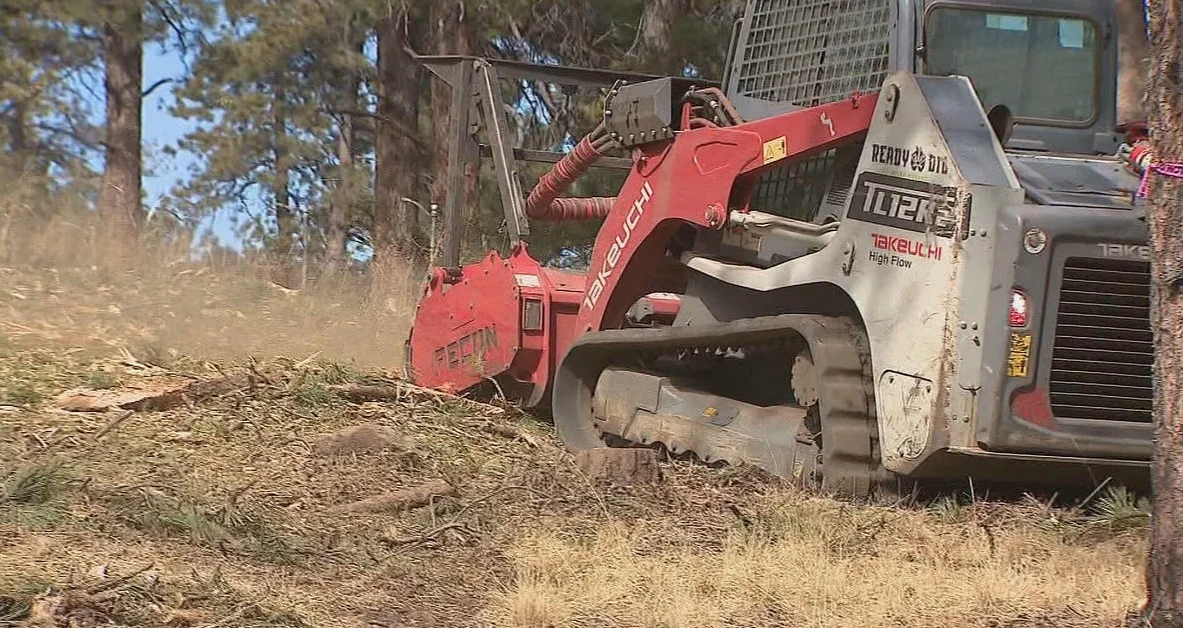
Thousands of brush piles, resembling beaver lodges on mountainsides, are scattered across Colorado’s foothills, waiting for the right conditions to be burned. These piles, created as part of fire mitigation efforts, are critical to reducing the risk of large wildfires, but they remain untouched due to a lack of snow cover and other environmental factors.
Impact on Fire Mitigation Efforts
Jen Hoogendoorn, a homeowner in Clear Creek County, has been working with neighbors to clear brush from their properties to reduce fire hazards. Despite the efforts, she says the piles are ready to burn, but the weather is not cooperating. ‘Ready to burn, and it’s unfortunate that the weather is not cooperating because the agencies and partners are ready to go,’ Hoogendoorn said.
Denver Mountain Parks, which manages public lands in the area, has also cleared trees and shrubs to reduce fire risk. However, those piles are also sitting idle, waiting for the right conditions. ‘I border Denver Mountain Parks land and other public land, and the amount of dead trees and the amount of dangerous areas are ridiculous,’ Hoogendoorn explained.
Fire departments and counties along the Front Range have been working on increasing mitigation efforts for years, but the urgency has grown following recent costly wildfires. Brian Keating, Jefferson County’s wildland fire program manager, said the county was ready to ramp up this year with newly built crews and supported burn plans. ‘Ready to ramp up and hit those piles hard this year, and we’ve had one day where we able to do some pile burning,’ Keating said.
Conditions for Controlled Burns
Burning brush piles requires specific conditions, including snow cover, low wind speeds, and proper humidity levels. These conditions are necessary to mitigate the risk of prescribed fires escaping. ‘That sets the conditions, which we feel that we can mitigate the risk of those prescribed fires potentially escaping,’ Keating said.
The county and its fire districts, along with partner agencies such as JeffCo Parks & Open Space, are prioritizing areas at high risk, including communications towers, power line corridors, and critical highways. ‘We’re doing more mitigation as the fire danger increases to year-round,’ Keating said.
The warm winter has created new challenges for fire planning. ‘Our conditions are changing,’ Keating said. ‘Every year, we’re like, ‘We’ve never seen fire behavior like that, or we’ve never seen conditions like that.’ This winter has been particularly unusual, with the lowest snowpack ever recorded. ‘This is the lowest snowpack we’ve ever had, and to go for months without any kind of measurable precipitation is really unusual,’ Keating said.
The lack of snow has also affected vegetation. ‘Right now if you drive around anywhere in the Front Range, the grasses are still standing up,’ Keating explained. ‘So, when we have just a little bit of wind and an ignition source, that supports large fire growth real fast.’
Changing Fire Risk Zones
These changes have led to updates in Jefferson County’s wildland urban interface map, which now includes a larger area deemed at-risk. Previously, 71% of the county above 6,400 feet was considered at risk. Now, 91% of the county, including lower elevations, is included in the risk zone. ‘That doesn’t bode well moving into the summer when we get into our normal patterns,’ Keating said.
In areas like Evergreen, residents are increasingly concerned about fire risk. Hoogendoorn said the frequent red flag warnings and strong winds have left people on edge. ‘It’s frightening, and I think everyone’s a little bit on edge with all the red flag warning days and this wind,’ she said. ‘Everyone is on edge and worried about the worst case scenario, and this doesn’t help.’
Hoogendoorn described the current conditions as ‘climate chaos in effect,’ adding, ‘I sure would like to see some snow and frozen ponds and safety around these parts of high fire danger.’
As the fire season approaches, the lack of snowpack and dry conditions are creating a growing concern for fire officials and residents alike. The situation highlights the urgent need for controlled burns and the challenges posed by an increasingly unpredictable climate.






Comments
No comments yet
Be the first to share your thoughts