

 BBC
BBC 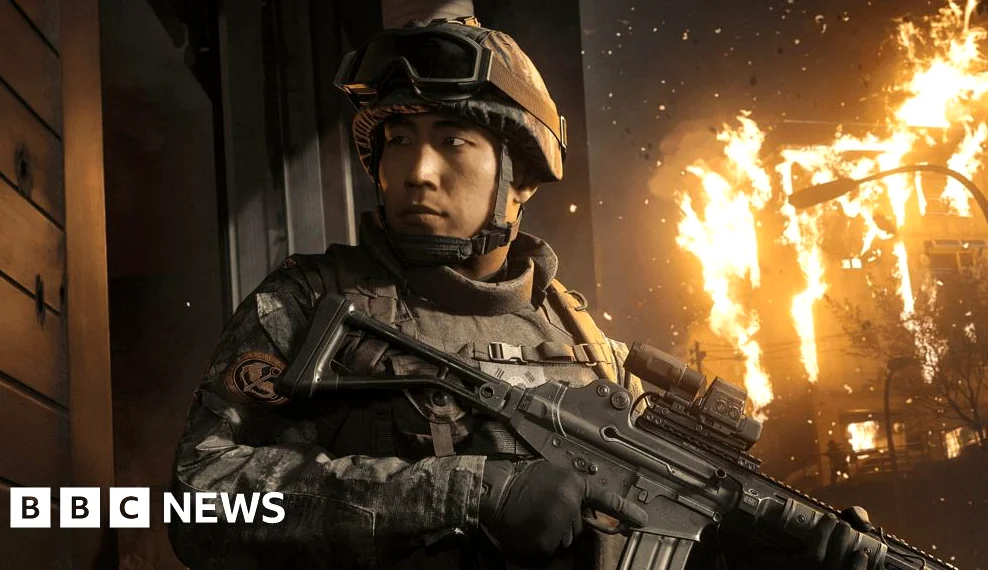
The next Call of Duty game. Modern Warfare 4, has been revealed, with much of the reaction focused on its campaign set around a fictional renewed conflict on the Korean Peninsula. The game is set to launch on 23 October and includes a storyline centered around South Korean soldiers facing a full-scale North Korean invasion. Dr Sarah Son, Senior Lecturer in Korean Studies at the University of Sheffield, said the move “could be controversial” as it “turns still-unresolved war into entertainment.” Some Koreans, however, reacted more positively, with one calling Korea’s inclusion in one of gaming’s biggest franchises a “symbolic moment.”
Setting and Gameplay Details
Developer Infinity Ward stated that the game will be “grounded in the military authenticity Modern Warfare is known for.” Modern Warfare 4 will launch on current-generation consoles, PC, and Nintendo Switch 2, marking the first mainline Call of Duty to skip PlayStation 4 and Xbox One. The game’s trailer, released recently, has already been viewed almost 22 million times within a day of release. It features a group of young South Korean conscripts on a routine patrol before a missile attack from North Korea throws them into full-scale war.
Players will also get to play as fan-favourite Captain Price, who will appear in different missions in several cities alongside the Korean campaign. The release of any Call of Duty game is a global cultural event, and posts about the latest version have amassed more than three million interactions within 24 hours of the announcement across Instagram, TikTok, X, and Facebook.
Reactions and Perspectives
Among the reactions, some Koreans have embraced Infinity Ward’s decision to tell the story from the perspective of ordinary South Korean soldiers caught up in the conflict. One person noted, “Then I heard they’re not just present but one of the playable protagonists? And not even special forces, handled from the perspective of an ordinary conscripted soldier, that’s what gets me.”
Beyond the setting, Infinity Ward announced significant changes to gameplay, including revamped movement mechanics and more interactive environments. The studio is also overhauling DMZ, its extraction-style multiplayer mode, and introducing a new ‘Frontlines’ system designed to make battles feel more dynamic and reactive.
Previous Controversies and Historical Context
Modern Warfare has previously courted controversy through storylines inspired by real-world events and conflicts. Missions such as “No Russian,” where players had the option to shoot civilians in an airport in Moscow, and later depictions of war crimes and terrorism have prompted debate about how far games should go in portraying realistic warfare. Dr Son said while the idea of a renewed inter-Korean conflict is “not unheard of” in Korean popular culture, these stories were often told “from a South Korean perspective.”
“A global gaming franchise might be judged differently,” she said. The Korean War ended in an armistice rather than a peace treaty in 1953, meaning North and South Korea remain technically at war. George Osborn, author of “Power Play: Video Games, Politics and the Battle for Global Influence,” told the BBC the setting was “likely to attract scrutiny” in the territory and pointed to previous games, such as Homefront, which depicted a unified Korea under northern control and which had received bans in South Korea. “The studio will have to show that it has handled possible conflict in the country with great care, or face significant backlash – and possible challenges selling the game – in South Korea specifically,” he added.




Comments
No comments yet
Be the first to share your thoughts