

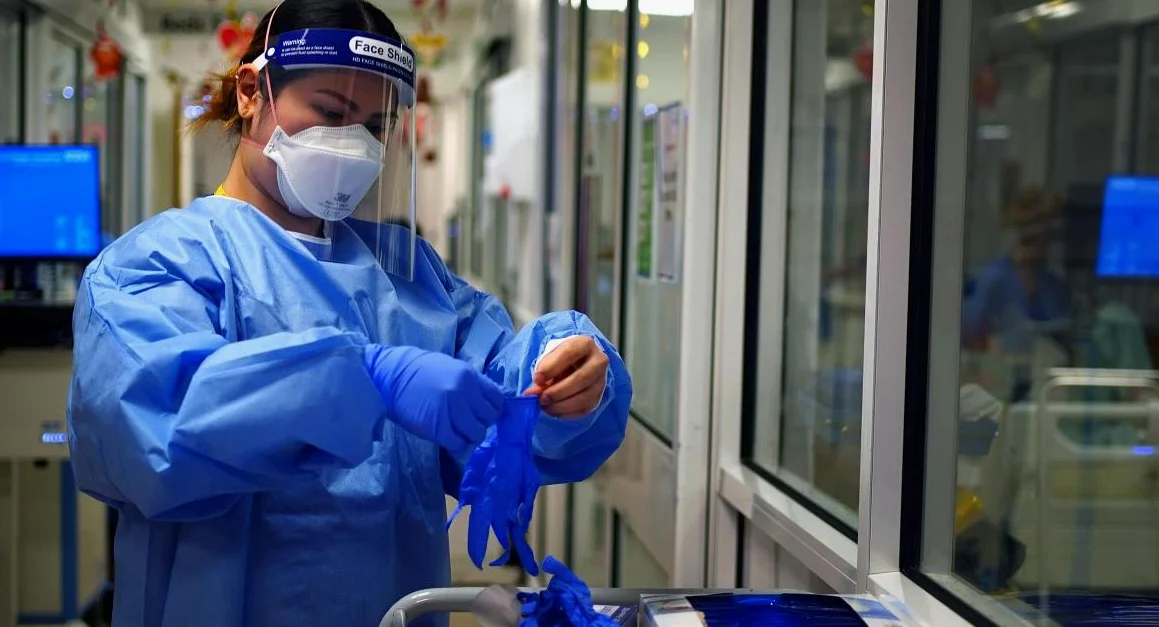
Women in Scotland were disproportionately affected by the pandemic, facing higher risks of infection and death, along with increased caregiving responsibilities, according to union leaders and research. As International Women’s Day and the first anniversary of the UK’s official ‘Covid-19 Day of Reflection’ coincide, the lessons from the pandemic are being highlighted as a call to action for better protections and equity.
Frontline Workers and the Pandemic’s Gendered Toll
Women were overrepresented in the sectors most affected by the virus, particularly in care and healthcare, where they accounted for a disproportionately high share of pandemic-related deaths.
Research from the Equality and Human Rights Commission, referenced by the Scottish Trades Union Congress (STUC), indicates that workers in the care sector, the majority of whom are women, accounted for a disproportionately high share of Covid-related deaths compared with the average across all occupations.
Age-standardised death rates for Covid-19 have been twice as high for people living in the 20% most-deprived areas compared to the 20% least deprived areas. This disparity highlights the intersection of gender and class in the pandemic’s impact, with low-paid workers—many of whom are women—being especially vulnerable.
Caregiving Responsibilities and the Pandemic’s Hidden Burden
As schools, nurseries, adult support services and community groups shut down, women stepped up to hold their families together, juggling work, caregiving roles, and the new challenge of homeschooling children.
Roz Foyer, General Secretary of the STUC, recounted her own experience of managing her family during the pandemic, including caring for her elderly parents whose care package was withdrawn. ‘I genuinely wonder how I survived while stepping up to a new role as General Secretary of the STUC, home schooling our daughters, and at the same time running round the corner on a daily basis to feed and bathe my parents,’ she said.
According to the STUC’s April 2021 report, ‘Who is winning from Covid-19,’ women, especially single women, lone parents, minority ethnic households, and disabled people, were more likely to live in poverty before the pandemic and thus more vulnerable to financial distress and hardship.
Gender Pay Gap Widens, Inequality Persists
Recent data on the gender pay gap shows that progress has stalled, with the gap nearly doubling in the past two years, rising to 10%—an increase of 3.6% from 6.4%.
The gap is most pronounced among health professionals (30%), followed by business and public service associate professionals (19%) and other associate professional occupations (17%). Although the gap has reduced from 25% in 1999 to 10%, the rate of change is too slow for the STUC. If it continued at the same pace, the gender pay gap would not close until 2042.
‘Women shouldn’t have to wait another 16 years for equity. We won’t,’ Foyer said.
Union leaders are calling for flexible working conditions to be normalized and for the proper remuneration of women workers, especially in the health and social care sectors, which were among the most impacted by the pandemic.
Women workers are taking the fight directly to the Scottish Government with their continued demands for a £15 per hour minimum wage. While politicians took to the streets to clap for carers, they are not willing to make the right political choice and invest in that workforce.
‘This is the bare minimum they deserve and would go a long way to ensuring the mistakes of the pandemic—underfunding of public services and the deliberate devaluing of the skilled labour of women—are not repeated,’ Foyer added.
International Women’s Day, which originated in calls for universal suffrage and the Labour Movement’s demands for equal rights, is being used as a platform to both celebrate achievements and reflect on the harsh realities of working conditions for many women in Scotland.






Comments
No comments yet
Be the first to share your thoughts