

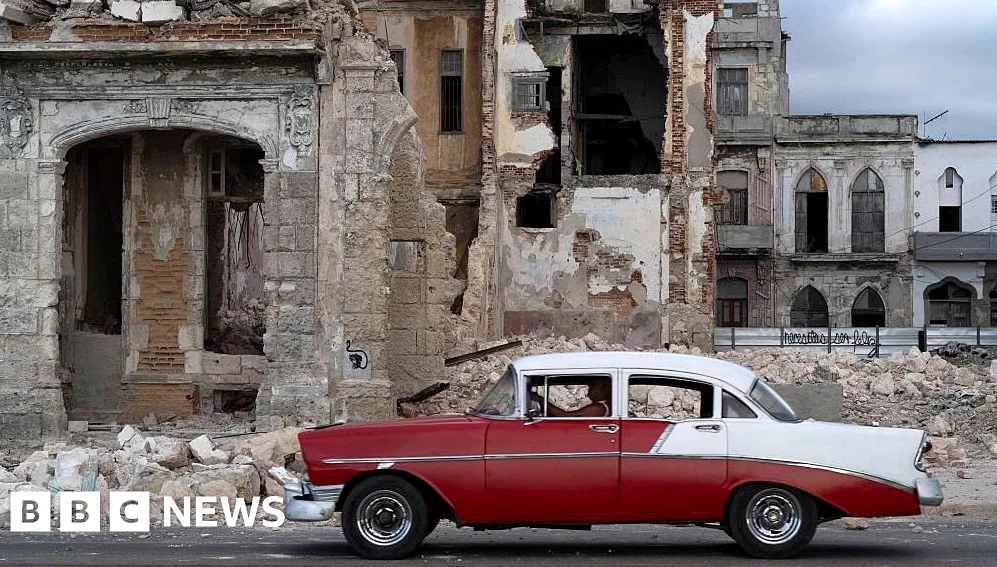
Cuba’s tourism industry—once a vital economic lifeline,has collapsed amid intensifying US sanctions and economic hardship. Fewer than 360. 000 foreign tourists visited the island in the first five months of 2026, marking a 58.4% drop compared to the same period last year, according to data from Cuba’s national statistics agency, Onei.
Decline of a Vital Sector
The tourism sector had already been severely impacted by the Covid-19 pandemic, which caused a 70% revenue drop between 2019 and 2025; Now, with the US pressure campaign in full force, the island is facing what some experts describe as a “disastrous year.”
Jose Luis Perello, a tourism expert, warned that the industry is at a critical juncture. “If tourism is affected, then we are really going to be in trouble,” said musician Victor Estevez, whose family’s well-being depends on the sector.
Transportation and Supply Chain Crises
Shortages of fuel and essential supplies have worsened the crisis. “There are few cars on the street because there is little fuel left,” one resident said. “When my gasoline runs out, I go home. What else can I do?”
The situation has drawn international attention. On Thursday, two Mexican navy ships arrived in Cuba carrying over 800 tons of humanitarian aid,fresh and powdered milk, meat, cookies, beans, rice, and hygiene items,according to the Mexican foreign ministry. The island of 9.6 million inhabitants has faced ongoing economic struggles since the US imposed its trade embargo in 1962, and recent years have seen severe shortages of food and medicine.
Compounding the crisis, Air Canada recently suspended its flights to Cuba indefinitely, citing “ongoing political and economic uncertainty.” The airline had previously stopped operations in February due to a lack of aviation fuel. Visitors from Canada have historically been the largest group of foreign tourists to Cuba this year.
US Pressure and Foreign Operator Withdrawals
The Trump administration has specifically targeted tourism as a key lever in its pressure campaign against Cuba’s leadership. As a result, several foreign airlines and hotel operators have stopped doing business on the island.
Spanish hotel chains Meliá and Iberostar halted operations at a significant number of hotels before the 5 June deadline set by the US government for companies to cease business with Cuban conglomerate Gaesa. US Secretary of State Marco Rubio accused Gaesa, controlled by Cuba’s armed forces, of acting as a “state within a state” and of “hoarding profits for a small elite” while “repressing anyone who dares to complain.”
Rubio delivered his remarks in Spanish, directly addressing the Cuban people in a speech that highlighted the political and economic dimensions of the crisis.
Cuba’s tourism-dependent economy now faces an uncertain future as international partners withdraw and fuel and supply shortages persist. With both government and private livelihoods tied to the sector, the consequences of this collapse are expected to be felt across the entire island.






Comments
No comments yet
Be the first to share your thoughts