

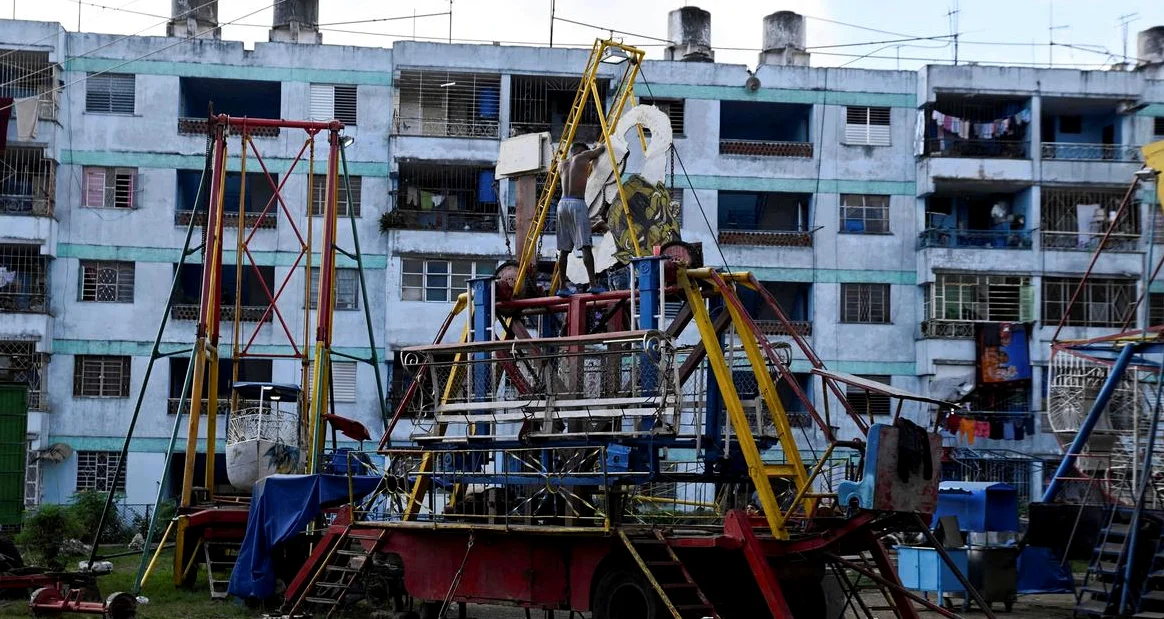
Cuba’s president, Miguel Díaz-Canel, has called for an immediate overhaul of the country’s economic model, signaling a rare public acknowledgment of the severe challenges caused by the United States’ tightening of its embargo. The move comes amid growing economic strain, with many Cubans now relying on bicycles as the only reliable form of transport due to fuel shortages.
Escalating Impact of US Sanctions
The US has imposed a series of sanctions on Cuba over the past decade, including restrictions on oil and fuel imports, which have significantly crippled the island’s economy. These measures have been intensified in recent years, particularly after the US removed Venezuela from its list of state sponsors of terrorism, cutting off a major source of support for Cuba.
According to a 2023 report by the Cuban Institute of Economics and Planning, the country’s GDP has declined by 4.2% since 2020, with inflation reaching a staggering 100% in some sectors. The US’ decision to impose an oil and fuel block in 2021 has left Cuba’s transportation system in disarray, with fuel shortages forcing many citizens to rely on bicycles and public transport that is often unreliable.
‘The Cuban government must take immediate action to transform our economic model to address the deepening crisis,’ Díaz-Canel stated during a recent address to the National Assembly. ‘We cannot continue to rely on outdated policies that no longer serve our people.’
Historical Context and Recent Developments
The US embargo against Cuba, now over six decades old, has been a cornerstone of American foreign policy in the Caribbean. However, the situation has worsened in recent years, particularly after the US shifted its focus from Venezuela to Cuba in response to political changes in the region.
Cuba had long been a key ally of Venezuela, receiving significant oil shipments and financial support in exchange for political backing. With Venezuela’s political landscape changing, Cuba has found itself increasingly isolated, with its primary source of economic support severed.
‘The Cuban government has made it clear that they are seeking to diversify their economy and reduce their dependence on oil imports,’ said Dr. Luisa Fernández, an economist at the University of Havana. ‘However, the US sanctions have made this transition far more difficult than it would have been otherwise.’
What Lies Ahead for Cuba
Despite the government’s calls for economic transformation, many experts believe the changes may come too late. The US has maintained a firm stance on its policy toward Cuba, with recent administrations vowing to continue efforts aimed at destabilizing the Communist regime.
According to a recent analysis by the Brookings Institution, the Cuban government faces a critical juncture in the next 12 months, with key decisions expected on how to proceed with economic reforms. The success or failure of these reforms could determine whether Cuba can maintain stability in the face of continued US pressure.
Cuba’s economy, already weakened by the pandemic and the collapse of Venezuela’s oil industry, is now facing new challenges as the US intensifies its sanctions. With inflation soaring and basic goods becoming increasingly scarce, the Cuban people are bearing the brunt of these policies.
‘The people of Cuba are suffering from the consequences of these sanctions,’ said a local shopkeeper in Havana. ‘We have no choice but to adapt, but it’s not easy when the government is also struggling to find solutions.’
As the situation continues to unfold, the international community is closely watching to see whether Cuba can handle its way through this crisis or if the pressure from the US will lead to further instability in the region.


Comments
No comments yet
Be the first to share your thoughts