

 The Guardian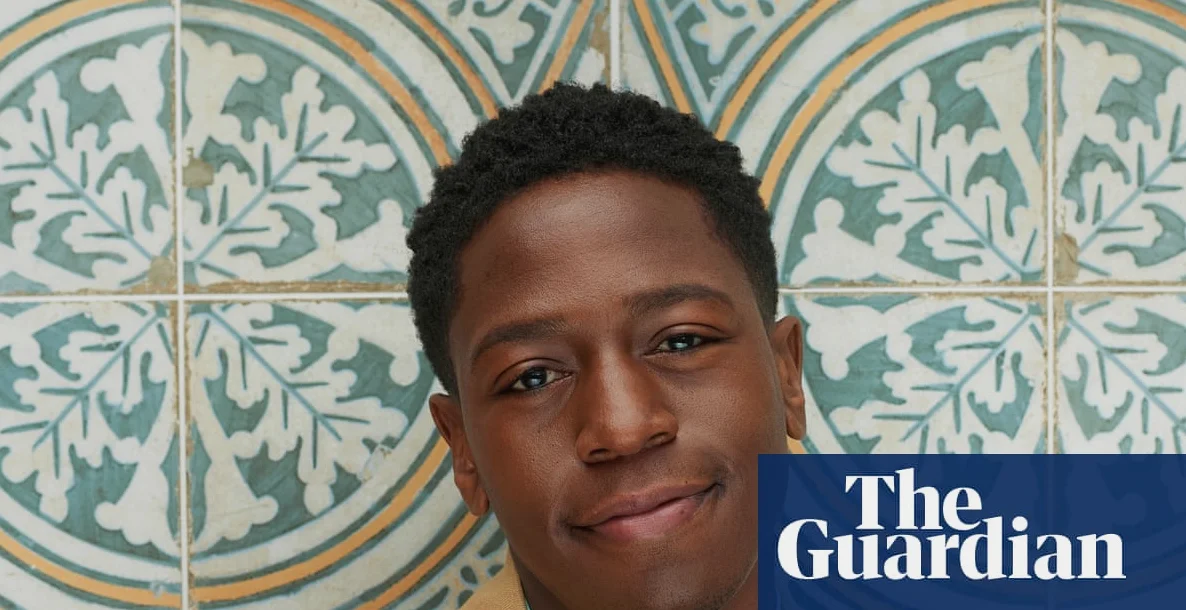
Black Panther has become a global symbol of Black excellence since 2018. The first film grossed more than $1.3bn worldwide, won three Oscars, and became the first superhero movie nominated for best picture.
A New Generation of Wakanda
Now, six years after the death of Chadwick Boseman, Marvel has found its next T’Challa: British star David Jonsson. He will play Boseman’s son in Black Panther 3. Jonsson was introduced at Comic-Con in San Diego, where the crowd erupted into chants of “Wakanda forever” after his announcement.
Journey of a Rising Star
Jonsson, 32, grew up in Custom House in Newham, the youngest of four children. His father worked as an IT engineer at Heathrow, while his mother worked for the Metropolitan police. He describes his heritage as Creole, with roots in Nigeria, Sierra Leone, the Caribbean, and Sweden.
He has spoken about the upheaval that followed his parents’ separation when he was 11. He pushed boundaries at school and was eventually expelled for fighting as a teenager. “I wasn’t a bad kid at all,” the self-described introvert told the Guardian. “I was just a bit … distracted at the time.”
It was around then that Jonsson told his mother – one of the first Black police community support officers in London – that he wanted to be an actor. At a new school in Hammersmith, a 90-minute commute across the city, he began performing in school plays. At 16, he won a scholarship to the American Academy of Dramatic Arts in New York. Returning to Britain two years later, he joined the National Youth Theatre before winning a place at the Royal Academy of Dramatic Art.
Jonsson left drama school early to join a revival of Mary Stuart opposite Juliet Stevenson, which transferred to the West End. His 2021 performance in And Breathe … at the Almeida won him a Black British Theatre Award.
Television came alongside his stage work. After early roles in the ITV detective drama Endeavour and the Fox UK espionage thriller Deep State, his breakthrough came as Gus Sackey in Industry, the cult drama about young graduates clawing their way up a London investment bank. To prepare, Jonsson immersed himself in a world of elite schools and Oxbridge privilege far removed from his own upbringing. He left the show in 2022. “Life is short, art is long,” he later told GQ.
Recent Roles and Awards
His ascent since then has been rapid. His first film lead came in Raine Allen-Miller’s acclaimed 2023 romcom Rye Lane, which premiered at Sundance to critical acclaim and earned him a British Independent Film Award (Bifa) nomination. He became the first Black lead in a television adaptation of Agatha Christie with the BBC’s Murder Is Easy.
Then came the sci-fi horror Alien: Romulus in 2024, which earned him the Bafta Rising Star award, the Stephen King adaptation The Long Walk, and the British prison film Wasteman, which earned him his second Bifa nomination. Jonsson has long been conscious of what his roles represent. “Every character I do, no matter what, I’m going to be a Black man first,” he has said.
Accepting his Bafta award last year, he added: “Growing up, I had the Denzel Washingtons and Idris Elbas, but they’re not me. There’s not enough space for diverse talent in this industry. I realise I have an important role in defining what Black is.” Interviewers have described him as warm, with “an innate sense of decency,” which would make him the perfect successor to Boseman, who was deeply respected for his humility and grace.
The mantle of Black Panther passed once before, to Letitia Wright’s Shuri in Black Panther: Wakanda Forever (2022). Jonsson plays the next generation of Wakanda’s royal family, inheriting both the character’s name and its huge legacy.






1 Comment