

 BBC
BBC 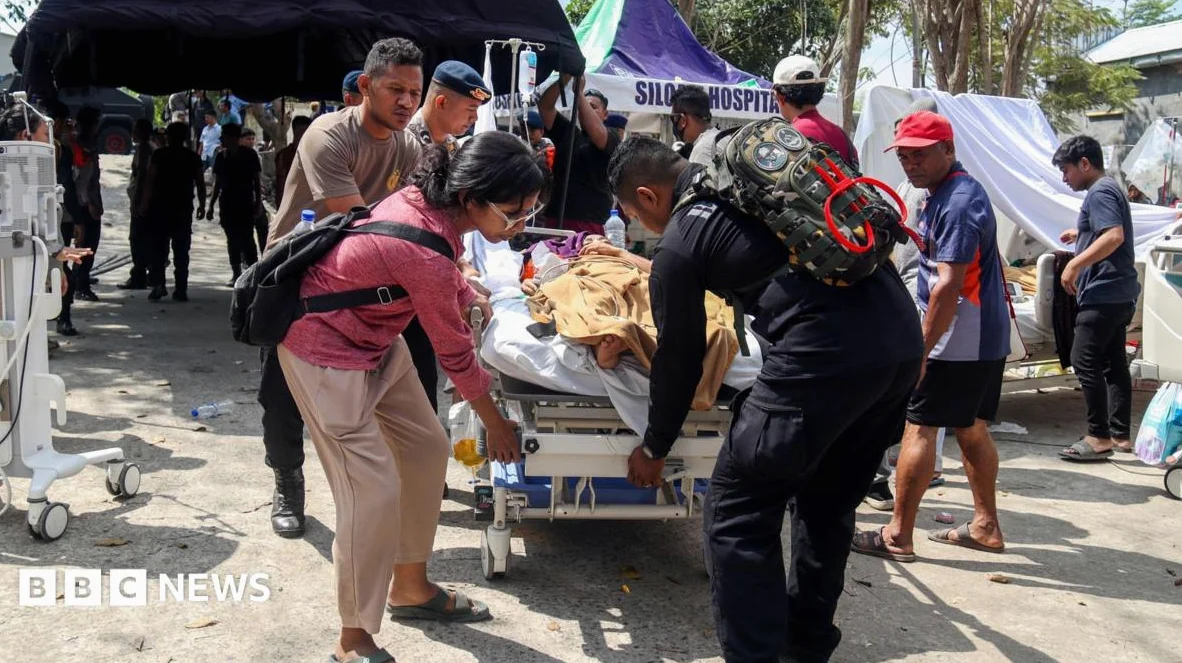
A powerful 7.7 magnitude earthquake in Indonesia has displaced around 5,000 people and caused at least 51 fatalities, according to the National Disaster Management Agency (BNPB). The shallow quake struck the island of Flores just before 05:00 local time on Saturday (22:00 GMT on Friday).
Severe Damage and Aftershocks
Preliminary reports indicate more than 900 homes and hundreds of other buildings have been severely damaged by the tremor and 341 subsequent aftershocks; the National Disaster Management Agency said the full scale of the disaster is still being uncovered.
The initial earthquake, which occurred just 15km below the surface, was the south-east Asian nation’s deadliest since 2022, when hundreds of people were killed in West Java. Tremors were reportedly felt by residents as far west as Bima, but the Manggarai province was among the most affected.
Regional Impact and Casualty Distribution
Preliminary data shows 24 fatalities had been recorded in Manggarai province, while 17 deaths were recorded in East Manggarai province, three in Sikka province, and at least one in each of the Ngada, Ende and West Manggarai provinces.
A total of 3,356 people had been displaced in Sikka, with a further 2,078 evacuated in Manggarai, the agency said — Thirty-six people were seriously injured in East Nusa Tenggara province, while 77 suffered minor injuries, Deputy Health Minister Benjamin Paulus Octavianus said.
It will take time to assess the full extent of the destruction in the region, which is remote and mountainous. However, early reports indicate that, as well as more than 1,000 damaged homes, dozens of schools, healthcare facilities and government offices had also been severely damaged.
Medical and Infrastructure Challenges
Ruteng Regional Hospital in Manggarai was among the damaged facilities — Images show operating theatre and clinic ceilings caved in, requiring patients to be treated in tents. “We heard that medical assistance would be provided, but nothing has arrived yet,” hospital spokesperson Rista Mari told BBC Indonesian; “We hope that assistance will arrive soon.”
The BNPB said “meeting basic needs and providing logistics for evacuees has become one of the top priorities of the emergency response,” adding it had dispatched tonnes of emergency supplies to Manggarai. Video taken at the port in Maumere – the largest town in Flores – showed large chunks of concrete breaking off the terminal building onto passengers waiting to board an inter-island ferry. Some were thrown into the sea when the gangway to a ship collapsed.
Emanuel Melkiades Laka Lena, governor of East Nusa Tenggara province, told a news conference that several of the victims had been killed in their sleep by collapsing rubble. Others, like Arnold Welianto, who lives in Talibura, a village near the coastline in Sikka, East Nusa Tenggara, were shaken out of their beds.
“I was startled awake and immediately went to my child’s room,” he said; he also told the BBC that many people had already fled into the hills because the sea had also receded.
While a tsunami warning was initially issued – leading some 2,000 people to self-evacuate – it was lifted around three hours after the initial jolt, when no significant sea level rise was detected. Landslides, however, did block access to some villages but the experienced rescue teams worked tirelessly through the day to free those trapped under the rubble.
In Ruteng, a temporary medical tent was also assembled outside of a hospital to treat earthquake victims, though the ongoing advice from BNPB is for people to remain calm and to stay away from coastal areas and structures showing signs of damage. Indonesia is prone to earthquakes and volcanic activity, lying along the meeting point of three major tectonic plates.






Comments
No comments yet
Be the first to share your thoughts