

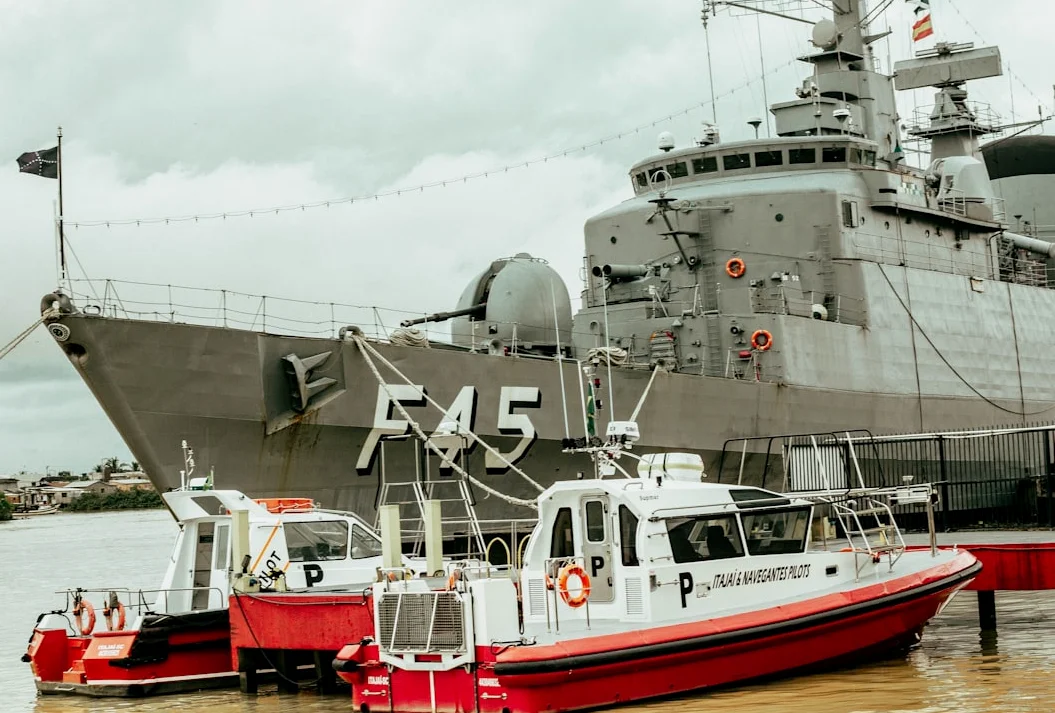
Iran’s Deputy Chief of Naval Operations, Admiral Farhad Fattahi, has issued a stark warning, stating that if the US Navy dares to approach the coasts of Jask and the Strait of Hormuz, it will face certain destruction. This statement comes in the wake of what Iran describes as a US attack on an Iranian naval vessel during a training exercise in the Indian Ocean, an event that has raised tensions between the two nations.
Iranian Naval Exercise and the Attack on the Dena
A group of students from the Imam Khomeini University of Maritime Sciences in Noshahr embarked on a training voyage on January 24, accompanying the destroyer Dena, the destroyer Lavan, and the supply and support vessel Bushehr. The mission included a planned participation in a peace and friendship exercise with India, a gesture aimed at strengthening regional naval cooperation.
During the exercise, the Dena separated from the group and docked in an Indian port in the Bay of Bengal on February 15. On February 25, the Dena was en route back to the Iranian naval group south of Sri Lanka when, according to Iranian officials, the United States carried out what it describes as a terrorist attack on the vessel. The attack reportedly resulted in the loss of several Iranian sailors, with Sri Lanka cooperating by sending divers to recover the bodies of the victims.
Admiral Fattahi emphasized that the Dena was on a training mission, armed but not equipped to engage in a large-scale naval conflict. The vessel was over 2,000 nautical miles from Iran, making it difficult for the Iranian navy to provide support. ‘The principle of naval warfare is that if you want to fight on the surface, you must send a group to fight, not a single combat ship,’ he stated in a press briefing.
Strategic Implications and Regional Concerns
The attack on the Dena has raised significant concerns about the security of Iran’s maritime operations in the Indian Ocean and the broader Persian Gulf. Iran has long been wary of US naval presence in the region, particularly near the Strait of Hormuz, a critical chokepoint for global oil shipments. The incident has also highlighted the vulnerability of Iranian naval vessels operating far from their home waters.
According to Fattahi, the United States has not yet attempted to approach the coasts of Jask or the Strait of Hormuz. However, he warned that such an action would be met with a strong response. ‘So far, there have been no reports of an American destroyer approaching our shores, because it is certain that if it gets close, it will be destroyed and sink,’ he said.
Iran’s military has been increasing its naval presence in the region, conducting drills and deploying advanced anti-ship missiles to deter potential aggression. The Strait of Hormuz, through which about 20% of the world’s seaborne oil passes, remains a focal point of strategic interest for both Iran and the United States.
What Analysts Say About the Escalation
Regional security analysts have noted that the attack on the Dena could be a turning point in the ongoing naval rivalry between Iran and the United States. ‘This incident has the potential to escalate tensions significantly, especially if the US continues to operate in areas Iran considers its strategic sphere of influence,’ said Dr. Mohammad Reza Farrokhi, a defense analyst at the Tehran Institute of Strategic Studies.
Farrokhi added that the loss of the Dena, which was part of a larger Iranian naval exercise in India, could be seen as a symbolic blow to Iran’s naval ambitions. ‘Iran has been trying to project power beyond its immediate borders, and this attack may hinder that effort,’ he explained.
Meanwhile, US officials have not commented on the incident, but the US Navy has been conducting more frequent operations in the Persian Gulf and the Indian Ocean in recent months. These operations are part of a broader strategy to maintain a military presence in the region and ensure the free flow of commerce through critical maritime routes.
Iran has not confirmed the attack, but the details provided by Admiral Fattahi suggest that the incident is being treated as a deliberate act of aggression. The lack of an official response from the US has only fueled speculation and concern among Iranian officials and analysts.
As the situation develops, the international community is closely watching for any signs of further escalation. The incident highlights the fragile nature of regional security and the potential for miscalculation in a highly volatile geopolitical landscape.
What remains unclear is whether the US will respond to the incident and whether Iran’s warning will be taken seriously. For now, both sides appear to be maintaining a degree of restraint, but the underlying tensions remain high.






Comments
No comments yet
Be the first to share your thoughts