

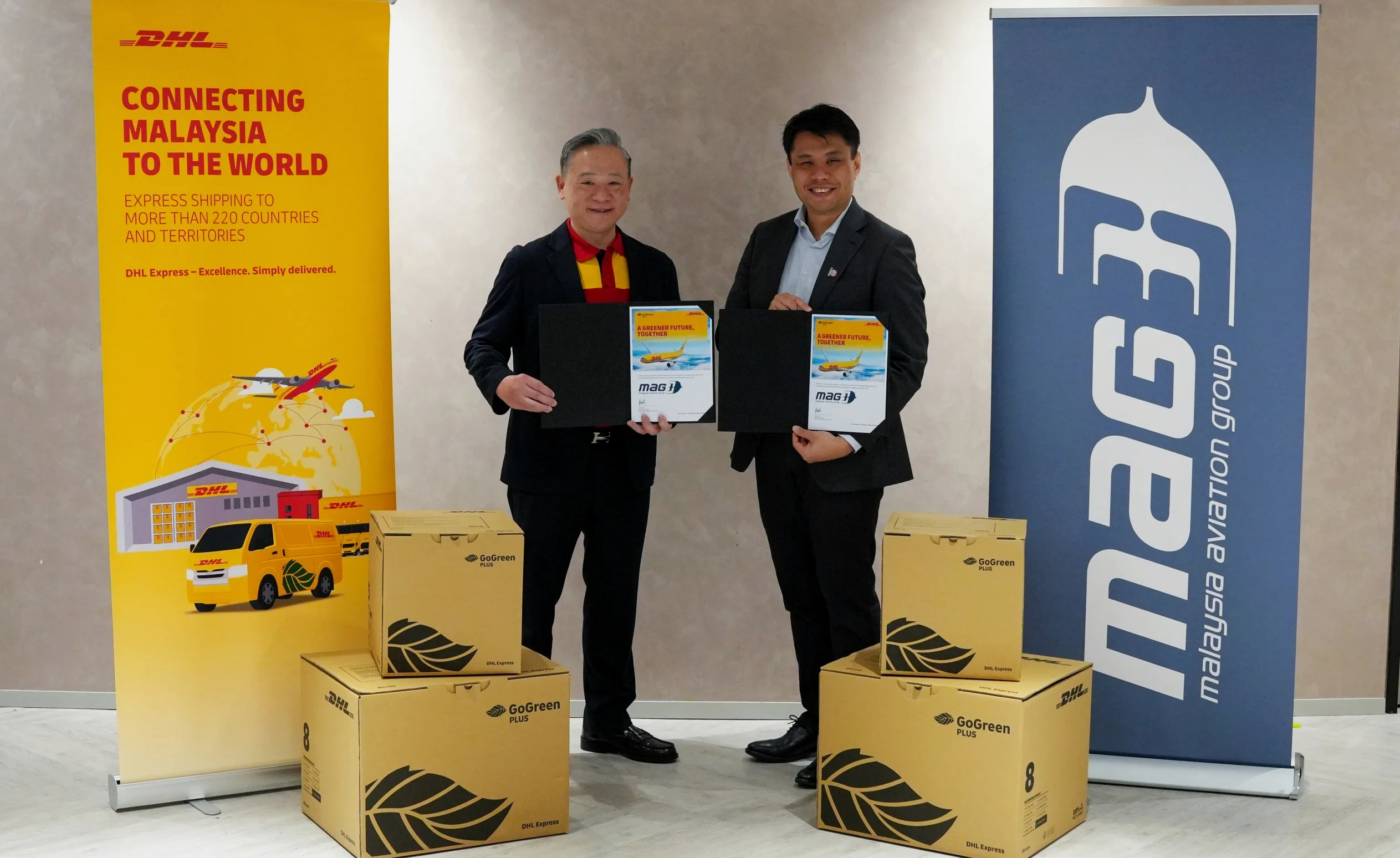
DHL Express and Malaysia Aviation Group (MAG) have announced a partnership aimed at significantly reducing greenhouse gas emissions through the use of sustainable aviation fuel (SAF) in DHL’s air logistics network. The collaboration, formalized in a joint statement released on March 19, involves DHL’s GoGreen Plus service, which is expected to cut 300 tonnes of lifecycle carbon dioxide equivalent (CO2e) emissions in 2026 compared to the previous year’s baseline.
Impact on Logistics and Emissions Reduction
The initiative is part of a broader effort to reduce the carbon footprint of international time-definite shipments. According to DHL Express Malaysia and Brunei managing director Julian Neo, SAF remains one of the most viable lower-carbon solutions for long-haul air transport. ‘It is therefore encouraging to see a national carrier of MAG’s stature amplify its position in the lower-carbon aviation fuel ecosystem and help galvanise wider sectoral adoption,’ Neo said.
GoGreen Plus, introduced in 2023, allows customers to reduce indirect Scope 3 emissions across their value chain, particularly from upstream and downstream transportation and distribution. The service is supported by SAF agreements DHL has secured with partners including BP, Neste, Cosmo Energy, and Cathay Group. SAF, produced from sustainable feedstocks such as used cooking oil and other residues, can reduce lifecycle greenhouse gas emissions by up to 80 per cent compared with conventional jet fuel.
The programme operates on a ‘book-and-claim’ mechanism, allowing DHL to replace fossil fuels with SAF within its network and allocate the resulting emissions savings to customers like MAG, even if shipments are not physically transported using SAF-powered aircraft. This approach enables companies to achieve sustainability goals without requiring direct access to SAF infrastructure.
Supporting MAG’s Sustainability Agenda
MAG’s subscription covers inbound and outbound air freight handled by DHL Express across key trade lanes in the United States, Europe, and Asia Pacific. The move supports MAG’s broader sustainability agenda by addressing emissions linked to its international logistics operations.
As an aviation group with both airline and cargo businesses, MAG said it continues to explore scalable SAF adoption across business-to-consumer (B2C) and business-to-business (B2B) segments as part of its long-term decarbonisation strategy. The group is also working with industry partners and local feedstock suppliers to explore domestic SAF production, supporting the development of commercially viable solutions for passenger, corporate travel, and cargo operations.
MAG group chief sustainability officer Philip See said SAF is a key lever in aviation’s transition to net-zero emissions by 2050. ‘As a hard-to-abate sector, scaling SAF requires coordinated action across the value chain — from policy to production to infrastructure and demand creation,’ See said. ‘Our collaboration with DHL Express reflects the growing momentum for market-based solutions such as book-and-claim mechanisms that can accelerate SAF uptake beyond regulatory mandates.’
Future Implications and Industry Trends
The partnership between DHL Express and MAG is expected to have a ripple effect across the logistics and aviation sectors. By using SAF and the book-and-claim model, the two companies are setting a precedent for how emissions reductions can be achieved in international shipping without requiring immediate changes to existing infrastructure.
According to industry analysts, the use of SAF is gaining traction globally, with several major airlines and logistics firms committing to increasing their usage in the coming years. The International Air Transport Association (IATA) has estimated that SAF could account for 20 per cent of aviation fuel use by 2030 if current trends continue.
The collaboration also highlights the importance of cross-sector partnerships in achieving decarbonisation goals. As more companies adopt similar strategies, the cost of SAF is expected to decrease, making it more accessible for a wider range of businesses and consumers.
With the global logistics sector responsible for a significant portion of carbon emissions, initiatives like this are becoming increasingly necessary to meet international climate targets. The partnership between DHL and MAG is not only a step forward for their respective operations but also a sign of the broader industry shift toward more sustainable practices.
Looking ahead, both DHL and MAG have outlined plans to expand their SAF initiatives beyond 2026. This includes exploring new feedstocks, improving production efficiency, and increasing the availability of SAF across their networks. The ultimate goal is to create a more sustainable and resilient supply chain that can support global trade while minimizing environmental impact.






Comments
No comments yet
Be the first to share your thoughts