

 BBC News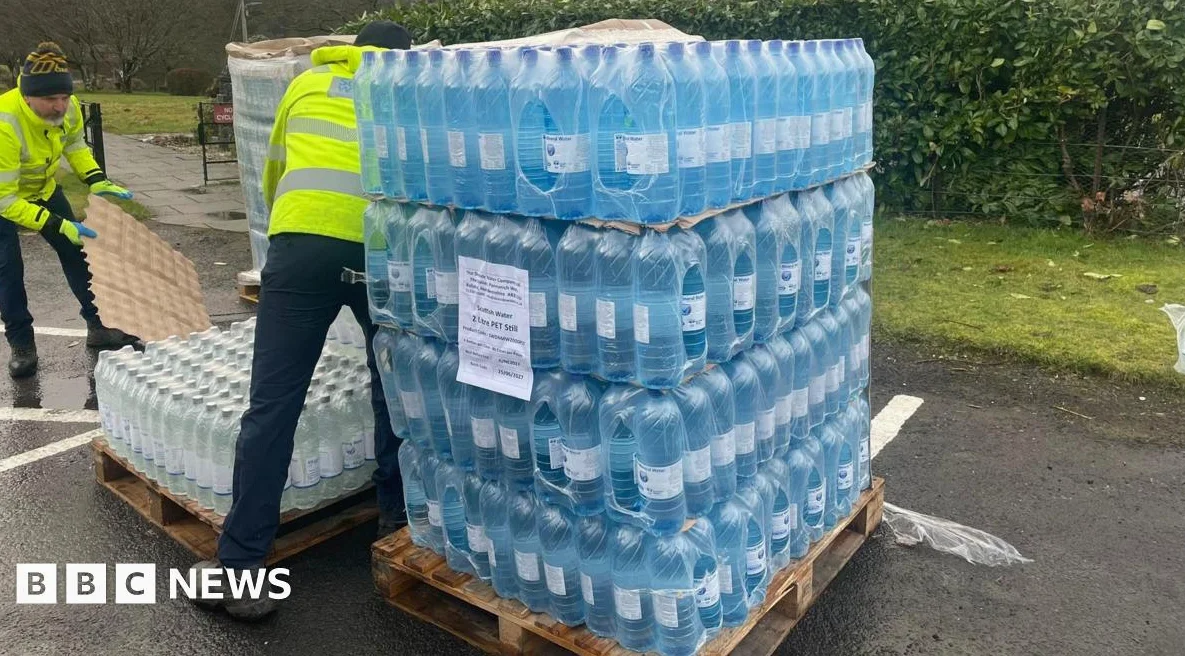
KILLIN, Scotland — Villagers in Killin braced for prolonged water shortages Tuesday after diesel contaminated the River Dochart, forcing the shutdown of a local water treatment facility.
Scottish Water warned that disruptions could stretch several days. Teams worked nonstop since Saturday, when residents first reported a strong solvent taste in tap water and the air. The spill stemmed from an attempted theft at a nearby petrol station, according to officials.
Bottled water deliveries continued into Tuesday for the village’s roughly 800 residents. Locals received strict instructions: use tap water only to flush toilets. No drinking, cooking or brushing teeth.
“We’ve isolated the contamination source and are flushing the system,” a Scottish Water spokesperson said. The company activated emergency protocols after the alarm sounded at the Loch Iubhair water treatment works, which draws from the River Dochart.
Reports surfaced around midday Saturday. One resident described the taste as “like petrol in my mouth.” Others noticed a sharp chemical odor wafting from the river, which runs through the scenic Perthshire village nestled in the Loch Lomond and Trossachs National Park.
Police launched an investigation into the theft attempt. Thieves apparently punctured an underground diesel tank at the petrol station, allowing fuel to seep into the river. No arrests have been announced.
Scottish Water deployed booms to contain the spill and vacuum trucks to extract contaminated water. Engineers tested samples upstream and downstream. Early readings showed diesel levels exceeding safe limits for treatment.
The utility pledged daily updates via its website and local radio. A hotline opened for affected households to request extra bottled water. Schools and businesses in Killin switched to alternative supplies.
This incident echoes past contamination scares in rural Scotland, where rivers supply isolated communities. In 2019, a similar fuel leak in Aberdeenshire sidelined water for a week. Officials stressed that boiling tap water would not neutralize diesel.
Environment officials from the Scottish Environment Protection Agency monitored fish stocks and river wildlife. No mass die-offs reported so far. The River Dochart, known for salmon runs, feeds into Loch Tay downstream.
Residents expressed frustration but gratitude for the quick response. “It’s a pain, but better safe,” said local shopkeeper Fiona MacGregor. Her store ran low on bottled water stocks amid the rush.
Scottish Water aims to restart the treatment works once tests confirm clean inflows. Full service restoration hinges on dilution from upstream rainfall, forecasters predict heavy showers by Thursday.






Comments
No comments yet
Be the first to share your thoughts