

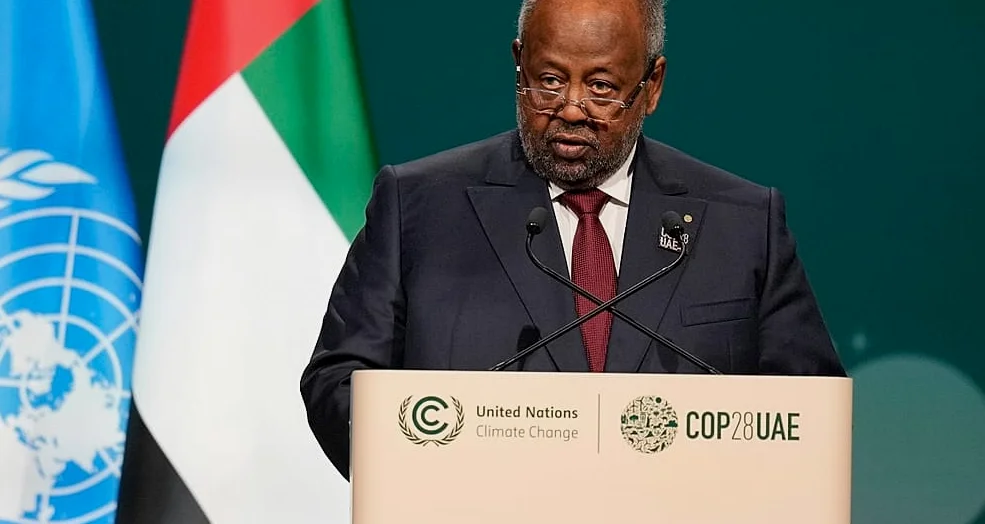
Djibouti’s President Ismail Omar Guelleh, who has ruled the strategically located Horn of Africa nation for nearly three decades, will face just one little-known challenger in next month’s presidential election, according to an official decree published Wednesday. The 78-year-old leader will seek a sixth term on April 10 after lawmakers unanimously amended the constitution in November to remove the 75-year age limit. His only rival is Mohamed Farah Samatar, a former ruling party member whose Unified Democratic Center party holds no parliamentary seats.
Strategic Crossroads
Djibouti, home to around one million people, hosts vital military bases for the United States, China, France and other powers near the strategic Red Sea and Gulf of Aden. Guelleh, in power since 1999, has maintained relative stability in a troubled region. The nation’s geographic importance has made it a key player in regional security and trade, with its ports serving as critical gateways for international shipping routes.
According to the Djibouti Ports and Free Zones Authority, the country’s ports handled over 20 million containers annually as of 2025, with projections for continued growth. This economic role has reinforced Djibouti’s strategic significance, making it a focal point for foreign military and economic interests.
Guelleh’s administration has long emphasized the country’s role as a regional hub, with investments from foreign governments and private entities in infrastructure, logistics, and security. However, critics argue that this focus has come at the expense of domestic political freedoms and governance transparency.
Democratic Concerns
A former presidential adviser, Alexis Mohamed, who resigned in September citing ‘democratic backsliding,’ was unable to submit his candidacy, claiming he lacked ‘security guarantees’ to return from abroad. The absence of prominent opposition figures from the race has raised concerns about the legitimacy of the election process.
Djibouti ranks 168th out of 180 in Reporters Without Borders’ press freedom index, and the International Federation for Human Rights says elections ‘are not free’ there. The country has faced consistent criticism from international human rights organizations over the past decade for alleged restrictions on political participation and freedom of expression.
According to a 2025 report by the International Federation for Human Rights, Djibouti has not held a free or fair election in over 20 years. The organization has called for greater transparency in the electoral process and the inclusion of independent candidates in future contests.
Local analysts have echoed these concerns, with one Djiboutian analyst telling AFP, ‘There is little doubt about the outcome.’ This sentiment reflects the perception that Guelleh’s re-election is all but guaranteed, despite the legal changes allowing him to run for a sixth term.
What Analysts Say
Political analysts have noted that Guelleh’s dominance in Djibouti is not only due to his control over the government but also his ability to suppress opposition. The removal of the age limit in November has been widely seen as a move to ensure his continued rule, with no credible challenge expected from the opposition.
‘The political landscape in Djibouti is highly controlled, and the absence of a strong opposition is a result of years of consolidation of power by the ruling party,’ said one analyst in a recent interview. ‘The upcoming election is more of a formality than a genuine contest for leadership.’
Despite the lack of competition, the election will still proceed as scheduled on April 10. International observers are expected to be present, although their presence is largely symbolic, given the limited access to independent media and the absence of meaningful opposition.
According to the African Union’s observer mission, the group will monitor the election process to ensure compliance with regional standards. However, the AU has not issued any formal statements on the fairness of the contest, suggesting a lack of confidence in the process.
The election is scheduled for April 10, with results expected to be announced within a week. If Guelleh wins, he will serve his sixth term, solidifying his position as one of Africa’s longest-serving leaders. His re-election would also extend the influence of the ruling party, which has controlled Djibouti’s government for over 20 years.
International relations are also expected to remain a focus for Guelleh’s administration, as the country continues to host foreign military bases and engage in trade agreements with global powers. The U.S., China, and France have all expressed interest in Djibouti’s strategic location, and their influence is likely to persist regardless of the election outcome.
Domestically, the lack of political competition has raised concerns about the future of democracy in Djibouti. Without a viable opposition, the country risks further erosion of political freedoms and increased centralization of power. Civil society groups have called for reforms to ensure a more transparent and inclusive political process in the coming years.
The international community, including the United Nations and various human rights organizations, has urged Djibouti to take steps toward greater political openness. However, the government has not indicated any immediate plans to address these concerns, citing the need for stability and economic development as its top priorities.




Comments
No comments yet
Be the first to share your thoughts