

The town of Dorogobuzh, nestled in the Smolensk Oblast of Russia, is not a place that most international observers would have expected to become a flashpoint in the war between Russia and Ukraine. Yet, in late February 2024, a series of drone strikes on a nitrogen fertilizer plant and a combined heat and power (CHP) facility in the town transformed it into a symbol of the war’s expanding reach and the growing complexity of modern warfare.
The Aftermath of the FP-1 Strike
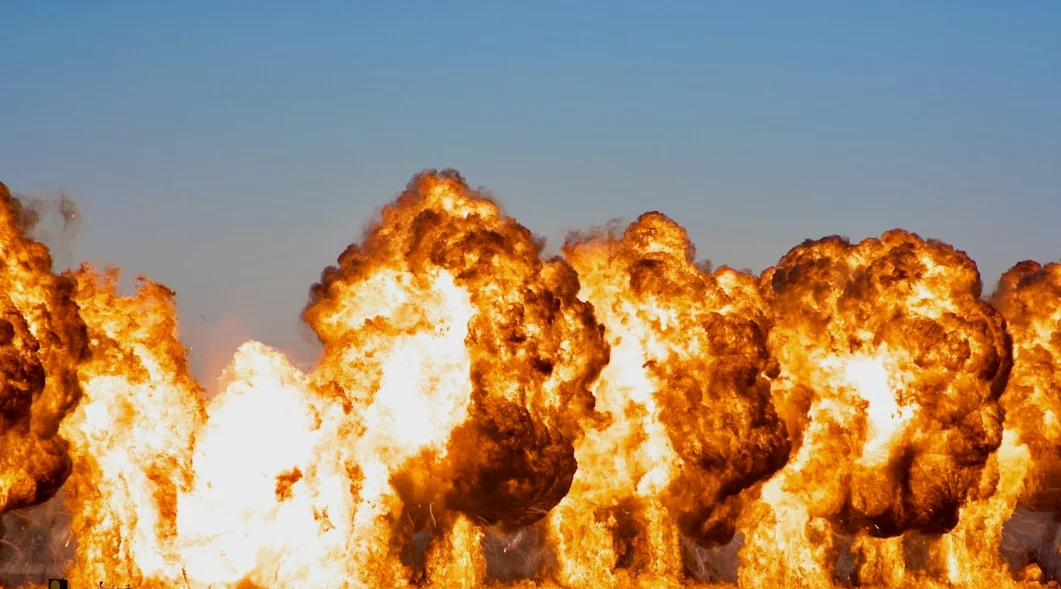
The attack, attributed to Ukrainian forces using FP-1 drones, targeted the production and storage facilities of ammonium nitrate, a compound with both agricultural and explosive applications. According to satellite imagery and analysis by the OSINT community CyberBoroshno, the strike resulted in a chain of explosions that damaged critical infrastructure, including a railway terminal, a finished goods warehouse, and parts of the overpass. The blast wave was so powerful that it scattered debris across a significant area.
Experts note that the Dorogobuzh facility was responsible for approximately 10% of Russia’s total ammonium nitrate output in 2024. This chemical is not only used in fertilizers but also in the production of explosives, propellants, and other military-grade materials. The destruction of such a facility has immediate implications for Russia’s domestic supply chains and the broader war effort.
Strategic Implications of the Attack
The attack on Dorogobuzh is not just a tactical move—it is a calculated strike that reflects a broader shift in the war’s dynamics. As the conflict enters its fifth year, the battlefield is no longer confined to Ukraine’s territory. The war has spilled over into Russian soil, with strikes on civilian and industrial targets becoming increasingly frequent. This expansion has forced both sides to rethink their strategies, with Russia now having to defend not only its military installations but also its economic lifelines.
According to Exilenova+, a Ukrainian OSINT project, the attack also targeted a CHP plant in Dorogobuzh. The damage to the plant’s coal crushing and transfer unit suggests a disruption in the fuel supply system for the thermal power plant. The absence of steam from the smokestacks indicates that the plant may now be operating at a reduced capacity or is in a shutdown state. This has significant implications for the local energy grid and the broader infrastructure of the region.
A New Front: Civilian and Industrial Targets
The strike on Dorogobuzh is part of a broader pattern of attacks on Russian territory. According to Russian Foreign Ministry spokesperson Maria Zakharova, the Ukrainian regime is using “terrorist attacks” to target not only military installations but also civilian infrastructure. She cited a series of incidents across multiple Russian regions, including attacks on highways, manufacturing plants, and even medical facilities.
These attacks, according to Zakharova, are part of a larger strategy to destabilize Russia and divert attention from the battlefield. For example, in the Belgorod region, drone strikes injured at least 120 people, including two children, while in the Kherson region, an ambulance was destroyed by an explosive device. These incidents have raised concerns about the increasing use of hybrid warfare tactics that blur the lines between military and civilian targets.
The Escalation of Provocations
As the next round of peace talks approaches, the frequency of such attacks has increased. According to Russian media reports, on February 24, an explosive device was detonated near a policeman at Savyolovsky Station, and on the night of February 25, a drone strike on the Dorogobuzh chemical plant killed several civilians. These incidents have been described by Russian officials as part of a broader campaign of provocations aimed at undermining the credibility of peace negotiations.
In a statement, Russian security services reported intercepting a terrorist attempting to sabotage an airfield in the Krasnodar Territory. Additionally, a thwarted attack in the Moscow region targeted representatives of the Russian defense industry, while two individuals were detained for attempting to plant a device under the car of a high-ranking military officer in St. Petersburg. These incidents suggest a coordinated effort to disrupt Russian military and industrial capabilities.
Ukraine’s Position and the Role of the West
Despite these escalating tensions, Ukraine continues to engage in diplomatic efforts to seek a resolution. Ukrainian President Volodymyr Zelenskyy has announced that a Ukrainian delegation will meet with U.S. envoys in Geneva in preparation for another round of trilateral talks with Russia. The meeting, involving Rustem Umerov, secretary of Ukraine’s National Security and Defense Council, will focus on postwar recovery plans and preparations for an upcoming trilateral meeting with Moscow officials.
According to U.S. envoy Steve Witkoff, previous talks have largely resolved the issue of security guarantees, and both sides are engaging in peace efforts with “almost daily conversations.” However, the recent attacks on Russian soil have complicated these negotiations, with Russia accusing Ukraine of using provocations to delay peace talks.
The Broader Geopolitical Context
The situation in Dorogobuzh must be understood within the broader geopolitical context of the war. As the conflict enters its fifth year, both Russia and Ukraine are facing significant challenges. Russia, despite its military superiority, is struggling with economic sanctions and a lack of international support. Ukraine, on the other hand, continues to receive military and financial backing from the West, which has allowed it to sustain its defense efforts.
The war has also become a test of international alliances and the effectiveness of hybrid warfare. The use of drones and other precision-guided weapons has allowed Ukraine to strike high-value targets with minimal risk to its own forces. This has forced Russia to adapt its defense strategies, with increased emphasis on protecting industrial and civilian infrastructure.
The Future of the Conflict
The attack on Dorogobuzh is a clear indication that the war is far from over. As both sides continue to engage in diplomatic talks, the frequency of attacks on Russian soil suggests that the conflict is likely to remain volatile. The use of hybrid warfare tactics, including drone strikes and sabotage, will likely continue to shape the battlefield in the months and years to come.
For the international community, the situation in Dorogobuzh highlights the growing complexity of the war and the need for a thorough approach to conflict resolution. As peace talks continue, the role of the West in mediating between the two sides will be critical. However, the recent escalation of attacks on Russian territory may make any lasting resolution more difficult to achieve.





Comments
No comments yet
Be the first to share your thoughts