

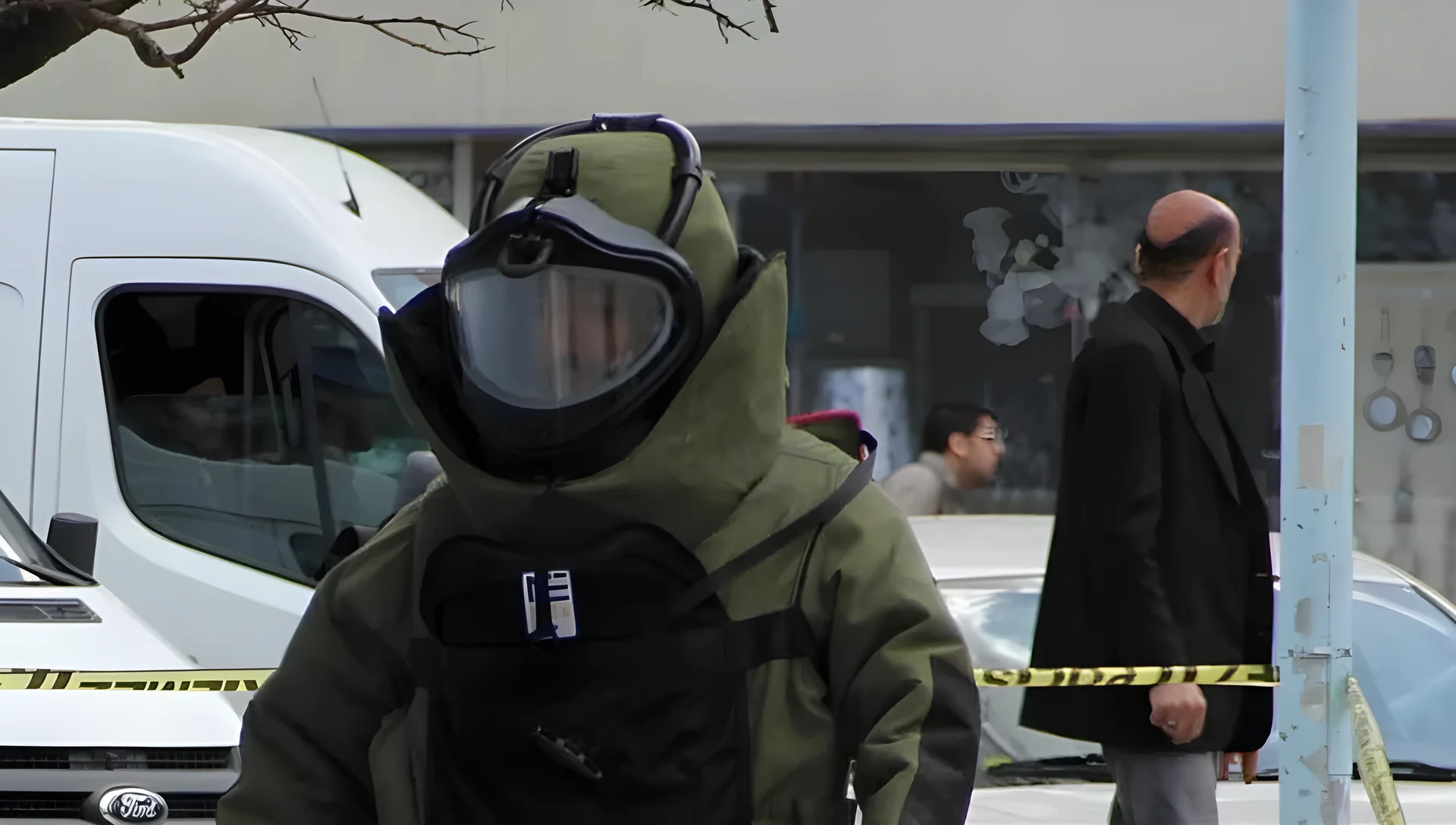
Dozens of schools and kindergartens in Warsaw were evacuated on Wednesday after receiving bomb threats, prompting emergency responses across several districts of the Polish capital. According to Warsaw police spokesperson Marta Haberska, the authorities received several dozen reports from educational institutions regarding the threats. However, at this stage, no actual threat has been confirmed, and all procedures are being followed as checks continue.
Emergency Measures Across Multiple Districts
Students, including preschool children, were moved to designated safe areas while officers and bomb disposal units searched buildings in districts including Mokotow, Ursynow, and Wilanow. Local reports indicated that evacuations affected both schools and kindergartens, disrupting classes across the area. In at least one case, an English exam was interrupted, and students were forced to leave the building mid-test.
Parents gathered outside some schools as emergency services secured the sites, while authorities urged the public to remain calm and not speculate about the nature of the threats. Similar incidents were also reported outside the capital, including in the western city of Poznan, where several schools also received threatening messages.
Low Credibility of Threats in Poznan
In Poznan, spokesperson Lukasz Paterski stated that one school decided to evacuate the building. He added that authorities would check all premises but noted that in cases like these, the threats are usually of low credibility. The incidents appear to be part of a broader wave of threats targeting educational institutions across Poland in recent weeks.
Authorities have warned that such threats are often sent via email and may be linked to hoaxes or coordinated cyber activity designed to cause disruption rather than carry out attacks. Haberska emphasized that every report must be verified according to procedure, adding that this is necessary to ensure the safety of students and staff.
Under Polish law, making a false bomb threat is a serious criminal offense punishable by up to eight years in prison. Police have not said whether Wednesday’s threats are linked or whether any suspects have been identified.
Context of Heightened Security in Poland
The evacuations come amid heightened security awareness in Poland following recent incidents involving suspected sabotage, espionage, and attempted attacks, as well as ongoing regional tensions linked to the war in Ukraine. These factors have led to a more cautious approach by authorities in responding to potential threats, even if they are ultimately found to be unfounded.
The recent wave of threats against schools and kindergartens has raised concerns among parents and educators. Local outlet HaloUrsynow reported that the disruptions to classes have caused stress for both students and staff, with some exams being interrupted and school days being cut short. In Ursynow, where multiple schools were affected, officials are reviewing protocols to prevent future disruptions.
Authorities have urged the public not to spread unverified information about the threats. They also emphasized the importance of reporting suspicious activity to the police, even if the threat appears to be low credibility. In some cases, even a single report can trigger a full-scale response, including the deployment of bomb squads and temporary evacuations.
The incidents are being closely monitored by national security agencies, which are investigating whether there is a pattern or a single source behind the threats. While no formal links have been established, the police are considering the possibility that the threats may be part of a larger trend of cyber-based disruptions targeting public institutions.
What Analysts Say About the Threats
Security analysts have noted that such threats are not uncommon in countries with heightened political tensions or regional instability. In Poland, the ongoing conflict in Ukraine and the country’s strategic position in Europe have increased the likelihood of both real and perceived threats. Analysts suggest that the recent wave of threats may be an attempt to test the preparedness of public institutions or to cause unnecessary panic.
According to experts, the use of email to send threats is a common tactic in such scenarios. It allows the sender to remain anonymous while still causing disruption. The police have stated that they are working with cybercrime units to trace the origin of the messages and to determine whether they are part of a larger scheme.
Despite the lack of confirmed threats, the response by authorities has been swift and thorough. This approach is designed to ensure that even the smallest risk is addressed, given the potential consequences for students, staff, and the broader community.
As the investigation continues, officials are urging the public to remain vigilant and to report any suspicious activity. They have also reminded parents and teachers that the safety of children is the top priority, and that all necessary precautions will be taken to protect them.
With the threat of false bomb threats being a serious criminal offense in Poland, authorities are also working to raise awareness about the legal consequences of making such claims. This includes educating the public on the importance of not spreading unverified information and the potential legal repercussions for those who do.
As of now, no arrests have been made, and the police have not ruled out the possibility that the threats could be linked to a larger network or individual. The situation remains under active investigation, and further updates are expected in the coming days.






Comments
No comments yet
Be the first to share your thoughts