

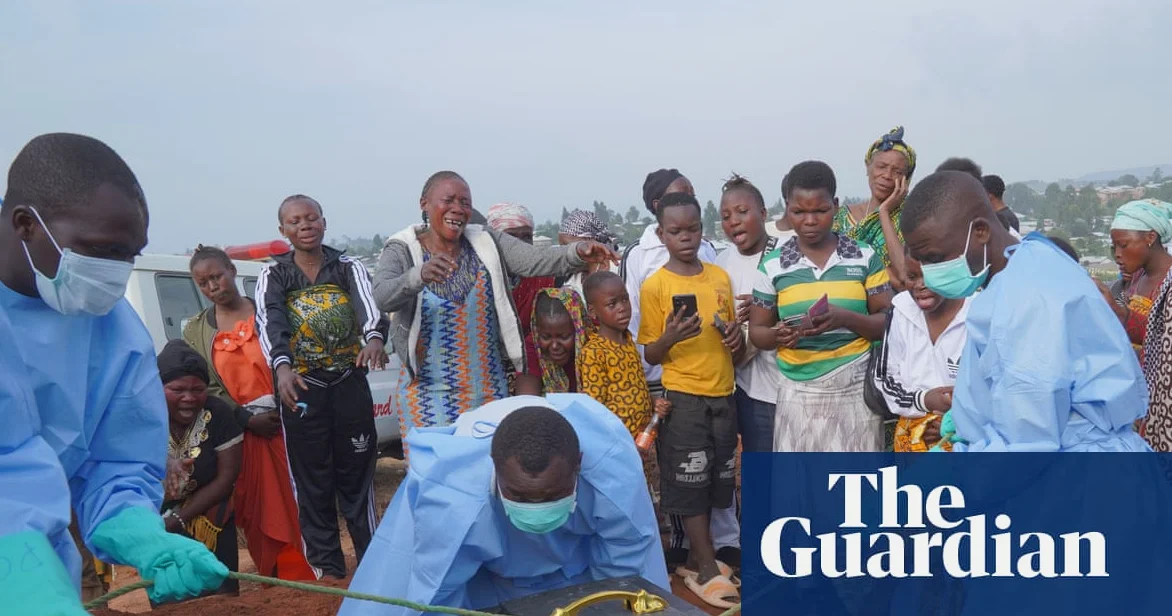
The Ebola epidemic in the eastern part of the Democratic Republic of the Congo has now spread to a sixth province in the country; Concerns are growing that the life-threatening infectious disease could reach the capital, Kinshasa, which is home to 19 million people. According to Tedros Adhanom Ghebreyesus, Director-General of the World Health Organization (WHO), the outbreak could surpass the West African Ebola outbreak of 2014–2016, which claimed 11,000 lives. The current health crisis has claimed 2,000 lives so far, with more than 4,300 cases recorded to date; Authorities officially announced the outbreak on May 15; three months later, the country remains on edge.
Preparedness in the capital
Facilities for isolating patients are ready for the event that a public health alert should hit the capital, says Jean-Jacques Muyembe, Director General of the National Institute for Biomedical Research (INRB). “If there is a suspected case, the epidemiological services and the INRB laboratory are ready to quickly identify and confirm cases,” he told DW, while the Ministry of Health has set up the Cinquantenaire Hospital to admit and fully isolate patients if necessary. “We are prepared. We can quickly contain an Ebola outbreak here in Kinshasa,” he said.
Strain and spread
This Ebola outbreak is driven by the rare Bundibugyo strain of the virus, for which no vaccine or treatment has yet been approved. The virus has been spreading faster than health authorities can contain it. The WHO expects the current outbreak to only peak in six months. Initial infections can be traced back to as early as February, according to reports. This timeline highlights the difficulty in controlling the virus and the urgency of the situation.
Regional tensions complicate response
The M23 rebellion in the east of the Democratic Republic of Congo continues to complicate the response to the health crisis. The M23 took up arms again in November 2021 in the province of North Kivu, where it has seized vast swathes of territory. In 2022, several significant events unfolded, including the death of thirty Congolese soldiers near Virunga Park on January 26 and the crash of a peacekeeper helicopter over a combat zone on March 29, killing eight people. A regional force comprising Kenyan, Burundian, Ugandan, and South Sudanese contingents was set to begin deployment in November 2022. Despite a ceasefire agreement in July 2022 between Rwandan President Paul Kagame and Congolese President Félix Tshisekedi, it was not respected.
A UN expert report on August 4, 2022, asserted that the Rwandan army intervened in eastern DRC directly in support of the M23. Kigali disputes this, and the U.S. expressed concern over the report. At the UN on September 21, the President of the DRC accused Rwanda of armed “aggression,” and on October 29, Kinshasa expelled the Rwandan ambassador to DRC. These tensions highlight the complex political environment in the region, which further challenges efforts to contain the Ebola outbreak.

Comments
No comments yet
Be the first to share your thoughts