

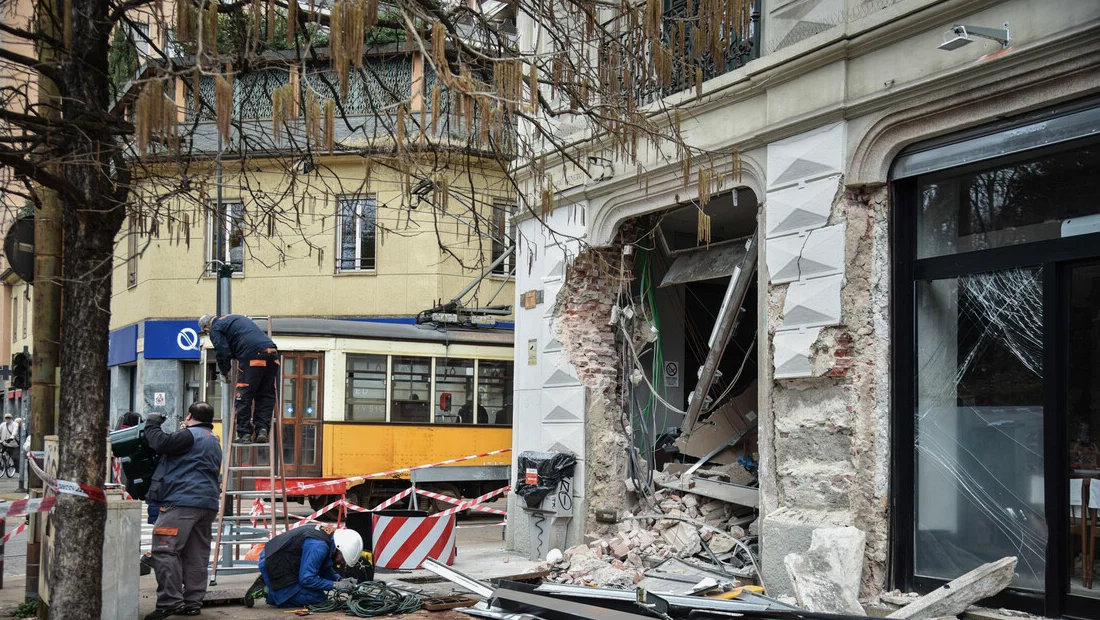
The driver of the Milan tram that derailed and crashed into a restaurant last month, killing two people and injuring around 50, was on the phone until 12 seconds before the impact, according to police phone records cited by three Italian dailies on Friday. The incident, which occurred on February 27, has sparked a wide-ranging investigation into the causes of the crash and the potential culpability of the driver.
The Timeline of the Crash
According to local police investigations, the driver of tram 9 was on the phone until at least twelve seconds before his vehicle missed a scheduled stop, entered a left-bound switch at a speed of 50 miles per hour, and crashed into the building. This detail was reported by the Italian newspapers Corriere della Sera, la Repubblica, and Il Giorno, which cited police records obtained through official channels.
The tram, which was traveling along a route in central Milan, veered off its track and collided with a restaurant located near the San Babila square. The impact caused significant damage to the building and left the driver and passengers in the tram with injuries ranging from minor to critical. Two individuals were killed, and more than 50 were treated for injuries, according to emergency services.
The driver, a 60-year-old man with a 35-year career on the Milan tram network and no prior accident record, reportedly said he lost control of the tram after having a bad turn. However, the police records suggest he was engaged in a phone call at the time of the incident, raising questions about his state of attention and whether the call contributed to the crash.
Legal and Investigative Developments
The driver is under investigation for a range of charges, including causing a rail disaster, culpable manslaughter, and bodily harm. These charges are based on the findings of the ongoing investigation, which is being led by local police and supported by technical experts analyzing the tram’s systems and the driver’s behavior.
The driver’s lawyer has disputed the claim that his client was on the phone at the moment of impact, citing GPS and phone data that he says exonerate his client. The lawyer stated that the data indicates the driver was not engaged in a call at the time of the crash, and that the incident may have been the result of an unexpected mechanical failure or a sudden loss of control.
Investigators are also examining why the automatic emergency braking system on the tram did not activate to prevent the collision. The system is designed to detect obstacles and apply the brakes automatically in such situations. If it failed, it could indicate a flaw in the tram’s safety systems or a software issue that needs to be addressed.
According to police records, the driver’s phone call was recorded as occurring in the minutes leading up to the crash. The exact nature of the call and its relevance to the incident are still under scrutiny. Authorities are working to determine whether the call was a distraction that contributed to the driver’s loss of control, or whether it was unrelated to the incident.
Impact on Public Safety and Transport Regulation
The crash has raised concerns about the safety of public transport in Milan and the potential risks associated with driver behavior. The incident has prompted calls for a review of the policies governing tram drivers, including the use of mobile devices while operating vehicles.
Transport officials in Milan have acknowledged the need for a thorough investigation into the incident and have stated that they will consider implementing stricter safety protocols for tram drivers. The city’s mayor has expressed his concern over the tragedy and has called for an urgent review of the tram system’s safety measures.
The incident has also sparked public debate about the role of technology in preventing accidents. The failure of the automatic emergency braking system has led to questions about the reliability of such systems and whether they should be mandated for all public transport vehicles.
Transport experts have suggested that the crash could serve as a wake-up call for cities around the world to invest in more advanced safety technologies and to ensure that drivers are properly trained and monitored for any signs of distraction or impairment.
According to the Italian transport ministry, the country has seen a steady increase in the use of automated safety systems in public transport over the past decade. However, the crash in Milan highlights the need for continued investment in these systems and for stricter enforcement of safety regulations.
The investigation into the crash is expected to continue for several weeks, with authorities planning to release more details about the incident in the coming days. The findings of the investigation will have significant implications for the future of public transport safety in Milan and beyond.






1 Comment