

 BBC
BBC 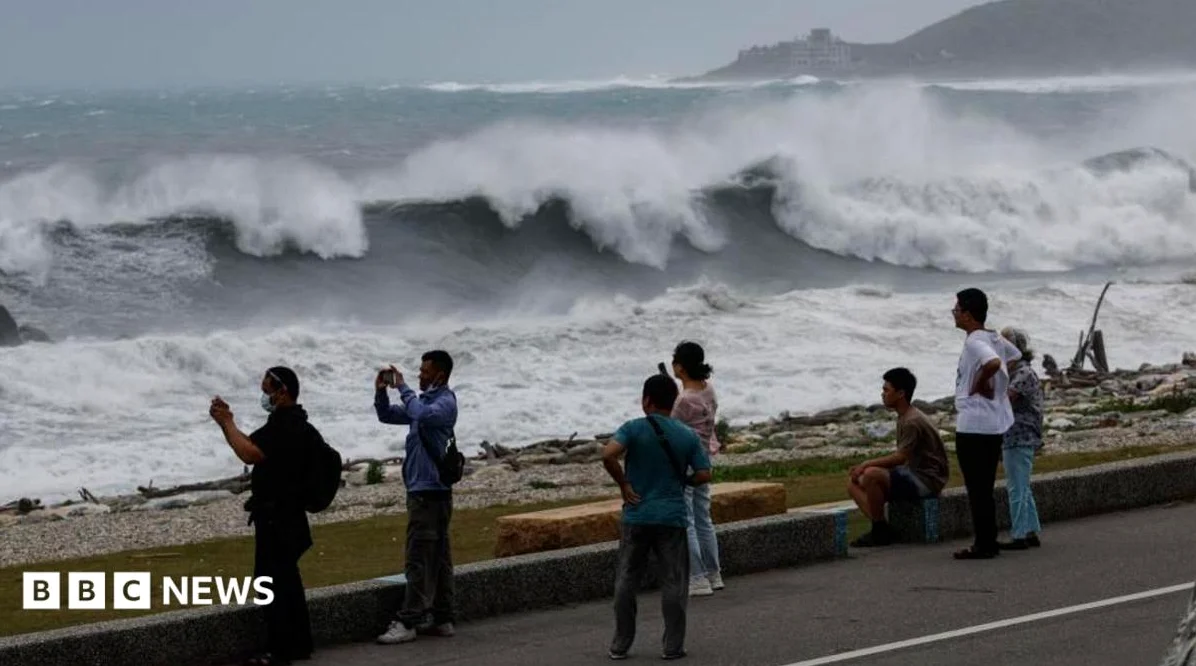
Philippines landslides claim 15 lives
On the Philippine island of Mindanao. Families were buried overnight by landslides, and rescuers are still searching for those missing — Moderate to heavy rains are expected to continue drenching parts of the country throughout the weekend, according to officials. The landslides occurred in an area where residents were already on high alert for severe weather due to the approaching typhoon.
Typhoon Bavi threatens Taiwan, Japan, and China
Taiwanese authorities have warned that Bavi could bring up to 1 meter (39 inches) of rainfall; some 29,000 soldiers have been put on standby to help with relief efforts, according to the island’s defense ministry. Bavi is set to be the largest storm, by size, to hit the island since 1987, according to Taiwan’s Central Weather Administration.
Residents across the region have been stocking up on supplies as supermarkets have been wiped out of essentials. Dozens of flights have been cancelled, and schools have suspended classes. Farmers rushed to harvest or protect their crops while the weather held earlier on Friday, while fishermen secured their vessels tightly.
‘Don’t be fooled by the nice and calm weather now. A storm like this could be the most terrifying,’ said 60-year-old fisherman Chen Ming-hui.
Thousands of sandbags have been distributed to residents and shop-owners in flood-prone areas. In China, officials have warned of a ‘significant impact’ from the typhoon that could move northward after hitting Fujian province. According to Ma Jun, director of China’s Institute of Public and Environmental Affairs, ‘Bavi’s large size and abundant energy mean its remnants and outer rainbands could move from Jiangsu and Anhui provinces toward the Bohai Sea region.’
Concerns about extreme weather and preparedness
While the focus is on Bavi, the region is also dealing with the ongoing effects of extreme weather conditions. In Japan, heavy rains have already caused localized flooding in some areas. The typhoon is expected to weaken as it moves northward but could still affect the Korean Peninsula.
Authorities in the affected countries are emphasizing the need for preparedness, particularly in northern China and the Korean Peninsula, where typhoons are less common. Ma Jun warned that these areas should ‘strengthen preparations’ due to their ‘less experience’ with such storms.




Comments
No comments yet
Be the first to share your thoughts