

 The Guardian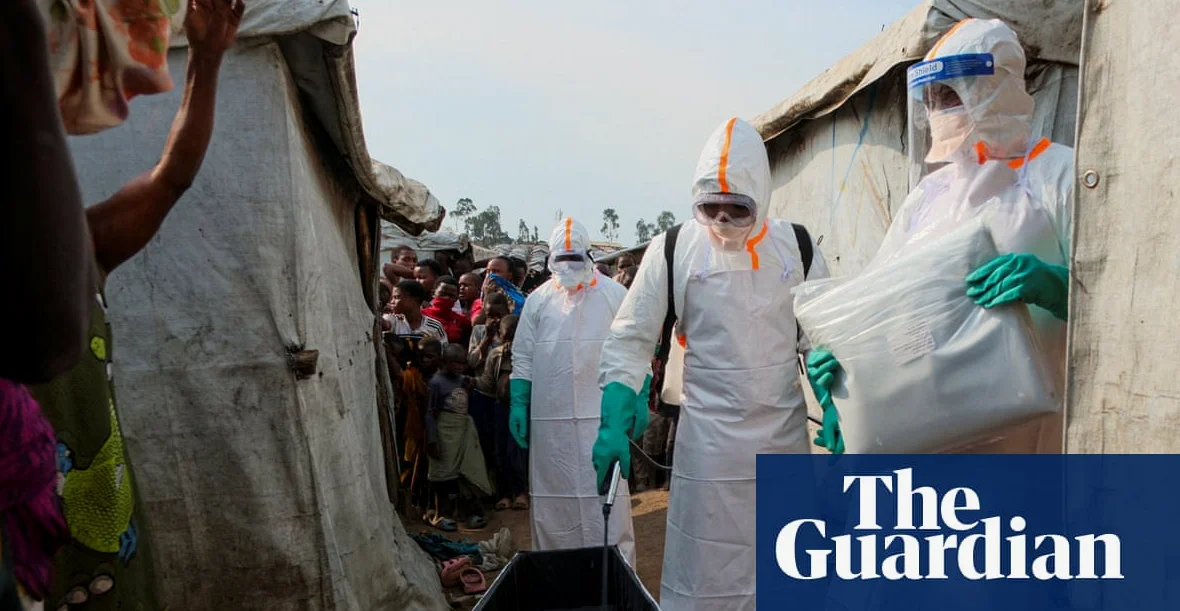
On Wednesday. France confirmed that a doctor who had been working in the Democratic Republic of the Congo (DRC) had tested positive for Ebola upon his return; his employer, the medical NGO Alima, said they were “working to understand how the contamination may have occurred.”
Unaccounted Cases Spark Concern
Figures on the number of patients who have recovered, those being treated, and those who have died indicate that 297 people who tested positive are currently unaccounted for. “This is a concern that we have, and Where are these people?” asked Kaseya, according to the report.
DRC authorities announced on Thursday that anyone who had been in affected provinces would need to wait 21 days before they could travel onwards; the outbreak, caused by the Bundibugyo strain of the virus, is the largest on record for five weeks after declaration.
Models Predict Possible Outcomes
At the same stage. The 2014 to 2016 West Africa outbreak, which infected more than 28,000 people and killed over 11,000, had 239 cases and 160 deaths. The World Health Organization (WHO) used computer models to simulate three possible trajectories — low, central, or high transmissibility; Current figures are most in line with the central scenario, predicting between 6,636 and 10,287 cases by 16 September. The worst-case scenario projects 66,000 confirmed cases by September.
Kaseya noted that 30% of new cases are among known contacts of confirmed cases, indicating “huge, huge community transmission.” Authorities intend to recruit 20,000 community health workers from the local area to boost contact tracing efforts, he said.
Challenges in Displacement Camps
Bed occupancy in Ebola treatment centres is at 95%, and “we didn’t reach the peak yet,” he added. Kaseya also highlighted that camps housing displaced people have cases, and because access is limited, contact tracing cannot be carried out effectively.
Meanwhile, the whereabouts of nearly 300 people with Ebola remain unknown, according to the latest reports, emphasizing the urgency of the situation and the need for more coordinated response efforts.



Comments
No comments yet
Be the first to share your thoughts