

 The Guardian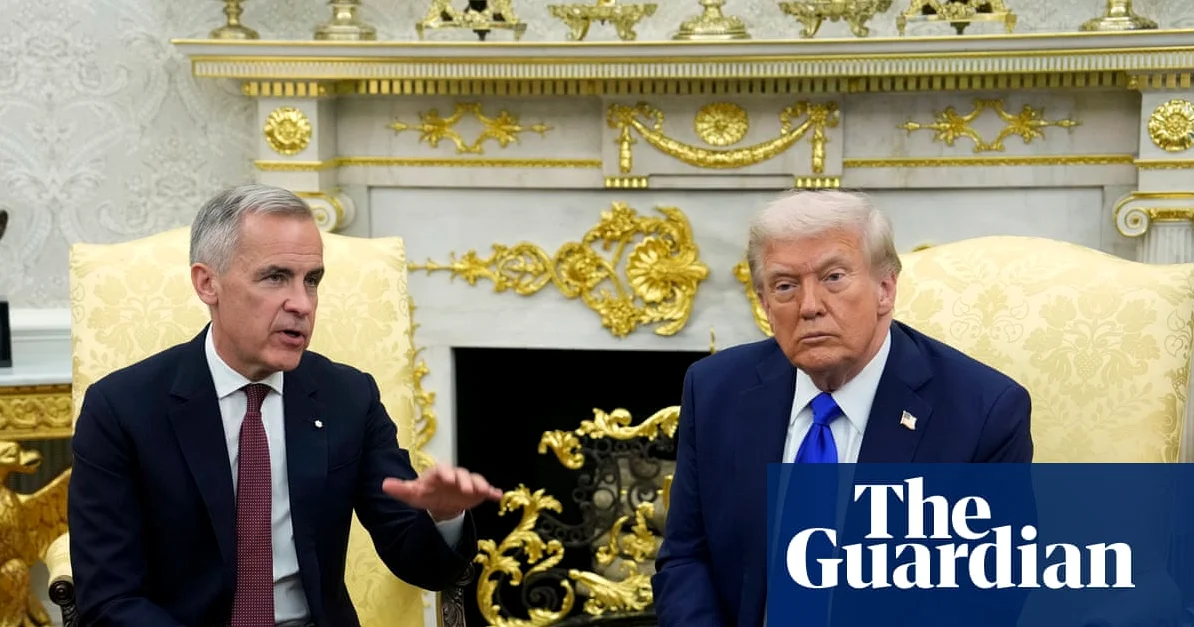
The United States and Canada reached a late-night agreement on Tuesday, temporarily halting a 50% tariff on Canadian goods that was set to affect $20 billion worth of exports, according to the Trump administration. The pause was announced hours before the tariff was scheduled to take effect.
Trump Announces Tariff Pause
Donald Trump posted late on Tuesday on social media, stating that the tariffs had been paused for three days, and he wrote, “based on the fact that Canada and the USA, subject to the finalization of documents, have a DEAL!”
Following the announcement, Canadian Prime Minister Mark Carney said that “substantial progress” had been made toward a trade deal but emphasized that more work was needed. He did not provide further details on the terms of the agreement.
Keystone XL Pipeline Hints
In the same social media post, Trump mentioned that the controversial Keystone XL pipeline project “may be awoken from the grave.” However, he did not offer further details or clarify if this was linked to the tariff agreement.
Keystone XL, a proposed pipeline intended to transport oil from Canada’s western tar sands to U.S. refineries, was halted in 2021 by its owner, TC Energy, after President Joe Biden revoked a key permit for a U.S. segment of the 1,200-mile project. The project had been a point of contention in U.S.-Canada relations, with opposition from landowners, Native American tribes, and environmental groups.
Other North American pipelines, such as Dakota Access and Enbridge Line 3, have also faced significant opposition from environmental groups due to concerns over potential spills and environmental impact.
Tariff Disputes and Trade Relations
The latest development comes amid a tense year for U.S.-Canada trade relations — In February 2025, the White House imposed a 25% tariff on Canadian goods, citing insufficient progress in curbing cross-border illegal immigration and drug trafficking. Canada responded with a reciprocal levy, calling the U.S. actions “unwarranted and unreasonable.”
Canadian officials maintained that their country had implemented a solid border protection plan and that less than 1% of fentanyl and illegal crossings originated from Canada. Tensions escalated further in July 2026 when the White House announced the 50% tariffs, citing Canada’s alleged discrimination against U.S.-produced cars, alcohol, and dairy products.
In the days leading up to the pause, top officials from both countries engaged in “intense and delicate” negotiations, as reported by Carney to journalists on Monday.
Historically, Canada and the U.S. have maintained strong trade ties, though In 2024, trade between the two nations was estimated at roughly $909 billion, according to the U.S. Trade Representative’s office.
The proposed U.S. tariffs have raised concerns among Canadian business owners about potential financial devastation and increased export costs, as reported by CBC, while some goods previously protected from import taxes under the Trump-negotiated United States-Mexico-Canada (USMCA) deal were not shielded from the latest round of tariffs.





Comments
No comments yet
Be the first to share your thoughts