

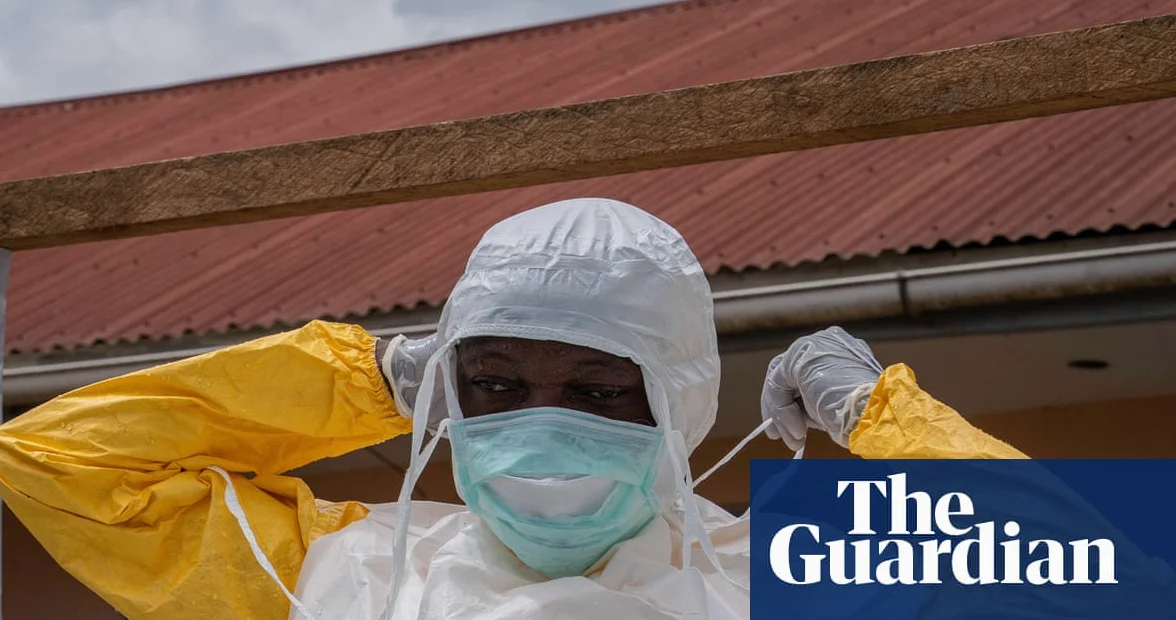
A new U.S. Centers for Disease Control and Prevention (CDC) analysis warns that the current Ebola outbreak in central Africa could rival the 2014 West African epidemic, which resulted in 28,000 cases. According to projections. The current spread could result in up to 20,000 cases and 4,000 deaths within the next three months alone.
Outbreak Projections and Modeling
Published analyses by the CDC model the potential spread of the virus and highlight the need for immediate action — the modeling indicates that if only 20% of cases are isolated within two days of symptom onset, more than 20,000 cases are expected. This projection is based on similar modeling techniques used during the 2014-2016 West African outbreak.
“If only 20% of cases enter isolation within two days of symptom onset, more than 20,000 cases are projected,” said Jason Asher from the CDC’s Center for Forecasting and Outbreak Analytics during a press briefing. These figures are based on a three-month timeframe. If the outbreak continues beyond this period, the numbers could rise further, surpassing the 2014 record.
Current Response and Challenges
Both the Democratic Republic of Congo and Uganda are working to contain the outbreak, which was declared an international health emergency by the World Health Organization in May. However, the current response faces significant challenges, including limited infrastructure, logistical hurdles, and community resistance to public health measures.
The 2014-2016 outbreak, the largest on record, saw a large and sustained international response that helped curb the spread. The current situation, according to the CDC, lacks the same level of global coordination and resources. Without large-scale and sustained public health interventions similar to those deployed in 2014, the risk of a worse-case scenario increases.
Historical Context and Risk Factors
The 2014-2016 West African Ebola outbreak was marked by 28,000 cases and 11,300 deaths across Guinea, Liberia, and Sierra Leone. The current outbreak, while localized to central Africa, has already shown signs of rapid transmission in areas with limited health infrastructure and high population mobility.
According to the CDC’s modeling, if the current rate of transmission is not slowed, the current outbreak could become the worst Ebola outbreak on record. The potential for a higher death toll is a stark reminder of the importance of early and sustained intervention.
Jason Asher emphasized that the situation is urgent but manageable if global health partners step up support. The analyses released by the CDC are part of an ongoing effort to monitor and forecast the spread of the virus and to provide data-driven guidance for containment strategies.






Comments
No comments yet
Be the first to share your thoughts