

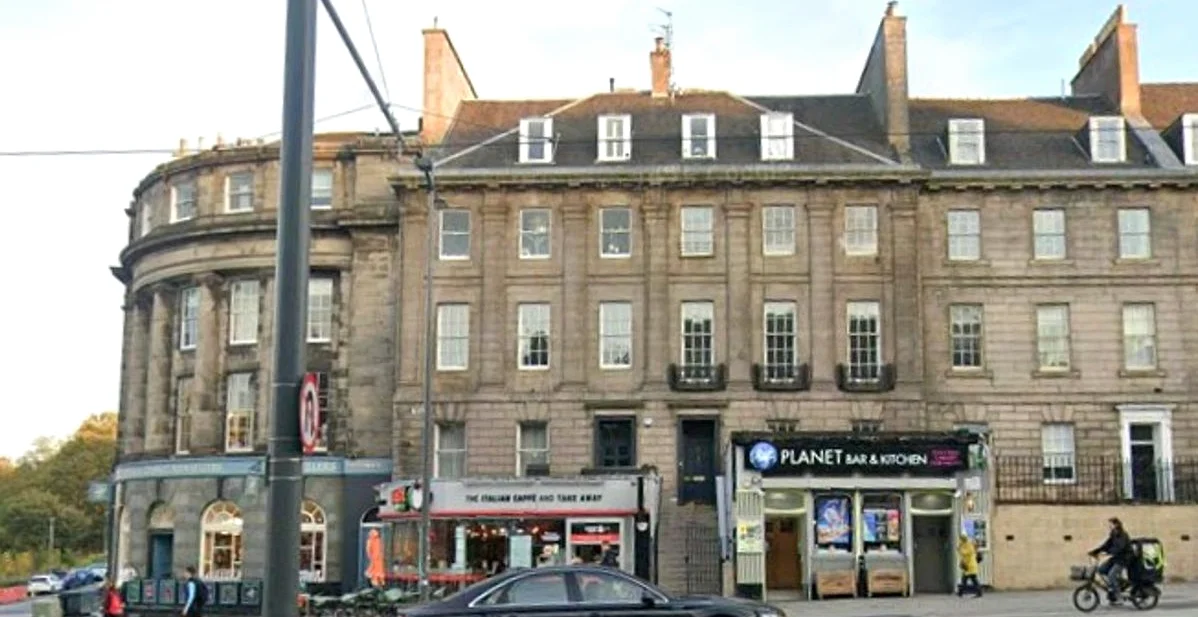
Edinburgh city councillors have approved plans to transform the Baxter’s Place social club into six serviced apartments, despite fierce local opposition. The decision came during a development management committee meeting, where council officers argued that the change from a commercial use to another commercial use was permissible under existing planning rules.
Residents Decry ‘Vile’ Proposal
Neighbors of the Baxter’s Place venue have strongly opposed the proposal, describing it as ‘vile’ and a ‘nightmare’ for the local community. The social club, which has stood vacant for years, has long been a point of contention among residents.
Councillors were presented with evidence that the property had been used for short-term lets in the past, which made the change in use more palatable from a regulatory standpoint. However, local residents expressed concerns that the new serviced apartments would exacerbate existing issues related to noise and disturbance in the area.
Commercial Use to Commercial Use
Council officers emphasized that the planning change was from a commercial use to another commercial use. They pointed to the fact that planning permission for the property to be used as flats was granted in 2016 but was never used. This, they argued, justified the current proposal.
Conservative councillor Joanna Mowat acknowledged the division among residents, noting that some viewed the change as a loss of residential potential, while others saw it as a more appropriate use given the property’s history of disturbance.
Mowat said, ‘There is a division in residents here, and local opinion. Some will maintain that this is a loss of residential, although it’s a sort of chimerical residential because it hasn’t been residential as we’d understand it.’
Architectural Concerns and Disagreements
SNP councillor Amy McNeese-Mechan voiced strong opposition to the proposal, citing concerns about the building’s architectural significance. She argued that the structure was originally designed as a typical Edinburgh-style residence, with ground-floor shops and residential units above.
‘My understanding of the history of that building and those are architecturally significant buildings in the city,’ McNeese-Mechan said. ‘I would think that it clearly was residential.’
Councillors also debated the feasibility of having 24-hour reception at the premises, with some expressing doubts about whether such a service would be implemented. Officers clarified that the committee had no authority to mandate the setup of a reception, as that was outside the scope of their planning responsibilities.
Liberal Democrat councillor Hal Osler, the committee convener, emphasized that the change was from commercial to commercial, despite the wishes of some residents for the property to return to residential use. He acknowledged the frustration of individuals who wanted the buildings to be residential but said the committee had no power to alter the proposed use.
‘I can understand individuals’ frustration, because it would have been lovely to have these properties returning to residential, but that is not what is being presented to us,’ Osler said. ‘Hopefully we will get a resolution to this issue now, and I would suggest that we uphold the officers’ recommendations on this.’
Despite McNeese-Mechan’s opposition, the committee ultimately voted in favor of Osler’s position, approving the development plan. The decision has sparked further debate about the balance between commercial development and the preservation of residential character in Edinburgh’s neighborhoods.






Comments
No comments yet
Be the first to share your thoughts