

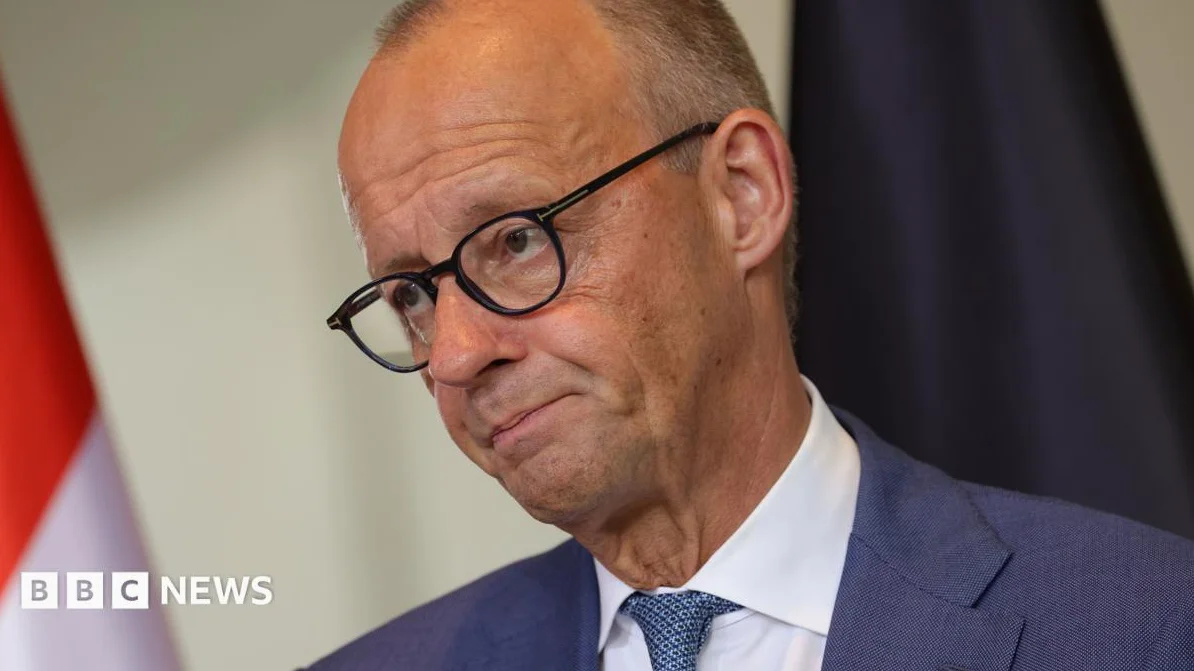
Eight German state premiers from the Christian Democratic Union (CDU) have issued a joint statement supporting Chancellor Friedrich Merz amid mounting pressure and speculation about his political future, according to The Guardian. The statement followed a weekend of regional elections in Berlin and Mecklenburg-Western Pomerania, where the CDU is expected to suffer further losses due to widespread public dissatisfaction with Merz’s coalition government.
Internal Unity or Political Strategy?
Merz, who became chancellor after a contentious and historically unique election process, has struggled to consolidate support within his own party. He lost the initial chancellor vote in the Bundestag despite having a coalition deal with the Social Democrats (SPD), a first in post-war German politics, according to the BBC. The state leaders’ backing of Merz is seen as an attempt to stabilize the party ahead of a meeting of CDU leadership scheduled for Sunday evening.
The statement from the state premiers emphasized the need for “stability” in German politics, particularly as far-right parties gain traction in upcoming elections across Europe. The signatories included several names mentioned as potential Merz successors, such as North Rhine-Westphalia’s Hendrik Wüst and Bavarian premier Markus Söder, who has previously positioned himself as a conservative populist.
Public Dissatisfaction and Election Outlook
Despite the show of support, polls indicate that voters are likely to punish the CDU in the upcoming elections in Berlin and Mecklenburg-Western Pomerania; Merz’s government, formed with the Social Democrats, has faced criticism for its handling of economic and social policy issues. The weekend elections could further undermine his position and raise questions about the viability of the coalition.
Merz, who is also the CDU’s party leader, is expected to meet with his party’s leadership to coordinate a response to the election results, while Senior party members have described the move as a “show of unity” ahead of the results. However, it remains unclear how long the current unity will hold, particularly if the CDU suffers another defeat.
Merz’s Political Challenges
Merz’s political career has been marked by difficulties in gaining widespread support within the CDU — he required three attempts to become the party’s leader and lost the first vote for chancellor despite having a coalition agreement with the SPD. This pattern suggests a struggle to consolidate power and maintain internal support, according to BBC.
With the party facing a challenging political setting and internal divisions, the state premiers’ backing may be more of a tactical move than a genuine show of confidence in Merz’s leadership. The coming days will test the strength of this support and the stability of the CDU under his leadership.





Comments
No comments yet
Be the first to share your thoughts