




In 2025, Hato submitted the bill to the São Paulo City Council, proposing that the day corresponding to Mazu’s birthday on the 23rd day of the third month of the Chinese lunar calendar be designated Mazu Day, included in the city’s official events calendar and made a legally established commemorative day of the city. Now that the bill has passed the council vote, the legislative process will continue.
This year is the China-Brazil Year of Culture, and the push to establish a Mazu Day is a vivid example of exchanges and mutual learning between the Chinese and Brazilian civilizations. Chen Yonghui, president of the Brazil Chinese E-Commerce Association, who took part in promoting the legislation, said that as an overseas Chinese from Putian, the hometown of Mazu, he has actively organized Mazu cultural activities and spoken with São Paulo city councilors about the historical origins and cultural value of Mazu culture, in the hope that local legislation would make Mazu culture part of São Paulo and allow more Brazilians to come to know Mazu and Chinese culture through the commemorative day.
Mazu culture originated in Putian and has been handed down for more than a thousand years. The spiritual core of Mazu — “cultivating virtue, doing good and great love” — has long transcended ethnic and regional boundaries to become a spiritual treasure shared by all humanity. In 2009, Mazu belief and customs were inscribed on UNESCO’s Representative List of the Intangible Cultural Heritage of Humanity. To date, Mazu culture has spread to 52 countries and regions, with more than 300 million devotees.

Establishing a Mazu Day means Mazu culture becomes a public cultural symbol of São Paulo, crossing geographic and linguistic boundaries and further advancing its spread across the Portuguese-speaking world. The measure will provide institutional support for Mazu cultural activities to be held regularly and passed on over the long term in São Paulo, and will add new substance to the city’s multicultural integration.
The way Mazu culture has taken root in Brazil vividly demonstrates the inclusiveness and appeal of Chinese civilization. Tang Liqin, an associate professor at the School of Music of Putian University and a doctoral candidate in Portuguese-speaking countries studies at City University of Macau, said that from the hometown bonds of overseas Chinese, to a legislative proposal in a Brazilian municipal council, to official promotion at the level of culture and tourism, Mazu culture has entered Brazilian society and built a bridge between the hearts of the Chinese and Brazilian peoples.
São Paulo is home to the largest Chinese community in Brazil, and overseas Chinese there have contributed to the city’s economic, social and cultural development. The spread of Mazu culture in Brazil has followed in the footsteps of their endeavors. Local overseas Chinese have translated Mazu stories into Portuguese, produced brochures for distribution to the public, and organized Mazu-themed study tours.
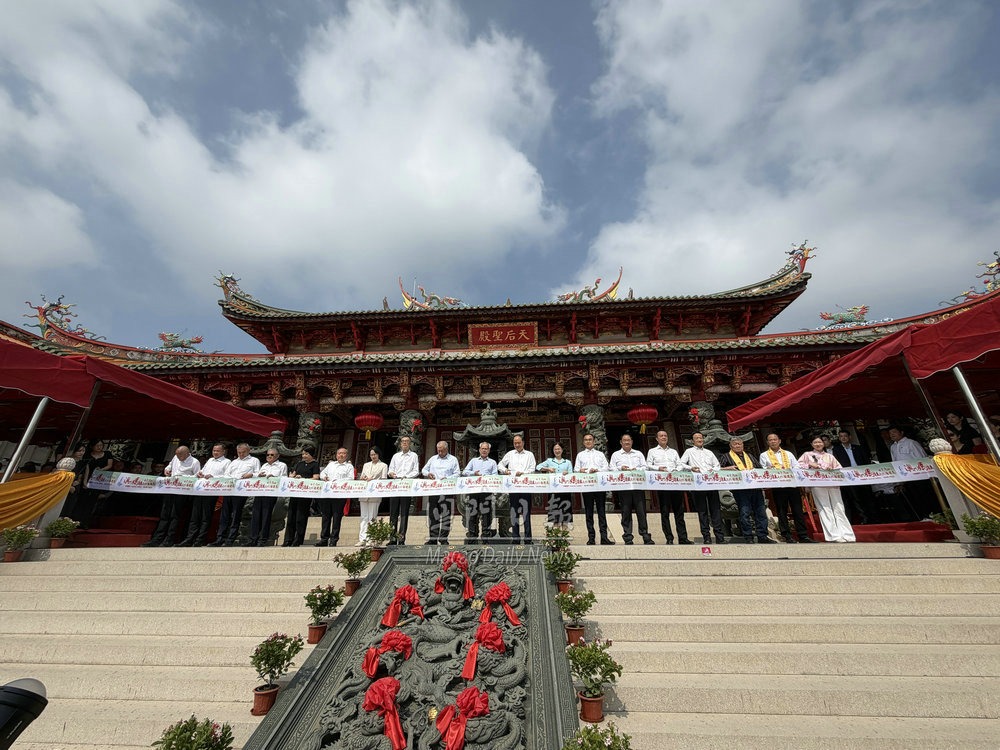
In 2024, the Brazil Tianhou Temple was completed in São Paulo’s Bom Retiro district. It is Brazil’s first formal Mazu temple and a physical testament to the blending of the Chinese and Brazilian civilizations. Built according to the architectural model and ritual conventions of the Meizhou Mazu Ancestral Temple, it embodies the deep attachment of overseas Chinese to their homeland and carries their spiritual aspirations.
News link
Since the Global Mazu Culture Forum was first held in Putian, the hometown of Mazu, it has run for eleven editions, and this is the first time it has set up an in-person sub-forum outside China. The Initiative on a Long-Term Exchange Mechanism for Mazu Culture in Brazil, released at the event, proposes to keep Mazu culture rooted in Brazil through “one forum a year plus year-round cultural activities.” Also released was the Initiative on China-Brazil Academic Exchanges on Mazu Culture and Maritime Civilization, which seeks to build consensus among scholars in the two countries and to carry out regular academic visits, joint research and the sharing of findings, giving the spread of Mazu culture in the Portuguese-speaking world solid academic support.
Source: Meizhou Daily New Media Center. Reporters: Huang Lingyan and Hong Ying (text); Cai Hao and Chen Bin (photos). Some photos provided by interviewees.


Comments
No comments yet
Be the first to share your thoughts