

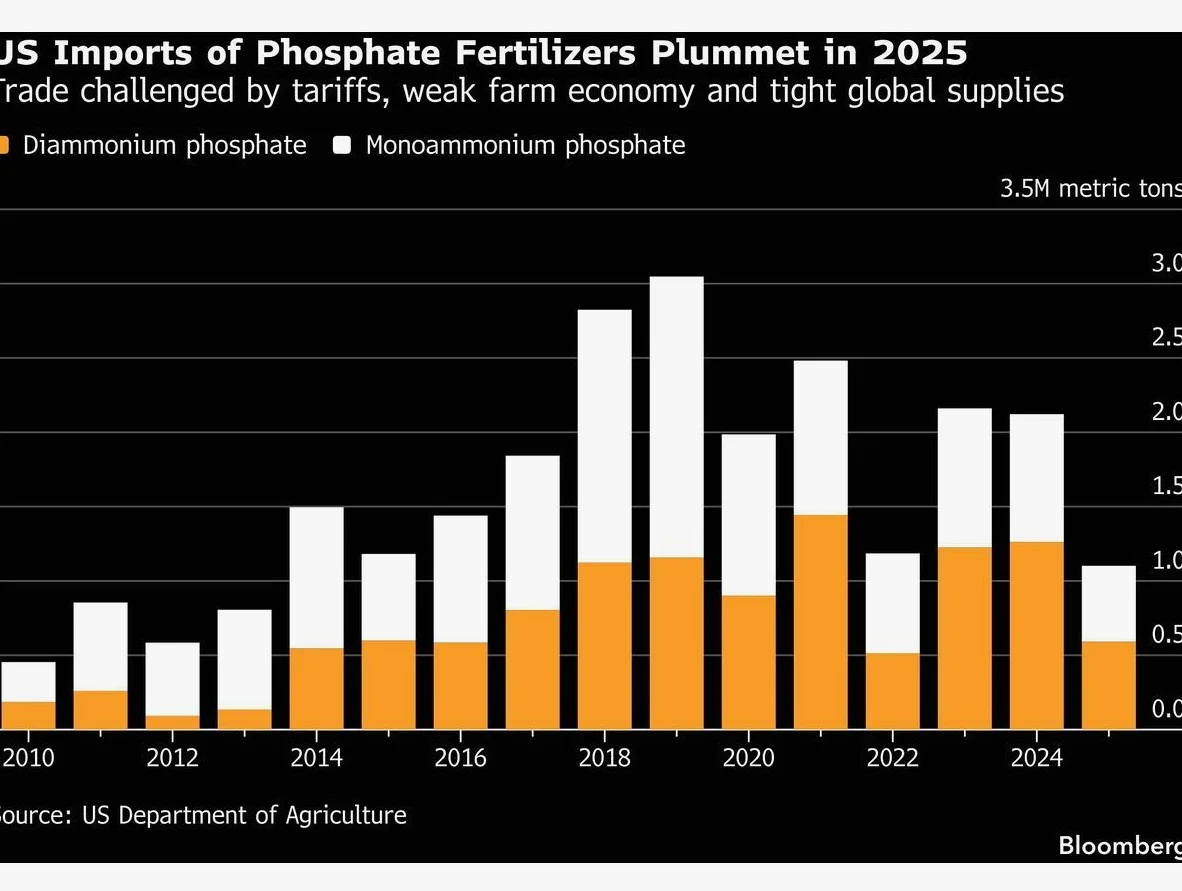
The effects along the supply chain could start to be “exponential” if the conflict continues for much longer, once producers work through existing sulfur and sulfuric acid reserves, said Andy Hemphill, who covers sulfuric acid markets for commodity pricing platform ICIS. This warning comes amid mounting concerns over the global supply of phosphate, a key ingredient in fertilizers essential for growing staple crops such as soybeans and potatoes.
Impact on Food Production
The ongoing conflict has disrupted the supply of critical agricultural inputs, with phosphate becoming a focal point; According to industry reports, phosphate is used extensively in the production of fertilizers, which are vital for maintaining crop yields. Nearly 80% of the US’s phosphorus is applied to soy and corn fields, which are processed into both livestock feed and fuel, and this dependence makes the situation particularly urgent for American farmers, who are already grappling with high production costs.
This increase is expected to have a cascading effect on food prices, particularly in developing countries that rely heavily on imported fertilizers. The conflict has led to a sharp decline in phosphate availability, pushing prices to record highs; In the first quarter of 2024, phosphate prices rose by 35% compared to the previous year, according to the US Department of Agriculture.
“This is not just a supply issue; it’s a crisis that could affect food security worldwide,” said Hemphill, though “If the conflict persists, we could see a complete breakdown in the supply chain for sulfuric acid, which is a key component in phosphate production.”
Threat to US Farmers
US farmers have been hit hard by the rising cost of fertilizers, which have been a significant part of their production expenses. With nearly 80% of the country’s phosphorus used on soy and corn fields, the disruption in supply is expected to reduce crop yields and increase the cost of food production.
“The cost of fertilizers has risen so sharply that many farmers are being forced to cut back on inputs to stay afloat,” said John Miller, a soybean farmer from Iowa. “This is a difficult decision, but it’s necessary to survive the current economic climate.”
The impact is not limited to the US, though Countries such as Brazil and India, which are major consumers of phosphate-based fertilizers, are also feeling the strain. In Brazil. The cost of fertilizers has risen by over 40% in the past year, according to the Brazilian Agricultural Research Corporation — this has led to a decrease in crop production and a rise in food prices, which is affecting the livelihoods of millions of people.
Economic and Social Consequences
The rising cost of fertilizers is expected to have far-reaching economic and social consequences; Inflation in food prices is already on the rise, and the situation is likely to worsen if the supply of phosphate remains constrained. According to the International Monetary Fund, food inflation could reach 10% in some regions by the end of 2024.
“This is a critical moment for global food security,” said Dr. Sarah Lee, an agricultural economist at the University of Toronto. “If the supply of phosphate continues to be disrupted, we could see a significant increase in food prices, which would have a severe impact on low-income households.”
The conflict has also raised concerns about the long-term sustainability of current agricultural practices. With the increasing reliance on fertilizers, the environmental impact of excessive phosphate use has become a growing concern. The overuse of phosphate can lead to water pollution and soil degradation, further complicating the situation.
“We need to find a balance between meeting the growing demand for food and ensuring that our agricultural practices are sustainable,” said Dr. Lee. “This is not just a short-term issue; it’s a challenge that requires long-term planning and investment in alternative solutions.”
As the conflict continues, the global community is being called upon to address the growing crisis in the fertilizer market. Governments, industry leaders, and researchers are working to find solutions to stabilize the supply of phosphate and ensure that food production remains sustainable and accessible to all.






Comments
No comments yet
Be the first to share your thoughts