

 BBC
BBC 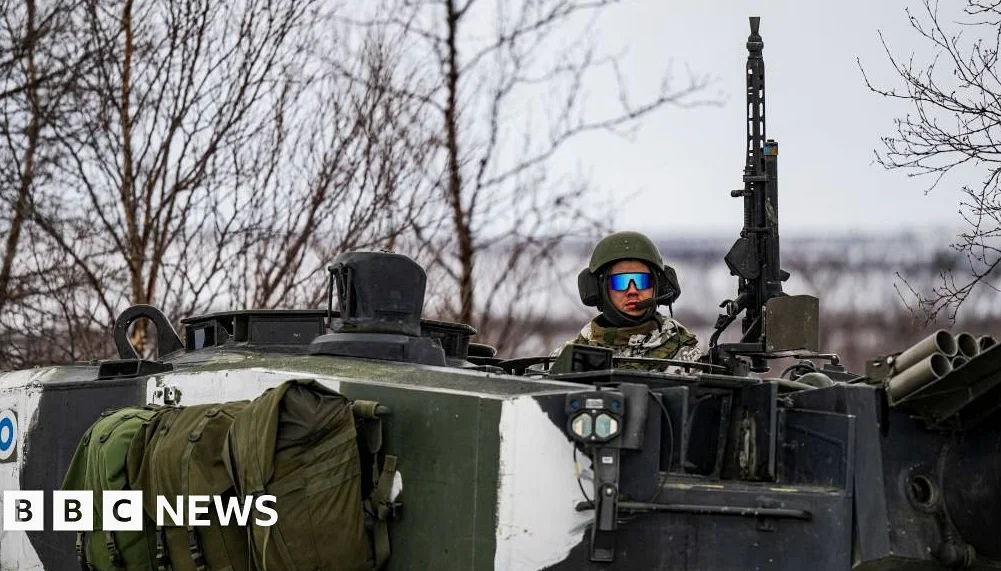
Finland is preparing to lift a long-standing prohibition on hosting nuclear weapons on its territory, a decision that marks a significant shift in the country’s military posture. The government says the move will better align Finland with NATO’s deterrence policy, reflecting the evolving security landscape since Russia’s full-scale invasion of Ukraine in 2022.
Strategic Shift in Defense Policy
Defence minister Antti Häkkänen stated that Finland’s security environment has ‘fundamentally and significantly changed’ in recent years, prompting the need for updated defense strategies. The Nordic nation abandoned its decades-old policy of military neutrality to join NATO in 2023, driven by concerns over Russia’s military aggression.
Under Finland’s 1987 Nuclear Energy Act, the import, manufacture, possession, and detonation of nuclear explosives have been prohibited on Finnish soil, even during wartime. However, the government’s proposed amendment would allow for the transportation, delivery, or possession of nuclear weapons on Finnish territory, provided they are linked to the country’s military defense as part of NATO.
‘The amendment is necessary to enable Finland’s military defense as part of the alliance and to take full advantage of NATO’s deterrence and collective defense,’ Häkkänen said during a news conference on Thursday. This move aligns Finland more closely with NATO’s founding principle of collective defense, under which an attack on one member is treated as an attack on all.
Legal and Political Implications
The proposed changes to Finland’s Nuclear Energy Act and criminal code require parliamentary approval and have been circulated for consultation until 2 April. The right-wing coalition government, which holds a majority in parliament, has emphasized the need for this legal shift to bolster Finland’s defense capabilities.
Finland’s 1,340-kilometer (832-mile) border with Russia is the longest of any EU or NATO member state. The country’s leaders have repeatedly warned that the security situation has deteriorated since Russia’s invasion of Ukraine in 2022. Finland’s accession to NATO in April 2023 was widely seen as a strategic setback for Russian President Vladimir Putin, who has long opposed the alliance’s eastward expansion.
Sweden, Finland’s neighbor, joined NATO in 2024, further altering the regional balance of power. As a result, NATO has increased its military presence in the Arctic and Baltic Sea, as well as along the newly expanded eastern flank of the alliance.
The proposed change in Finland’s nuclear policy comes amid broader efforts by European countries to strengthen defense cooperation in response to the war in Ukraine and global instability. Several NATO states experienced air traffic disruptions last year due to drones spotted over airports and military bases, which some officials attributed to ‘hybrid warfare’ tactics by Russia.
Moscow denied any involvement in these incidents, but they sparked renewed discussions about collective defense. Recently, France and Germany announced plans to deepen cooperation with European partners on nuclear deterrence, signaling a broader shift in defense strategy across the continent.
Broader NATO and Security Trends
Sweden’s Prime Minister Ulf Kristersson indicated last week that the country’s long-standing doctrine of not allowing foreign troops or nuclear weapons on its territory might not apply if the nation were to face a ‘completely different situation.’ This suggests that Sweden, like Finland, may be reevaluating its stance on nuclear weapons in light of evolving security challenges.
Finland’s decision to consider hosting nuclear weapons reflects the broader geopolitical realignment taking place in Europe. With the threat from Russia perceived as more immediate, NATO members are increasingly looking to strengthen their military postures, including through the deployment of nuclear capabilities.
The move by Finland also raises questions about the future of nuclear arms control and non-proliferation efforts. With several NATO countries already hosting U.S. nuclear weapons, the potential for Finland to join this arrangement could have implications for global nuclear strategy and arms control agreements.
As the proposal moves forward, the Finnish government will need to handle both domestic political debates and international reactions. The amendment to the Nuclear Energy Act is a critical step in this process, but the final decision will depend on the outcome of parliamentary consultations and broader strategic considerations.



Comments
No comments yet
Be the first to share your thoughts